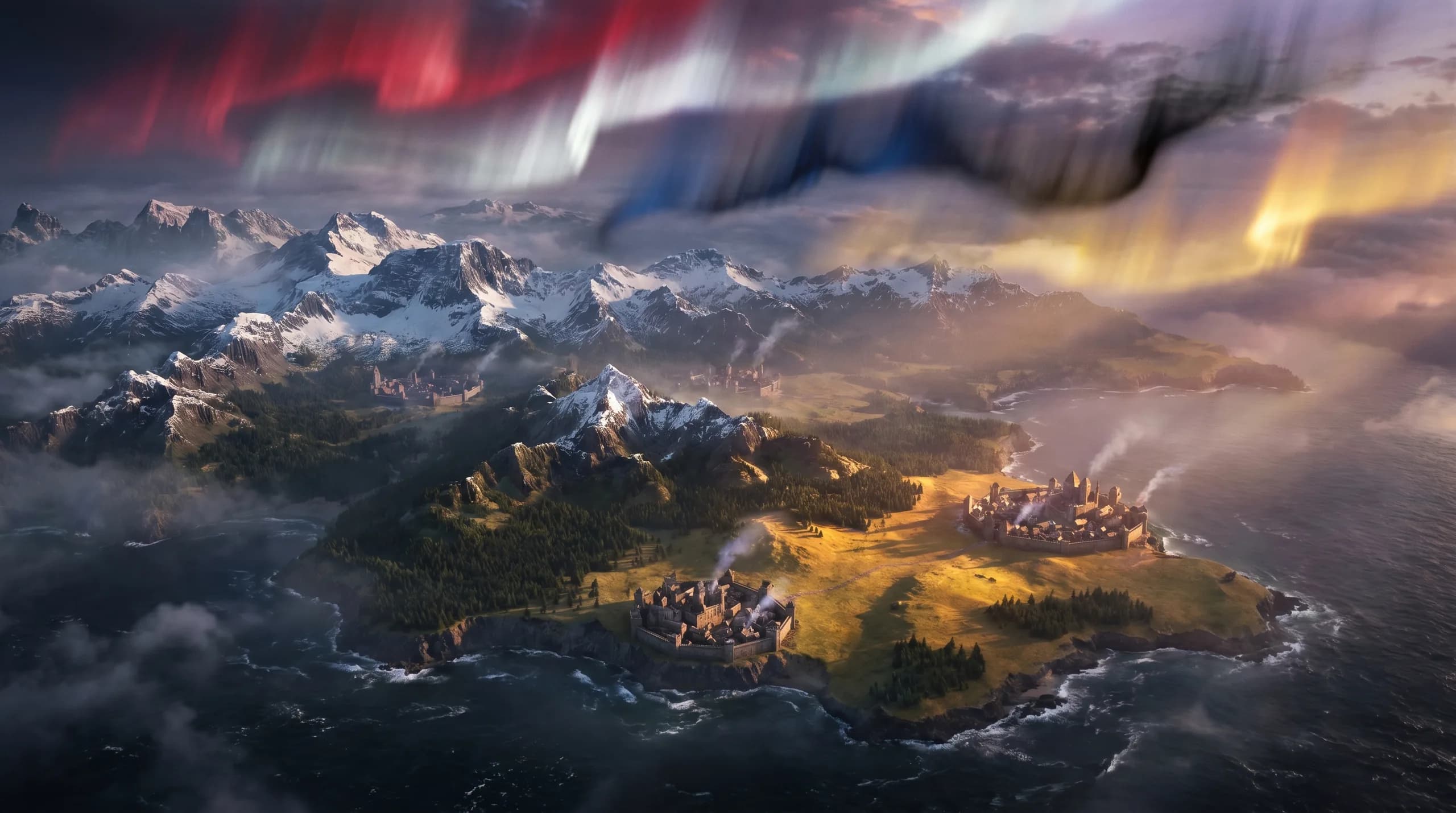
Kworgale is a world that remembers its gods too well. They were not distant makers glimpsed only in scripture — they walked its first cities, fought in its wars, and broke its history in half with their own hands. To understand Kworgale is to understand a single hard truth: the divine age has ended, and everything alive today lives in the long aftermath of that ending.
"We are the children of survivors, raised in the house the fire left standing."
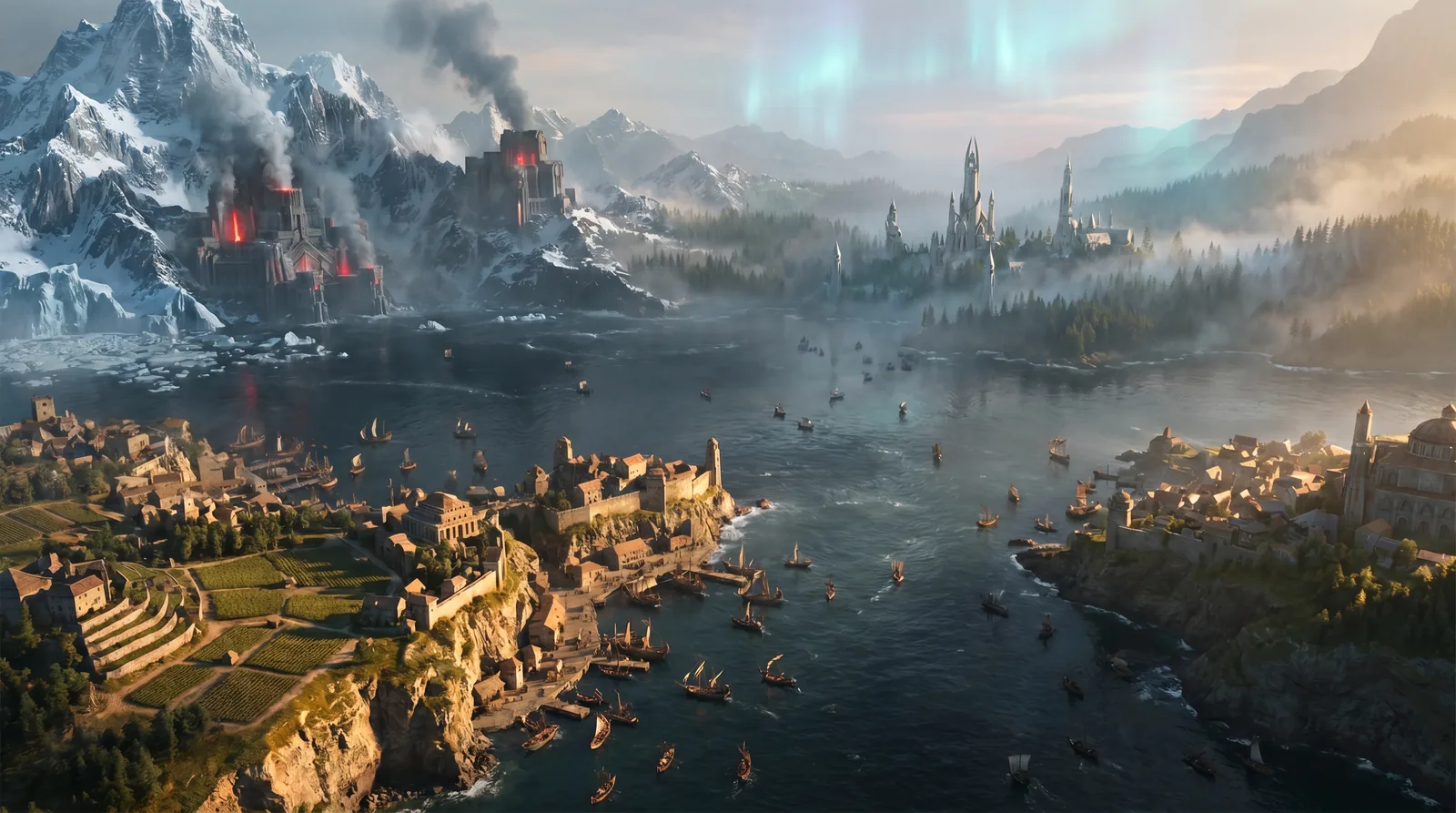
A World Lit by Fallen Gods
Mortals did not invent their faith to explain the thunder. In Kworgale, the gods were seen — known to have once been something older still, known to have chosen what they became, and known, in the end, to have failed. The great catastrophe that closed their age is not a myth argued over by priests; it is written into ruined cities, poisoned valleys, and a calendar that counts every year from the moment the world nearly ended. Belief here is less about proving the gods exist than about deciding what is owed to gods who saved their children and damned them in the same breath.
The Shape of the Land
The known world is the continent of Kworgalya and the seas around it. Along its southern and eastern coasts dwell the three great peoples of humankind, fractious and brilliant; on the cold northeastern shores, the long-lived elves keep their memories and their silences; and in the iron-hearted northwest, the immortal dwarves tend their forges and their lineages. Between them lie the wild interior, the haunted ruins of the old age, and the territories of older, stranger things that were here before any of them. The peoples of Kworgale are bound by shared origin and divided by everything else — language, faith, and the long grudges of a broken world.
The Age We Live In
It is the year 1337 DS — thirteen centuries and more since the cataclysm that the world calls the Deity's Sacrifice. The gods are gone from sight. In their absence the mortal races have rebuilt empires, raised rival faiths over the bones of the old one, and learned to wield the sorcerous arts the gods left behind. It is an age of theocracies and frost-courts, of pilgrim-roads and burning frontiers — and beneath its surface, old powers stir that most of the living have been content to forget.
This is the chronicle of how that world came to be: of the angels who chose mortality, the gods who ruled and ruined, the fire and ice that are older than them all, and the long history that brought Kworgale to the edge of where its story now begins.