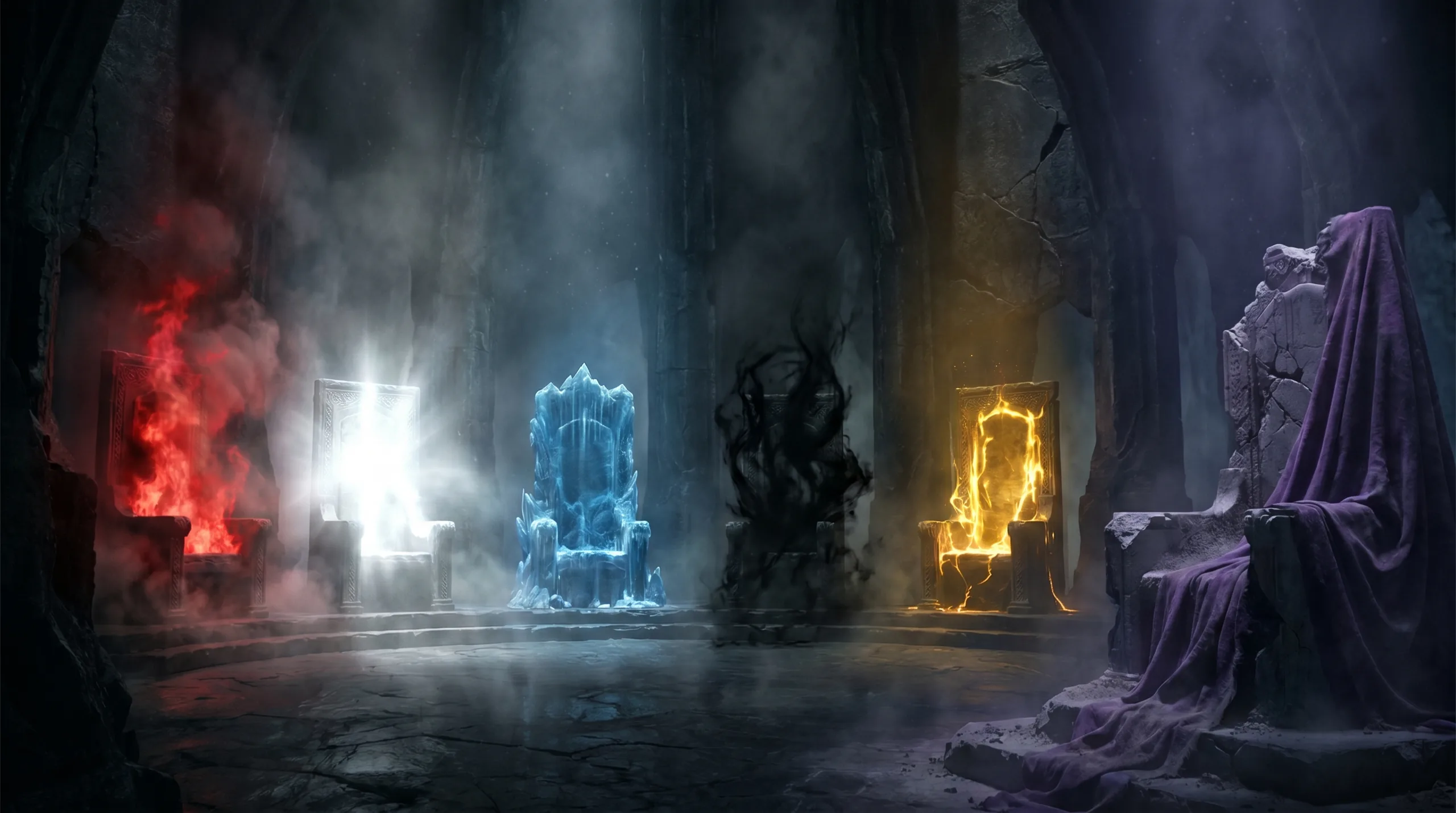
Before they were gods, they were exiles. The powers the world calls the Elder Elehath — the Elders — were once members of a deathless race of star-born beings who came to Kworgale fleeing the ruin of their own world. When the great majority of their kind laid down their immortality to be reborn as the mortal races, a handful refused the full surrender. They remained as they were, and to the new peoples of Kworgale they became, in all but name, gods.
"They never claimed to be divine. They never troubled to deny it."
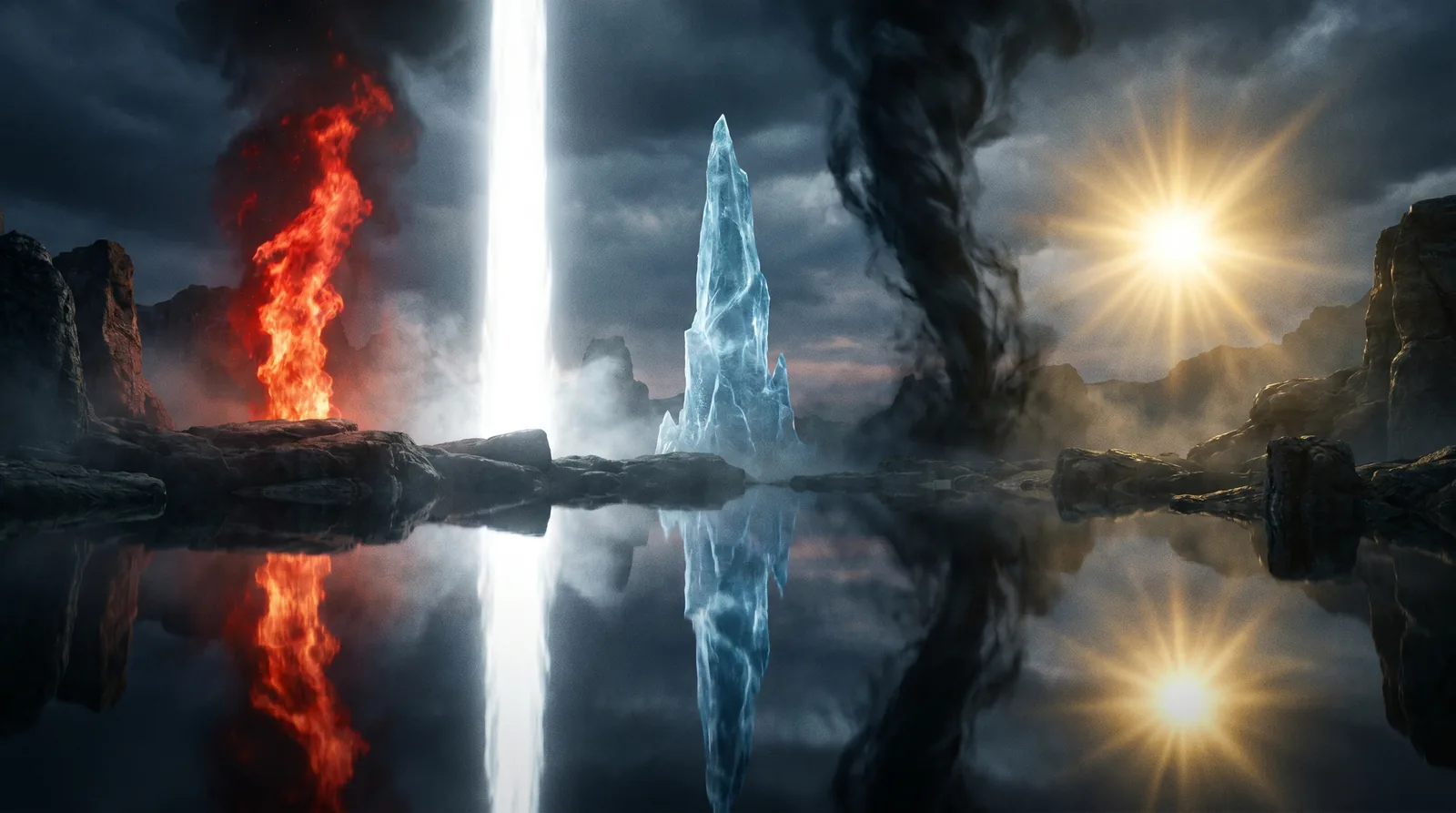
The Ruby — Red
Beautiful, golden-haired, and antler-crowned, the Ruby is the maker of humankind and the patron of fire, freedom, family, and beauty. Hers is the warmth of the hearth and the defiance of the chained; her faithful worship her still as a living goddess. Her full devotion is chronicled in The Religion of the Ruby.
The Warden — White
White-haired and grave, the Warden shaped the elves and is the keeper of preservation, memory, and the deep natural laws of sorcery. Where other gods demanded worship, the Warden asked only that nothing true be allowed to be forgotten. The elves revere him less as a god than as a remembered ancestor.
The Hammer — Blue
Bearded, white-maned, and mountain-strong, the Hammer forged the dwarves and the secrets of magical craft and construct-making. His creed is unity and shared burden: the conviction that nothing of worth is carried alone, and that the work of many hands outlasts the pride of one.
The Ancient Deity — Gold
Radiant and brown-haired, the Ancient Deity is the goddess of light, harmony, and faith. From her, centuries after her fall, the faith of Radiant Light would be born. She is remembered above all for the terrible thing she did to end the war among the gods — a sacrifice the calendar itself is named for.
The Ancient Devil — Black
Pale and raven-haired, sister to the Deity, the Ancient Devil is the goddess of strength, individual power, and the things the world names demons. For her crimes in the war of the gods she was sealed away beneath the earth — yet she is worshipped to this day by the Infernal Creed, who name her not a monster but a maker.
The Empty Throne
There is, the oldest texts insist, a sixth seat — the place that should have belonged to the Scholar, god of innovation and the boundless questioning of the world. But no Scholar ever took the throne. The office stands forever vacant, and its absence is its own kind of power: the great schema of knowledge-networks, Syndesia, is attributed to a god who never came to be. What the world lost in that empty chair, the wise do not like to say.
Together, these were the powers that ruled Kworgale for fifteen centuries — and then, in the Conflagration and the Deity's Sacrifice, tore that rule apart.