
The Grieving Flame
Before there were kingdoms to fear her, before the first hymn was ever raised to hold her still, there was Vessalyndra of the Ashen Sky — and she was sovereign. She is an Ancient Dragon, one of the Eidolons: the half-divine beasts who walked the dawn of the world as the living avatars of its eldest races. Three thousand four hundred years have passed across her, and every one of them is written somewhere on her body in scar and scale. She is not a queen, nor a monster, nor a god, though she has been named all three. She is grief given a shape large enough to hold it.
"I remember… I remember when the sky was mine."
Sovereign of the Ashen Sky
She was born among the Primordial Peaks, in the age before the Conflagration, when dragons still ruled their own stone and bent the knee to no younger power. There she held her court, a matriarch among matriarchs. She had a mate. She had a brood — hatchlings curled warm against her scales in the volcanic dark. She had, by every account that survives, the one thing this bleeding age would most envy: peace, and a domain, and a family that was wholly her own.
The Day the Sky Fell
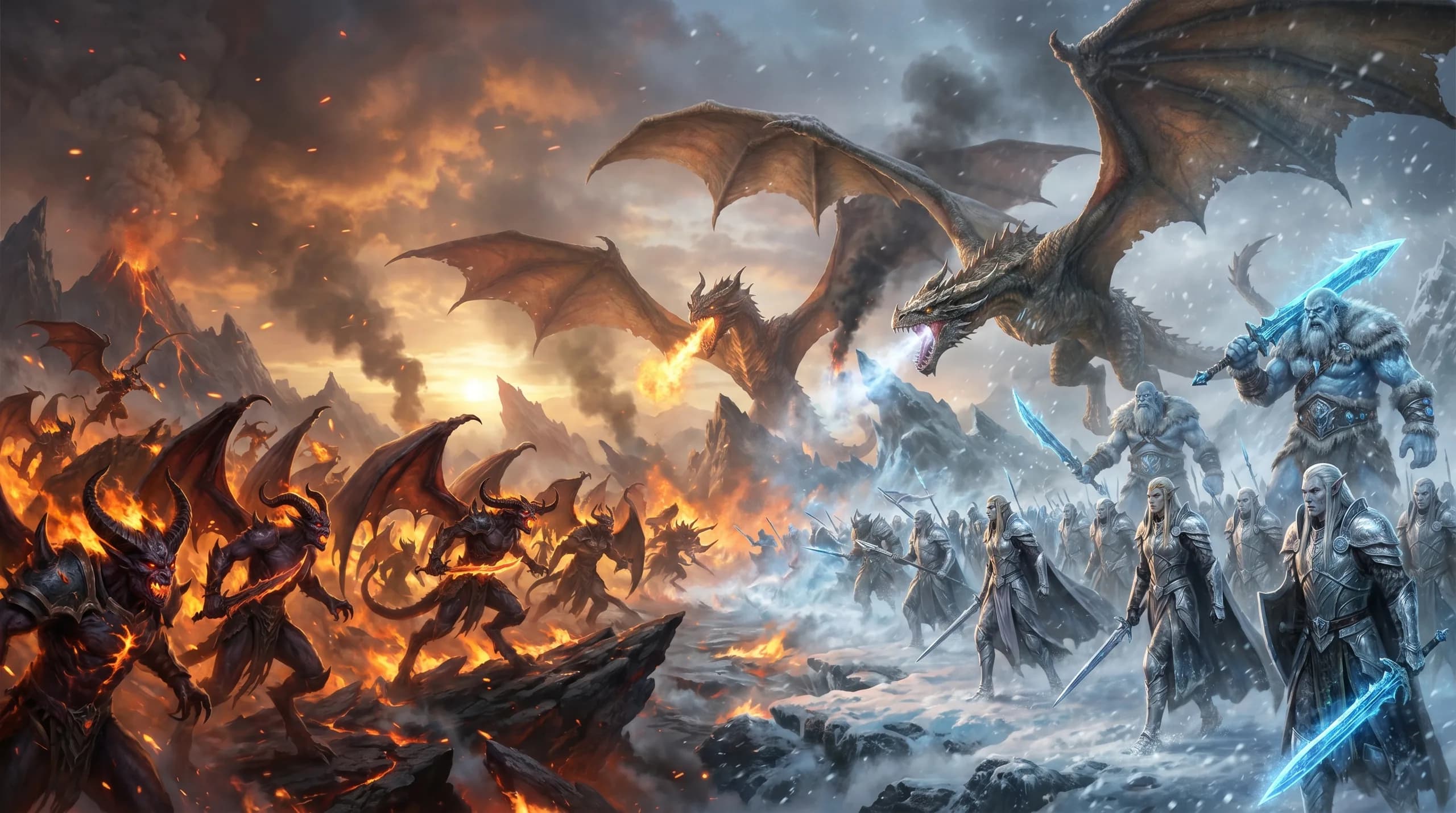
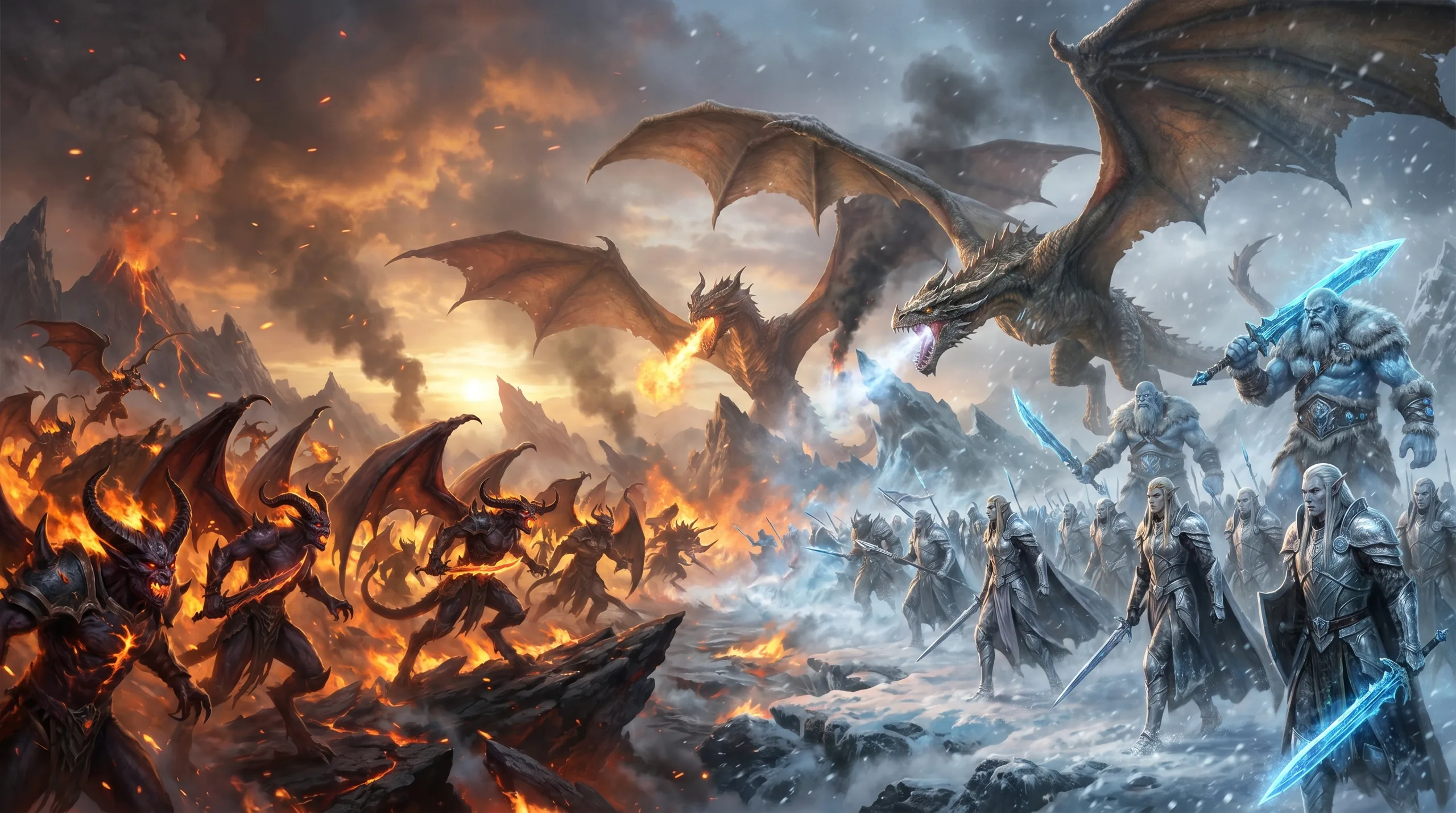
The cataclysm the world remembers as the Conflagration began as a quarrel between two of the Elder Elehath — the Ancient Devil, who would save the world by ruling it, and the Warden, who would not let her. Their war spilled across the map and, in time, across the borders of Vessalyndra's domain, where neither demon-fire nor frost had any right to tread.
Her kin did not stop to ask whose banner the trespassers carried. Demons and elves, furnace and frost — to the dragons it was all the same insult, and they rose to answer it. For one terrible moment, wings older than either sibling threatened to crush the whole war beneath them. And so the Ancient Devil, rather than be denied, turned her fire upon the dragons themselves.
What the Fire Left
What followed has no gentler name than the Dragon Kin Annihilation. The Devil's host fell upon Vessalyndra's line and did not stop — not for mercy, not for parley, not for the hatchlings. When the ash finally settled, of all her ancient kin only Vessalyndra still drew breath.
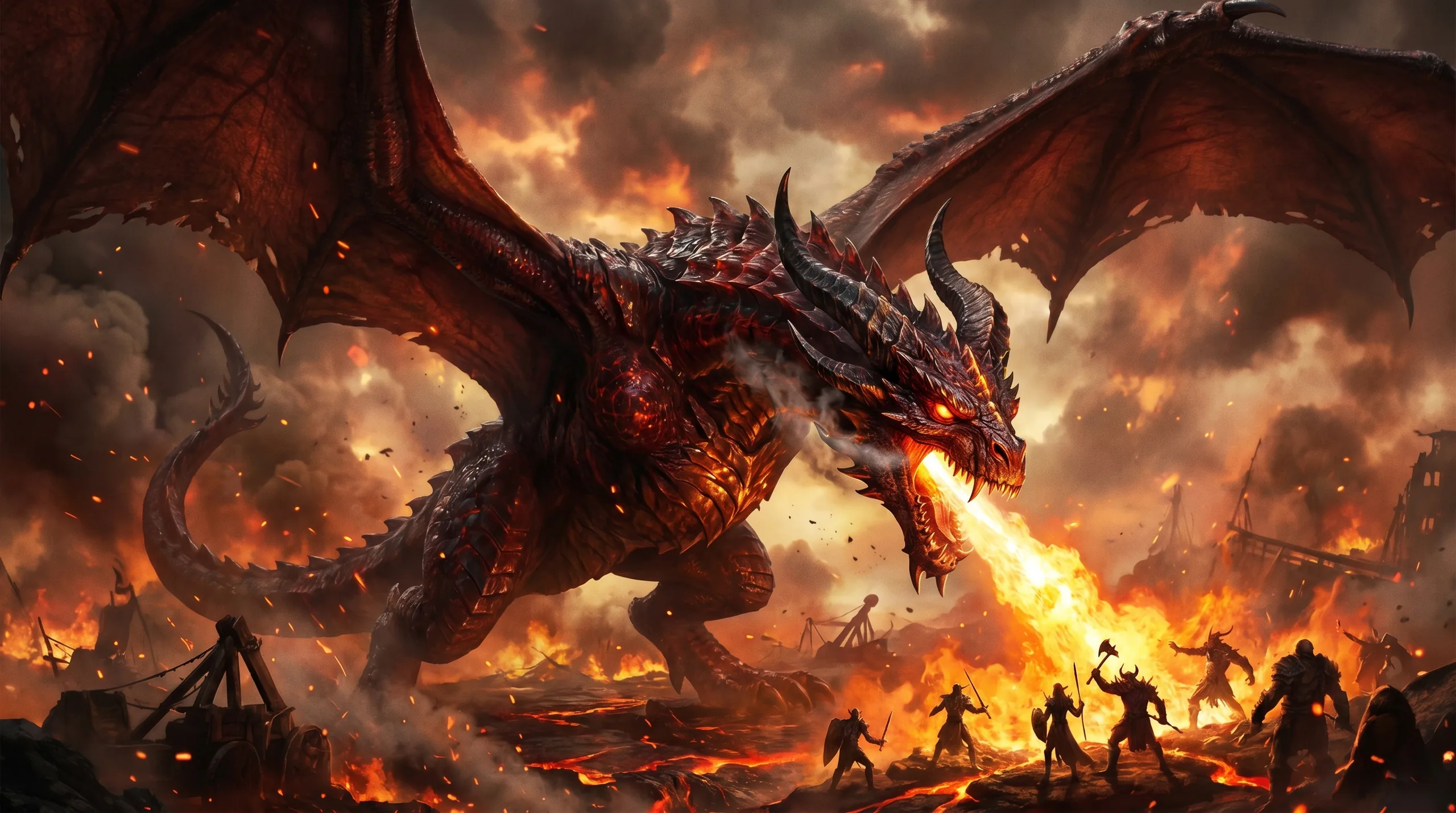
Grief, in a being that old, is not an emotion. It is a weather pattern. It is a geological event. She did not weigh the sides or count the cost; she turned upon both armies the full fury of a mother with nothing left to lose. She burned them. She burned the land. And she would — of this the records have no doubt — have burned the whole young world to cinders, had anything in it been strong enough to stop her.
The Mercy of the Warden
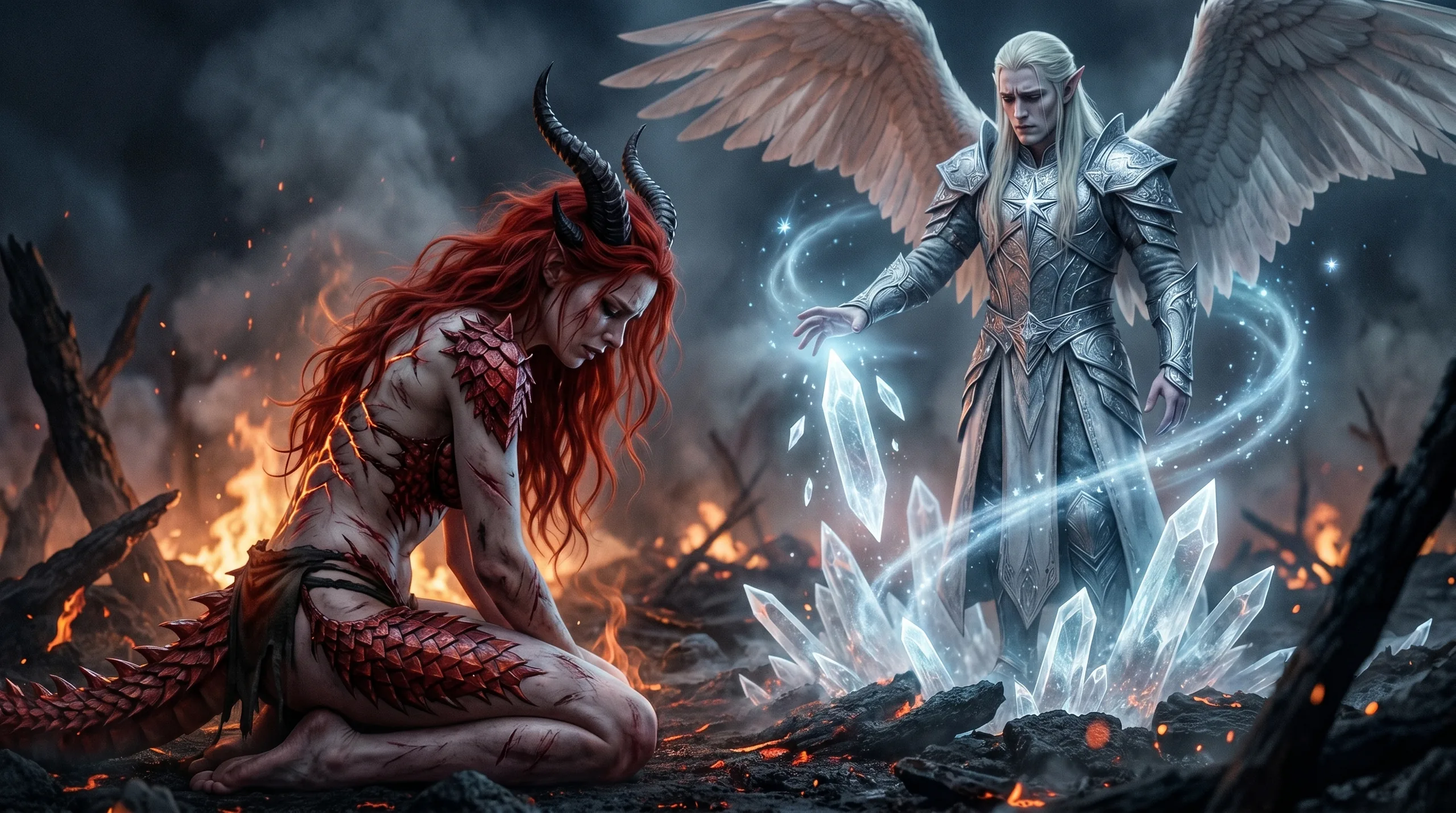
Something was. Of the two siblings whose war had unmade her, it was the Warden who came to her — and he did not come to kill. He understood, the chronicles suggest, that she was not the enemy but the wound the war had torn open. He spent everything he had against her: frost to slow the inferno, starlight to hold her gaze, and words in a tongue now lost, naming her grief back to her until at last her fire guttered low enough to be touched.
And then, because the world still needed saving and he had run out of kinder choices, he sealed her — not in chains, but in resonant crystal, binding her to the very fracture in reality that her grief had torn, and making of her a lock upon the door she herself had opened.
"He named my children to me, one by one, until I could not breathe for the weight of them. That is how he caught me. Not with frost — with memory."
The Living Seal
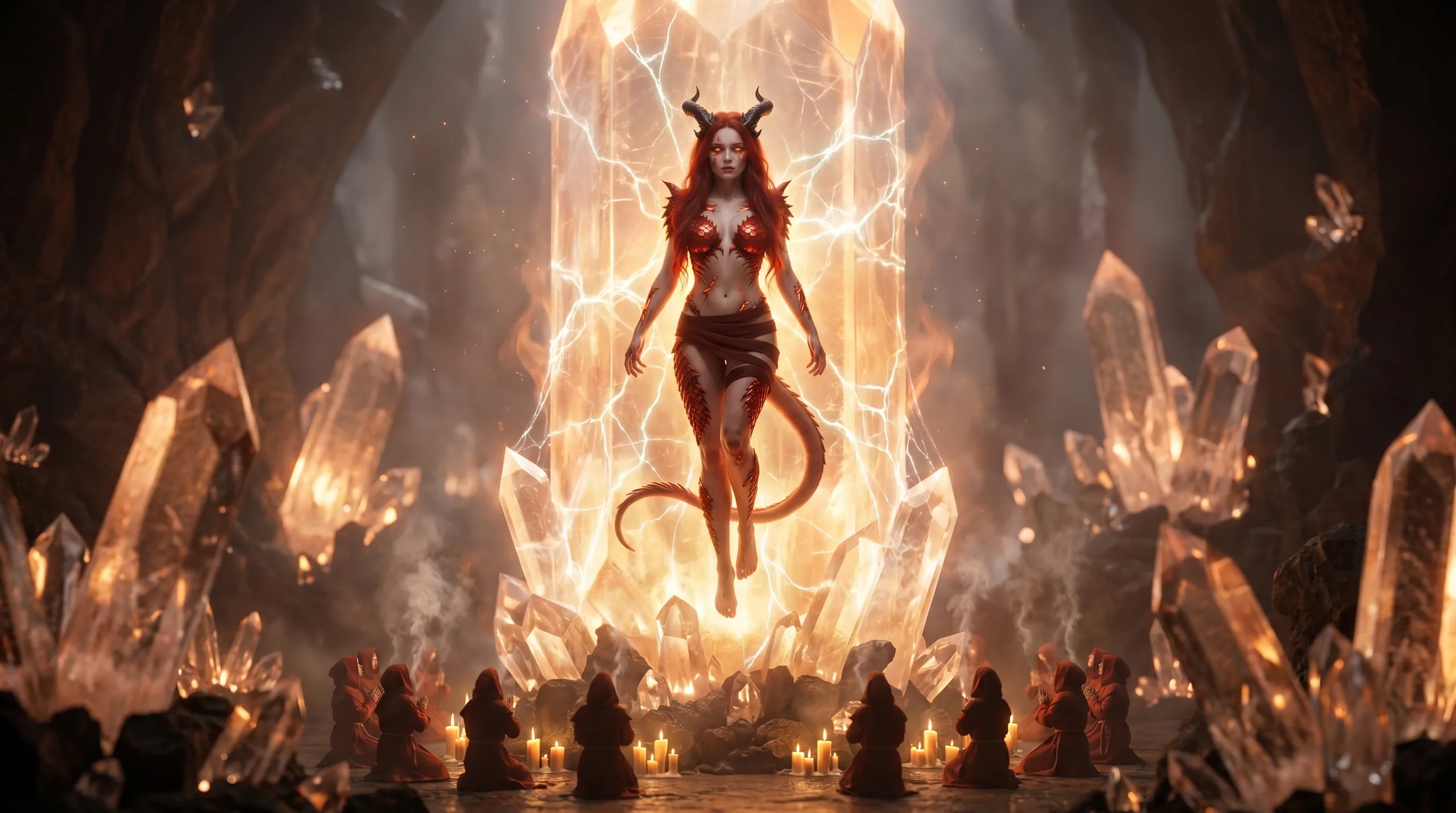
So Vessalyndra became the first and greatest of the Dragon Seals — that hidden lattice of ancient dragons bound into the fractures of the world, each a living keystone whose endless suffering holds reality shut against the Veil and the Nightmare things that strain against it from the far side. Hers is no metaphor. She is, quite literally, part of the architecture that keeps the sky from coming apart.
Over her prison rose Emberfall Monastery, raised upon the bones of a forgotten city to house her crystal and tend her with unending hymns of resonance; generations of fire-monks have lived and died sustaining the song that keeps her stable. And through all those centuries she has hung in the liminal dark between worlds, gnawed by Veil pressure — the migraines, the sensory distortions, the slow unravelling of dragon-self from humanoid-self — paying, without consent and without end, for a war she never started.
Two Shapes of One Sorrow
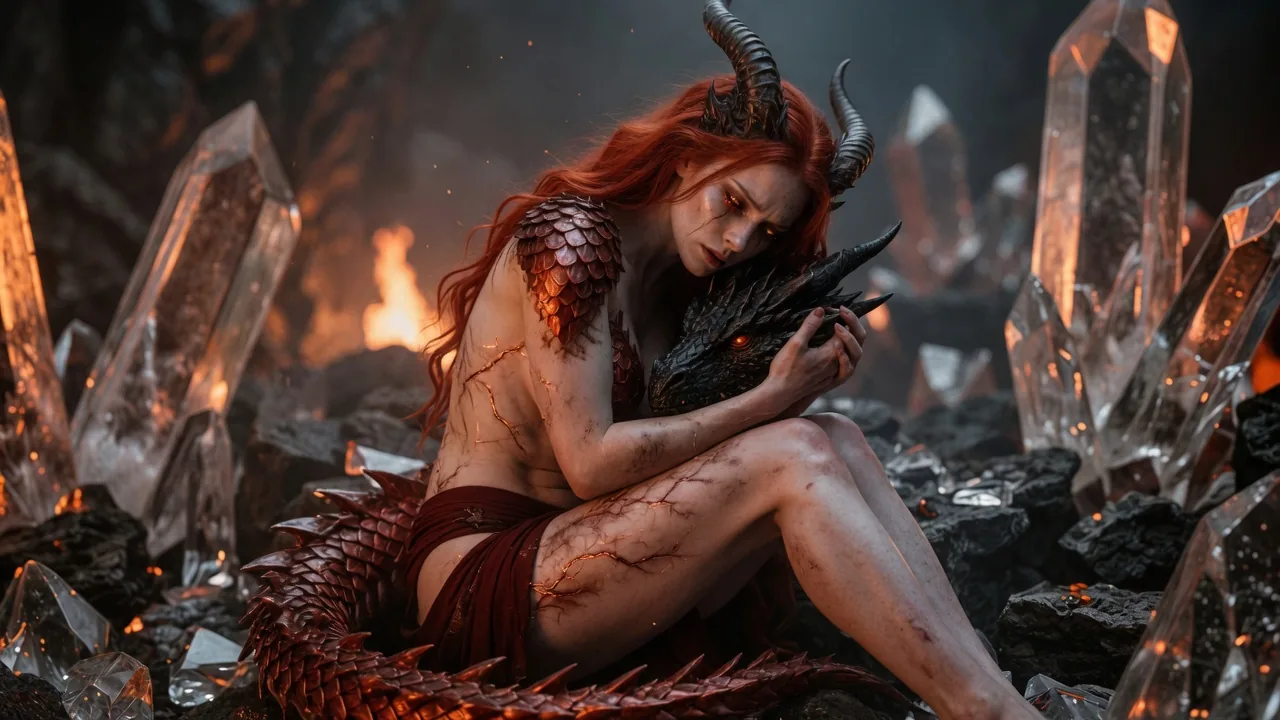
In her humanoid shape she stands well over six feet, powerfully built and unhurried, pale ivory skin half-claimed by glossy ember-red scale-plating across her shoulders, breast and thighs — armor she was born wearing rather than anything she chose. Curved obsidian horns crown her; she needs no other. Molten gold eyes, veined with red, watch from beneath a heavy fall of wild crimson hair, and a long blade-ridged tail moves behind her with a will of its own. Burn scars cross her ribs; fine fractures of crystalline sheen run the length of her spine where the Seal has marked her. Even in stillness, the air around her shivers with heat.
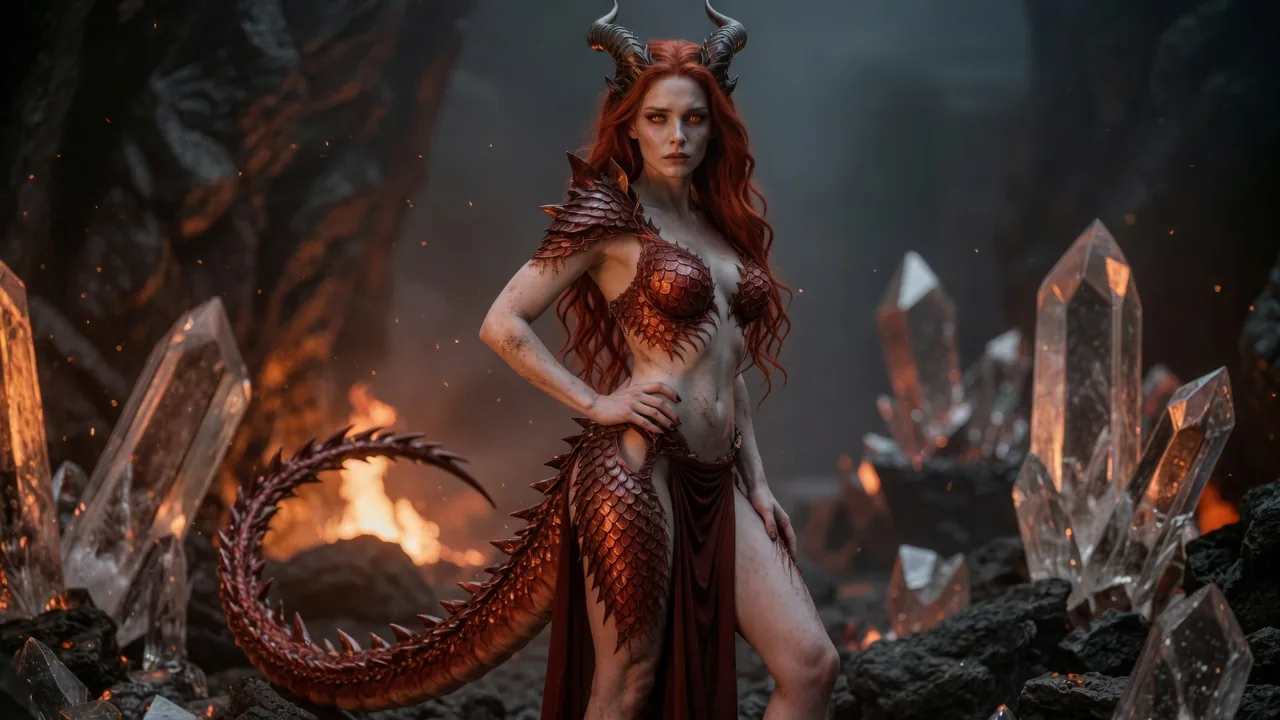
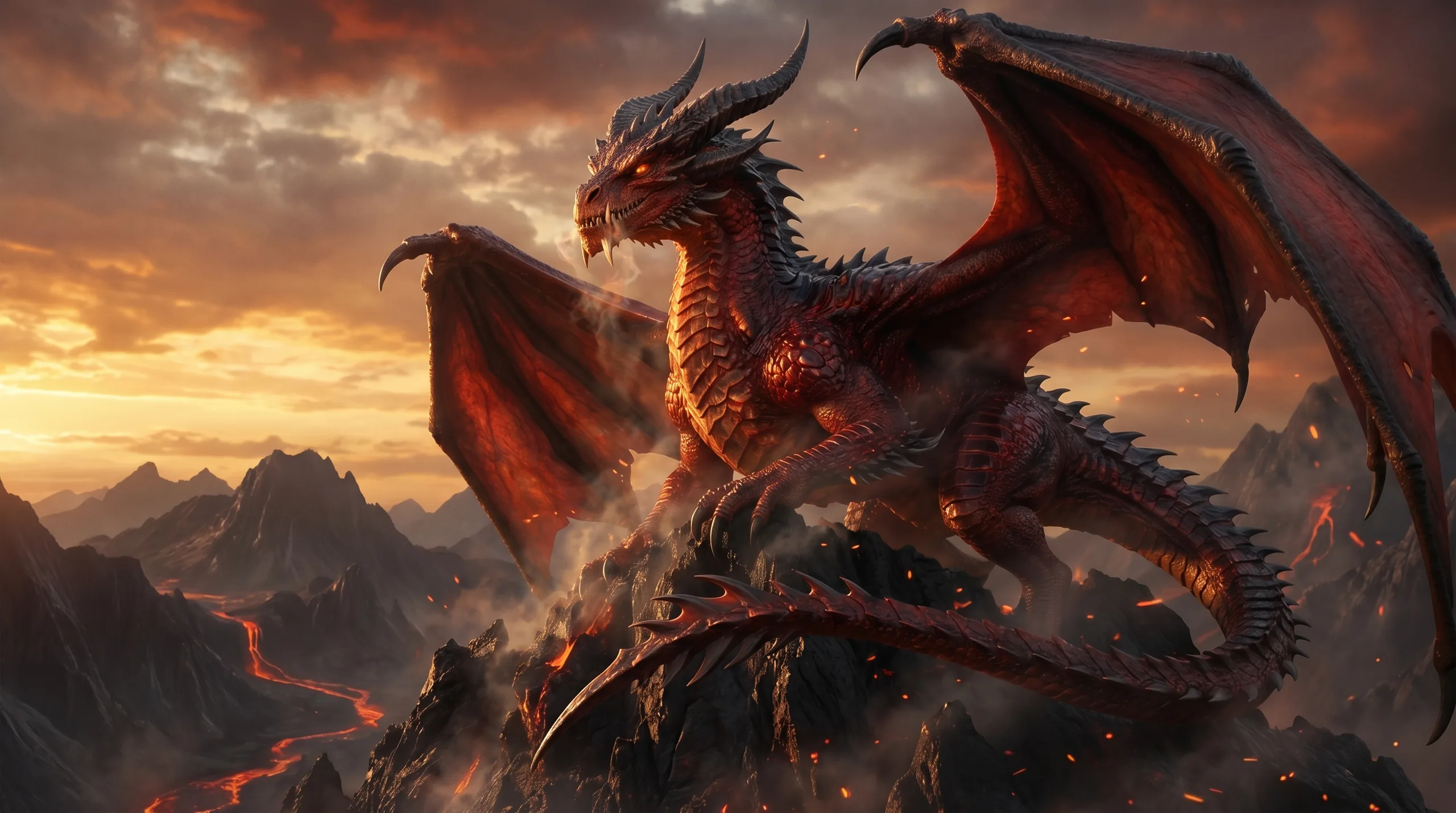
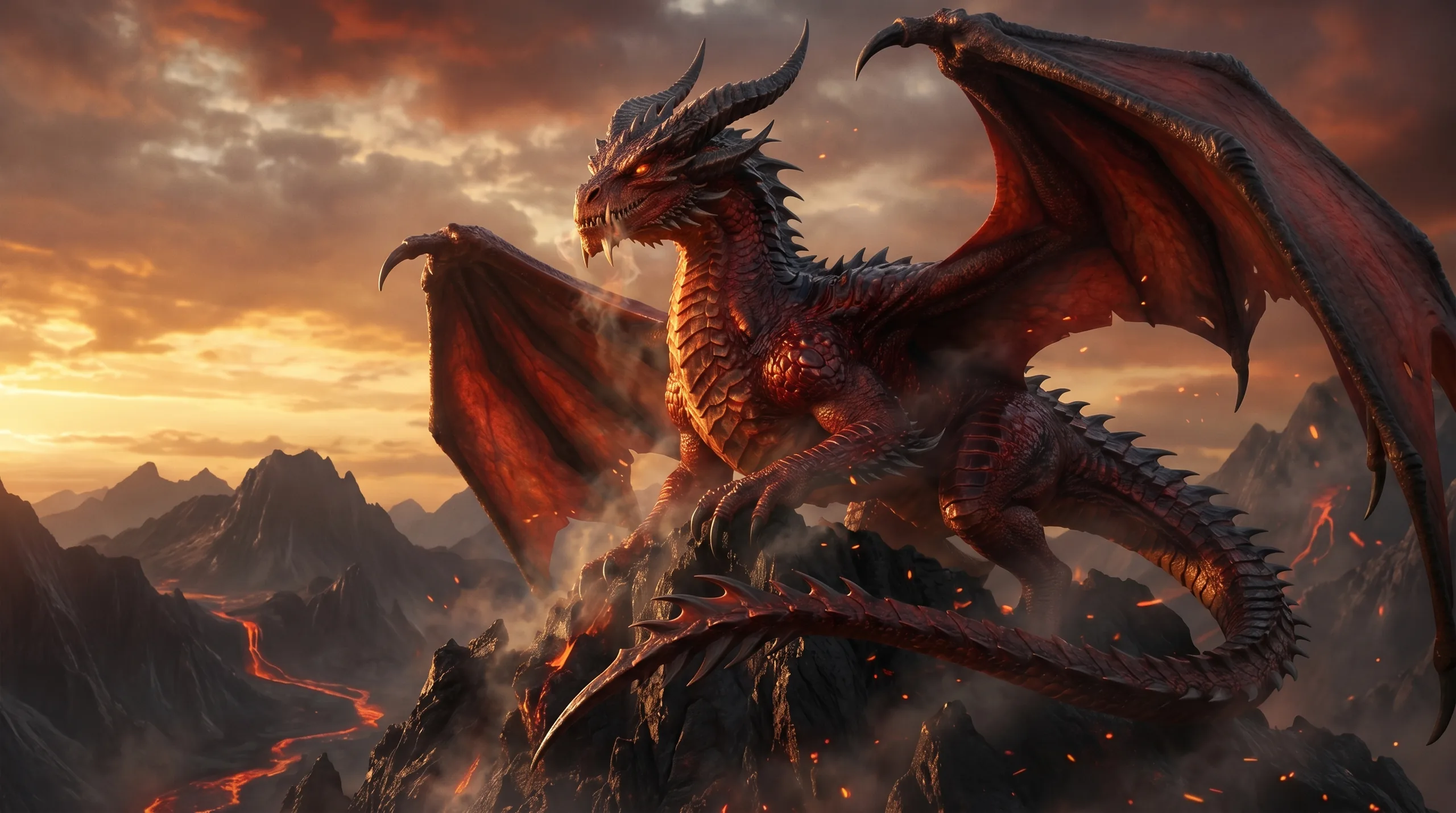
But this is only the smaller of her shapes. Let her grief or her fury slip its leash, and she unfolds into her true form — a colossal Ancient Dragon of the elder world, wings that blot out the sky, a sovereign predator who once ruled the Ashen Sky and has never quite forgotten how. The boundary between the two is not always easy to keep; emotion frays it, and not always when she would wish.

I Remember
Beneath all that ruined power, she is profoundly alone. She speaks little, and when she does it is in fragments of ancient draconic and archaic High Tongue, a thunderous undertone beneath the words — "like tectonic plates," one chronicler wrote, "remembering that they were once music." Between her moments of lucidity she hums a low draconic lullaby for hatchlings three thousand years dead. She keeps, when she is allowed, a single charred scale of her brood and a shard of her own shattered prison clutched close; and she begins so many sentences with the same two words that the monks who tend her have made a prayer of them: I remember.
She is not a villain. She is not a hero. She is grief made structural — a mother who lost everything, lost herself once, and now holds the world together with the very endurance that should, by every right, have broken her. Whether the song above her can hold forever, and what wakes if it ever falters, is a question the wise have long since learned not to ask aloud.
"Grief is a chain without end. I should know — I am the anchor at the bottom of it."