← All Races
The Suvanar
The Suvanar
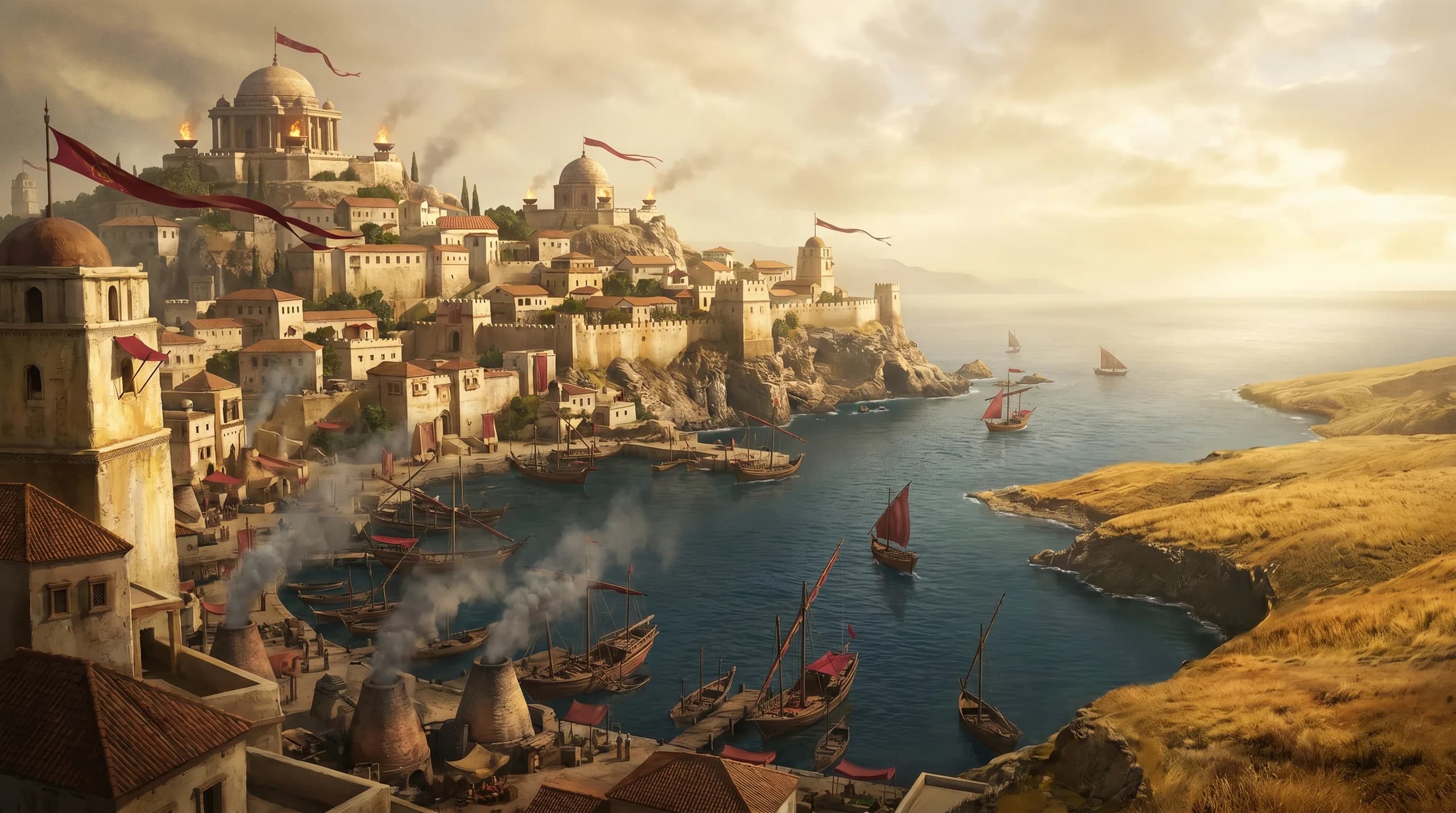
On the southeastern coast of Kworgalya, where golden grassland runs down to a bright blue sea, the Suvanar build their cities white as bone and crown them with red-tiled roofs and fire-temple domes. They are a warm people, loud at the table and grave at the altar, and they will tell you — without modesty, for modesty is not among their virtues — that no people of the Elekoi loves the Ruby as they love her. They are the Ruby-hearth folk, the keepers of the first flame, and they have made their whole way of life a long act of devotion.
Hearth, blood, and the free flame, the Suvanar say, and in those five words they hold the whole of who they are.
Children of the Renewal
Like all the Elekoi, the Suvanar trace their blood back to the Elehath — the winged celestials who came down to young Kworgale in crystal ships and chose, in the Great Renewal, to set aside their immortal pasts and be born again as mortals. The Suvanar do not grieve this trade as the elves are said to. To them the Renewal was a gift, not a loss: to be born, to burn briefly and brightly, to die and pass the flame to one's children — this, they hold, is the truest shape of life, and the shape the Ruby herself blessed when she walked among them.
For five centuries the peoples lived together in the Ur-City of Vadesh. Then came the Fivefold Fleets, the great seaborne migration that scattered the Elekoi across the continent. The forebears of the Suvanar turned their prows toward the warm southeast and made landfall on a coast of sun and salt and tall grass — and of teeth, for the Beasts already haunted the forests beyond. The Suvanar did not retreat. They planted spears in the earth, raised walls, and made the frontier their cradle. Everything they became, they became with their backs to the hearth and their faces to the dark treeline.
The Sun-Touched Coast
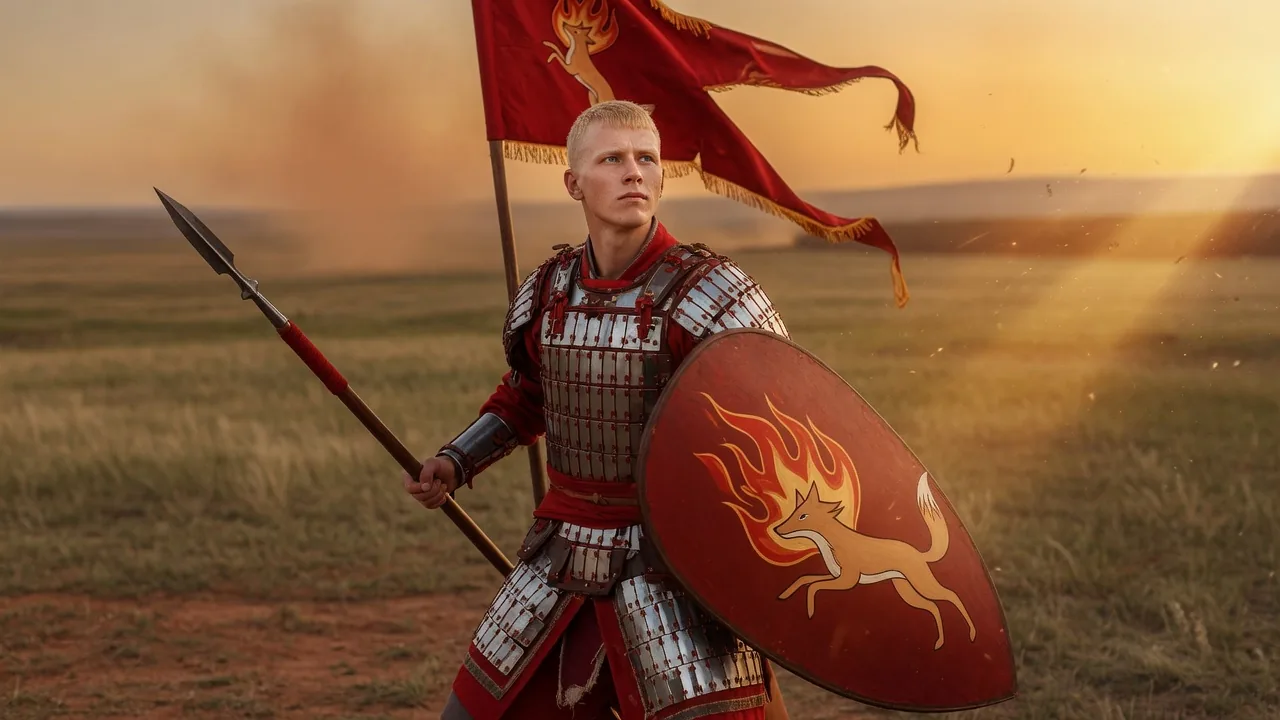
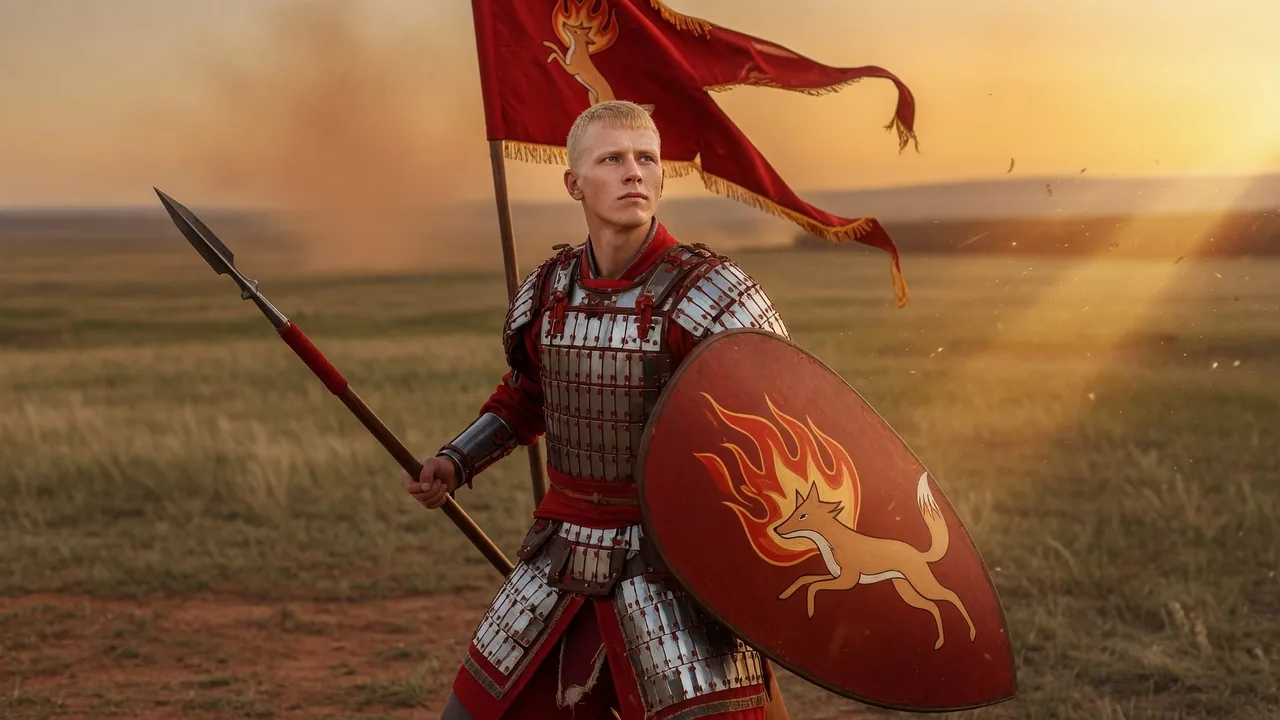
The Suvanar are, for the most part, a fair people — fair-skinned and sun-warmed, fair- or blond-haired, bright of eye in blue or amber. They carry themselves with a martial straightness even at the loom or the kiln, for nearly every Suvanar household has sent sons and daughters to the legions, and the bearing of the soldier lingers in the bones of the whole people.
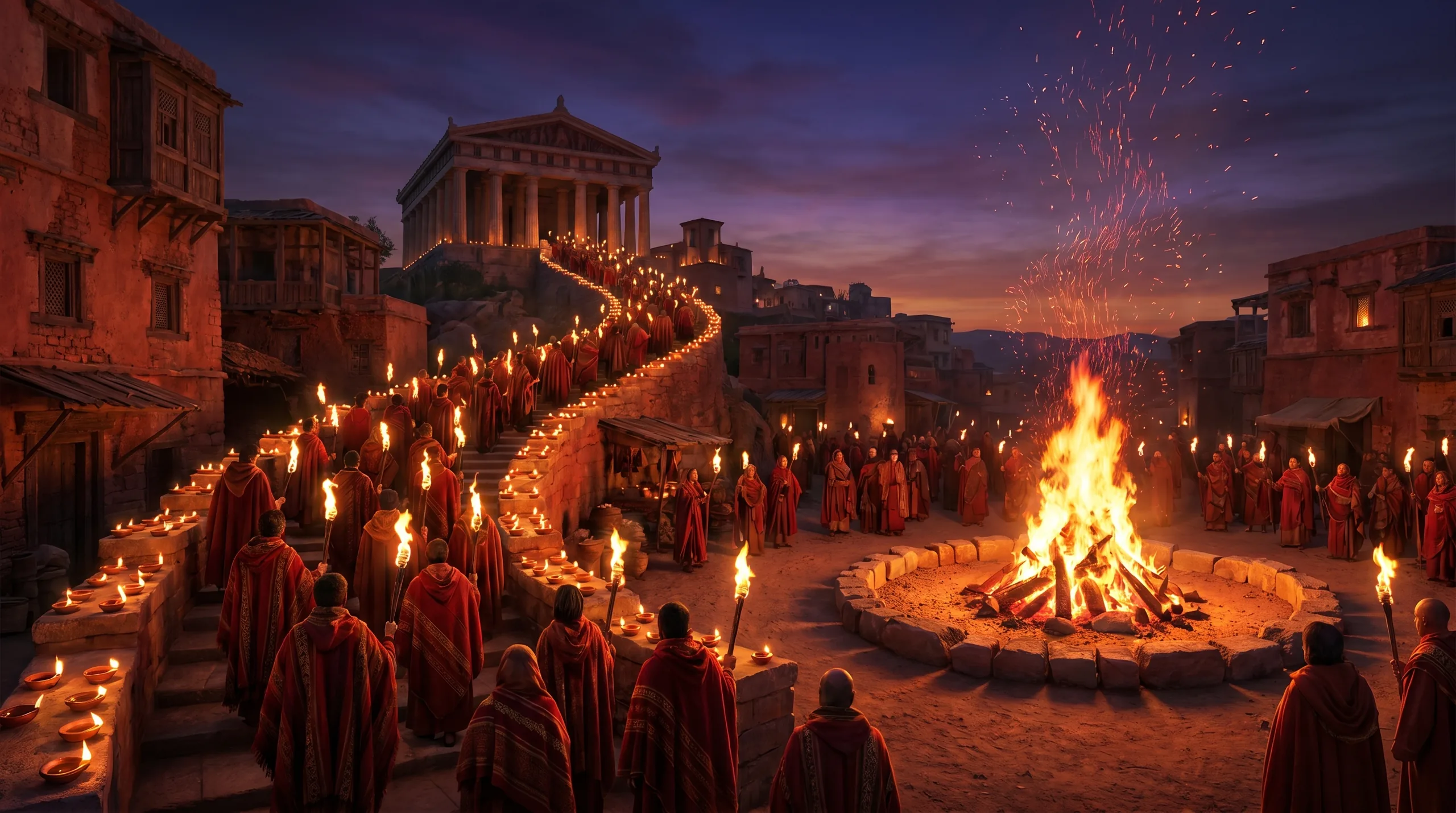
Their homeland is a land of contrasts made beautiful: lime-plastered cities glowing white-gold above a sapphire sea, harbours thick with masts and kiln-smoke, terraced grain-fields rolling gold into the haze. Velastra, the First Light of the Ruby, is the oldest of their cities and the spiritual heart of the people, where the great temples stand. Tirbasos, the Scorchmother's Anvil, is its iron fist — the forge-city whose legions are the best-drilled heavy infantry on the southern coast. Velastra is the mind and the flame, the saying goes, and Tirbasos is the steel.
Hearth, Kin, and the Free Flame
To understand the Suvanar, understand the two gifts they believe the Ruby pressed into their blood: the love of family and the love of freedom. These are not separate loves to them but one flame with two tongues. A Suvanar will defend the hearth — the family, the bloodline, the named ancestors whose banners hang in the hall — with a ferocity that startles outsiders. And a Suvanar will not be ruled past the point of dignity; the free citizen, they hold, is the only kind of person worth being, and a tyrant is a fire that has forgotten it is meant to warm and not to consume.
So their soldiers are citizens first, called to the legions in season and returned to plough and forge in peace. They are builders and warriors in the same hands — the men who raise the aqueduct in spring stand the wall in autumn. Their discipline is a thing of pride, drilled and dressed and ferociously kept, but it is the discipline of free folk who have chosen the line, not slaves driven to it. We hold the line, the legions of Tirbasos say, because behind it is home.
The Klerosia in the Blood
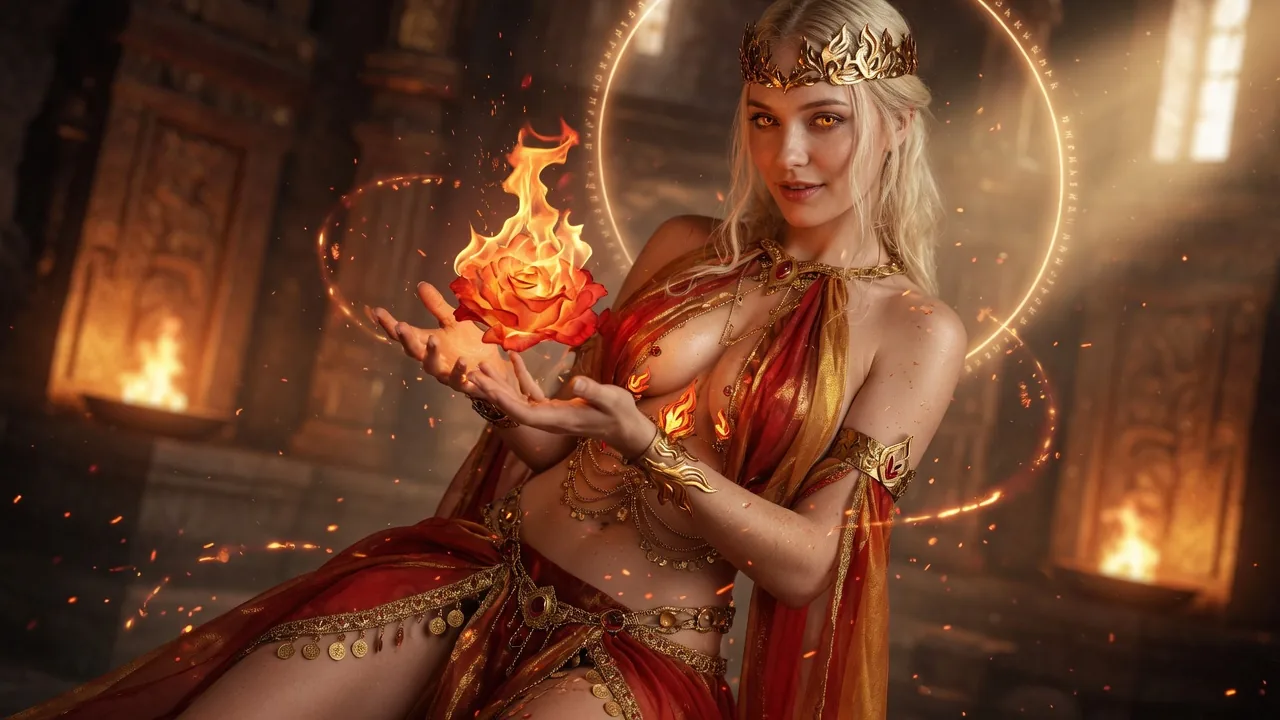
The Suvanar are a fire-aligned people, and through them runs the Klerosia bloodline schema — the great pattern of magic the Ruby gifted to humankind. Where it runs strongest, it gathers into the proud Klerokon lineages: families who carry, generation upon generation, an inherited reservoir of thymara passed down the blood like an heirloom too bright to spend all at once. A Klerokon child is born already an ember; a Klerokon house is a hearth that has been burning for a thousand years.
This is why bloodline matters so to the Suvanar, why genealogies are recited like prayers and marriages weighed like alliances of fire. To wed well is to braid two flames. To dishonour the line is to let a sacred hearth go cold. The Klerokon nobility wear their inheritance openly — flame-gold circlets, regalia the colour of embers and blood — and the greatest among them can call a blooming rose of living fire into open hands as easily as another might light a lamp.
The Many Faces of the Flame
This coast is the homeland of the Ruby-as-Divine, the heart of the human faith. Here the goddess is worshipped not as a distant Elder but as a living mother of fire, honoured in many faces. She is the gentle hearth-mother of harvest and home, who blesses the bread and the cradle and the safe return. And she is the Scorchmother, the vengeful flame of purification and righteous destruction, whose anger is reserved for the wicked and the Beast.
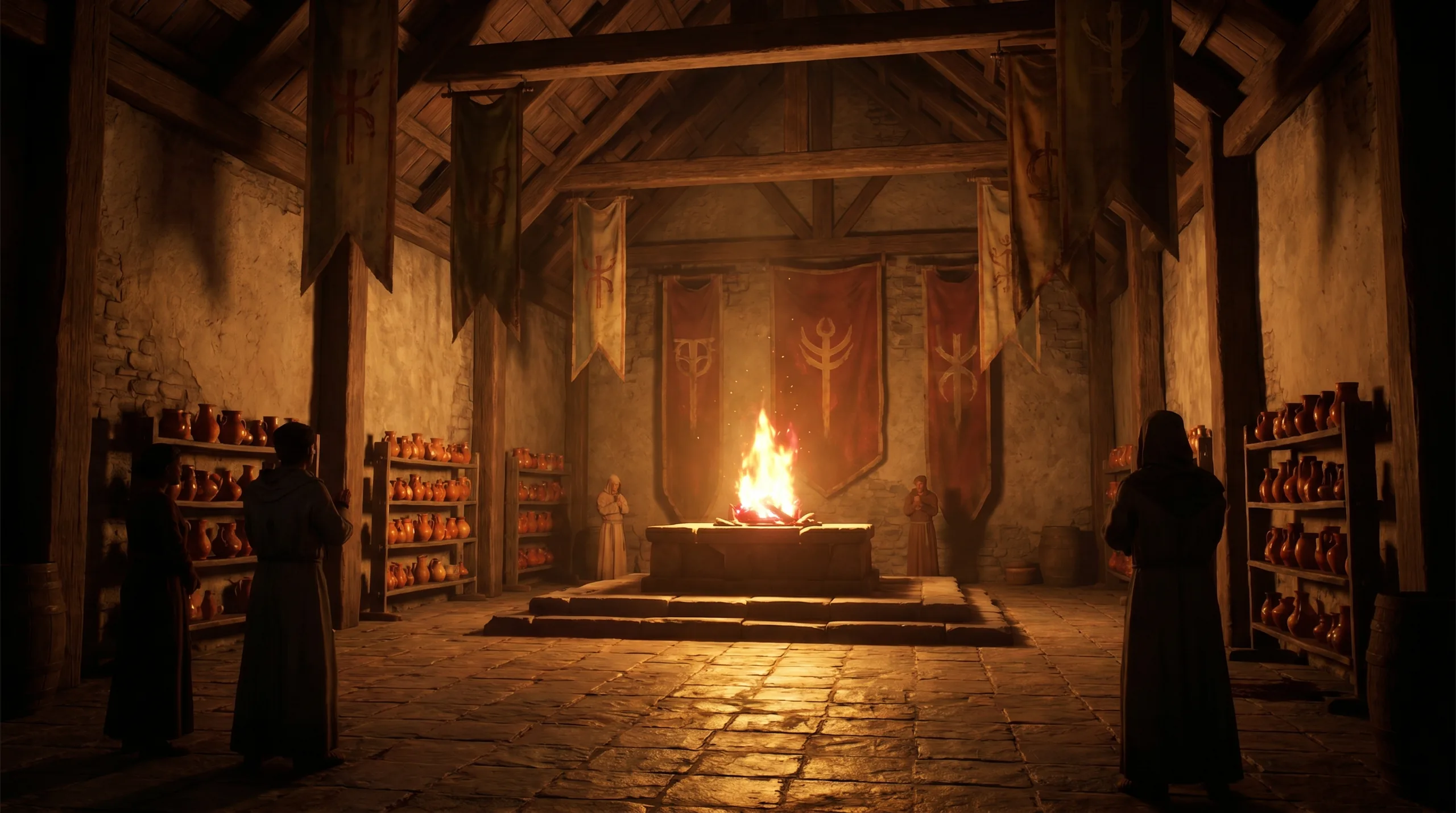
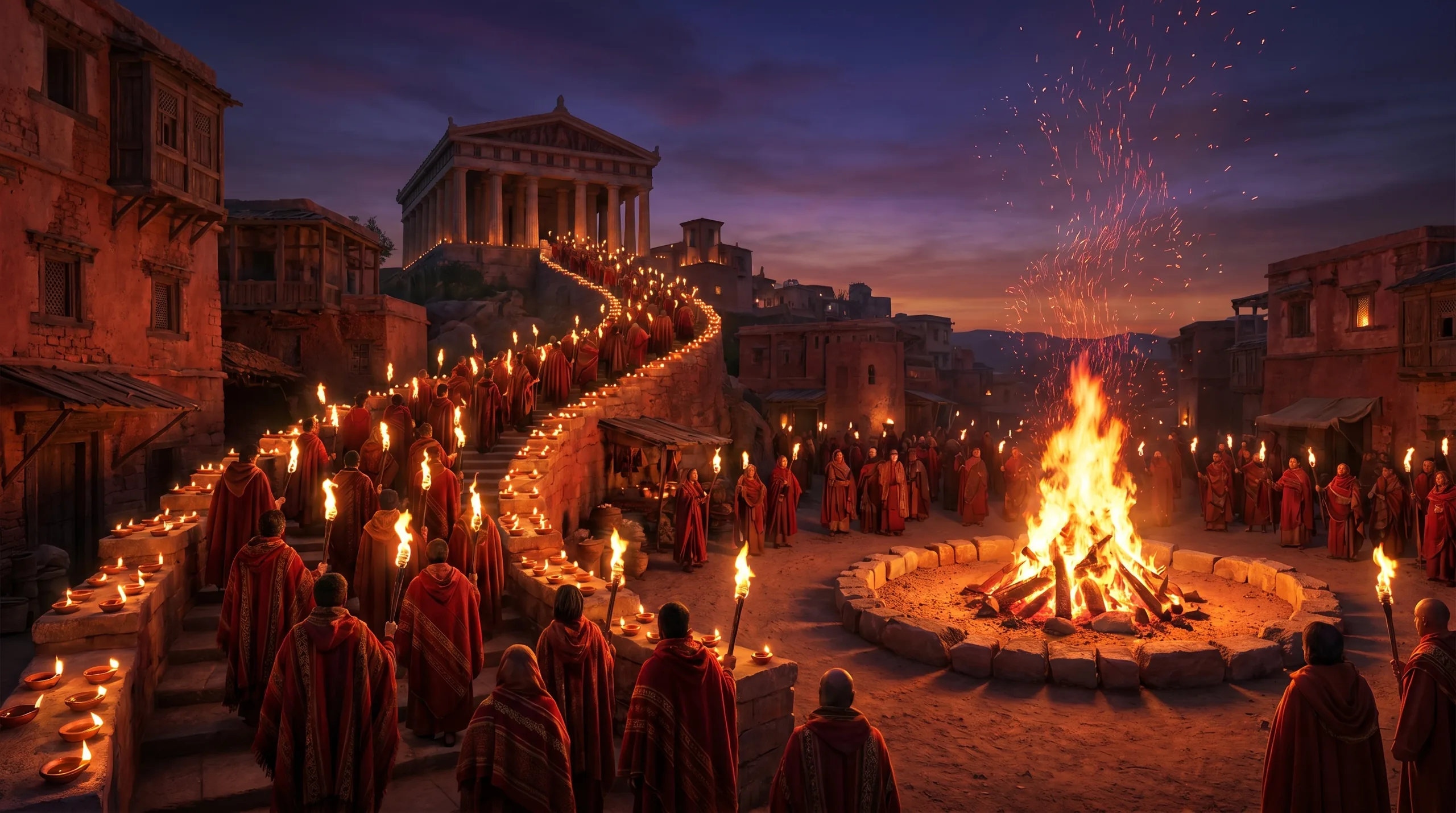
Suvanar devotion is loud, warm, and unashamed. They keep her with torchlight processions that wind up the temple hills at dusk, with flame-glazed clay votives stacked at every household shrine, with ceremonial burnings in which old grief and old debt are given to the fire and let go. Their clergy tend a sacred living flame that is never permitted to die, for a flame that goes out is an omen no Suvanar will speak of twice.
The flame that warms you, the priestesses teach, is the same flame that will burn the world clean. To the Suvanar this is not a contradiction but the whole truth of the Ruby — and the whole truth, too, of themselves: a people who would build you a home and raise you a feast, and who would, if you threatened the hearth, become a fire with no mercy left in it at all.