← All Races
The Ashanar
The Ashanar
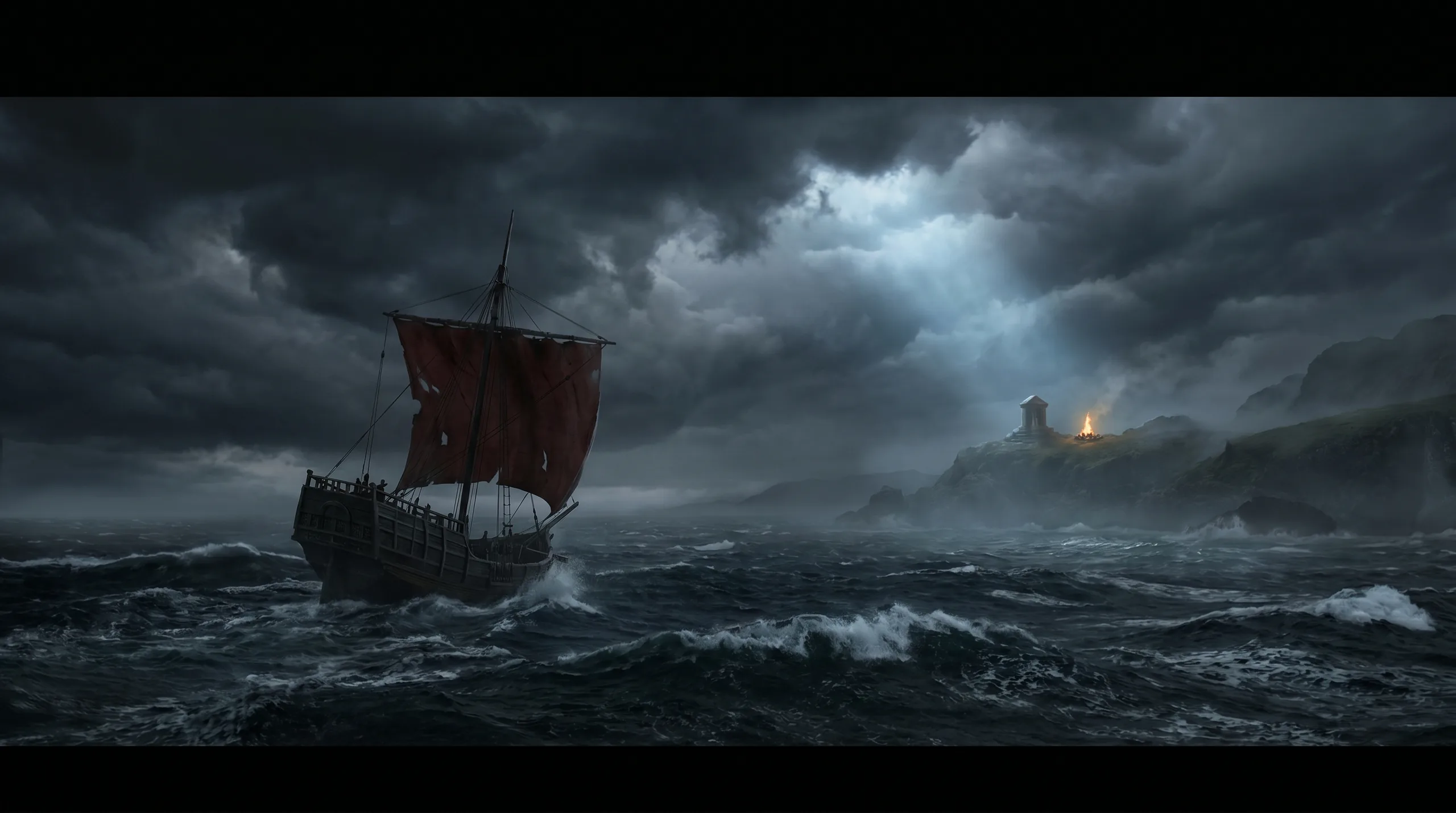
Where the continent of Kworgalya runs out of mountains and mercy, the land breaks into black-sand shores and cliffs gnawed grey by an ocean that never sleeps. This is the southwestern coast, the edge of the known world, and these are the Ashanar — the people of the far horizon. They were not driven here; they came hungry, and they stayed because the windward shore asks a price most peoples will not pay and the Ashanar pay it gladly. Theirs is a country of ash and ember and storm, of crimson sails leaning into a black sky, of harbours that cling to the rock like barnacles. No king's writ has ever truly reached them. What binds them instead is older and crueller and cleaner: the oath, the covenant, the word given and the word kept.
The horizon owes nothing — swear, and sail.
Children of the Renewal, Riders of the Fleets
Like all the Elekoi — humans, elves, and dwarves alike — the Ashanar descend from the Elehath, the winged celestials who fled a lost world and came down to young Kworgale in crystal ships. In the Great Renewal, two thousand years gone, most of those immortals laid aside their old memory to be born again as mortals, and for five centuries all the peoples lived together in the Ur-City of Vadesh. Then came the Fivefold Fleets, the great seaborne migration that scattered the Elekoi across the continent.
Where other humans hugged the gentler coasts, a harder strain pressed on past them, chasing the storm-line to the southwest because every other fleet had turned back. The Ashanar tell it without shame: their forebears were the restless, the gamblers, the ones who could not abide a settled hearth. They beached their hulls on ashen sand under a sky the colour of an old bruise, looked at a land that promised nothing, and swore the first covenant among themselves — to hold to one another where no law would hold them. From that oath, a people.
Ash, Ember, and the Far Shore
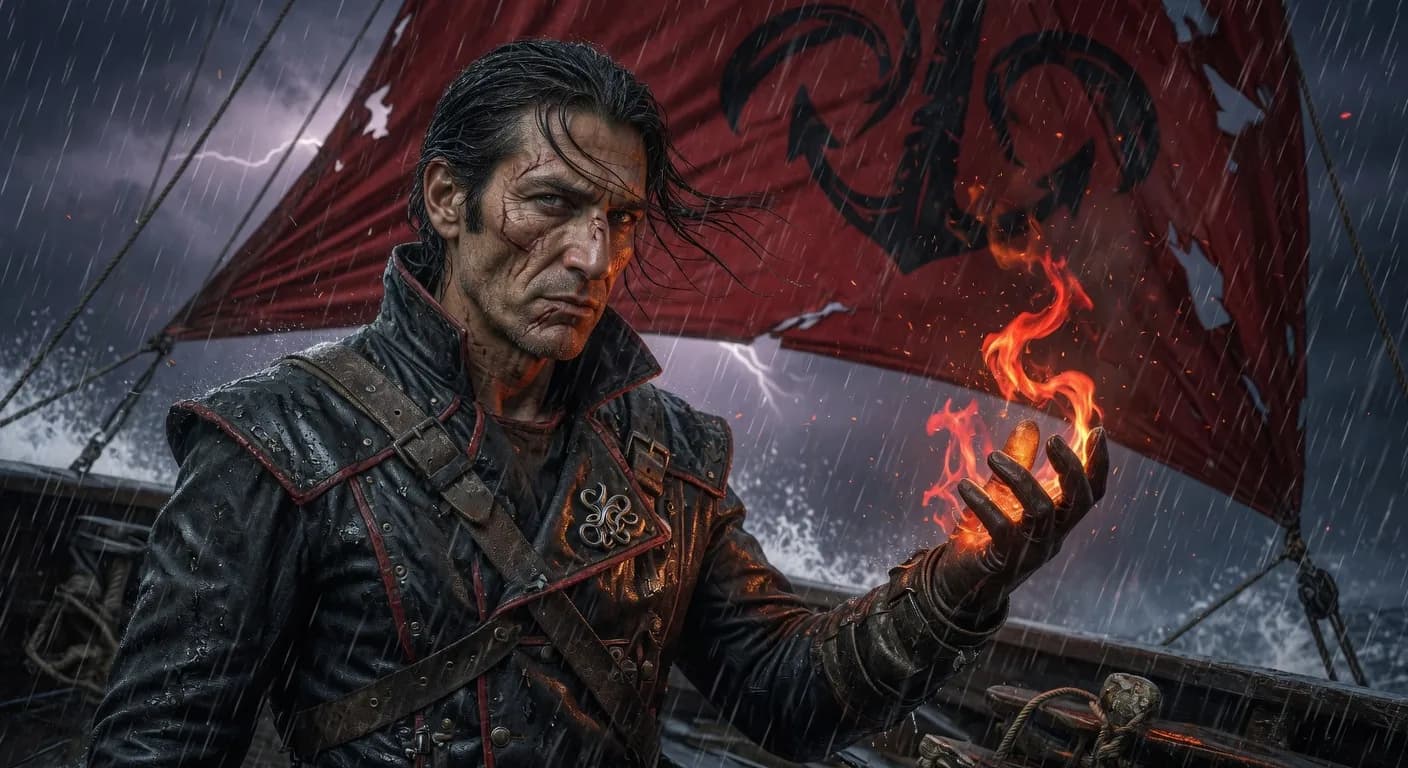
The Ashanar are a weathered, lean people, harder and fiercer in the face than their eastern kin the Suvanar. Long generations under sea-glare and salt-wind have darkened them — ash-toned and olive skin, raven or storm-dark hair, eyes of slate-grey or near-black that seem always to be measuring a distance. They carry themselves like people who expect weather.
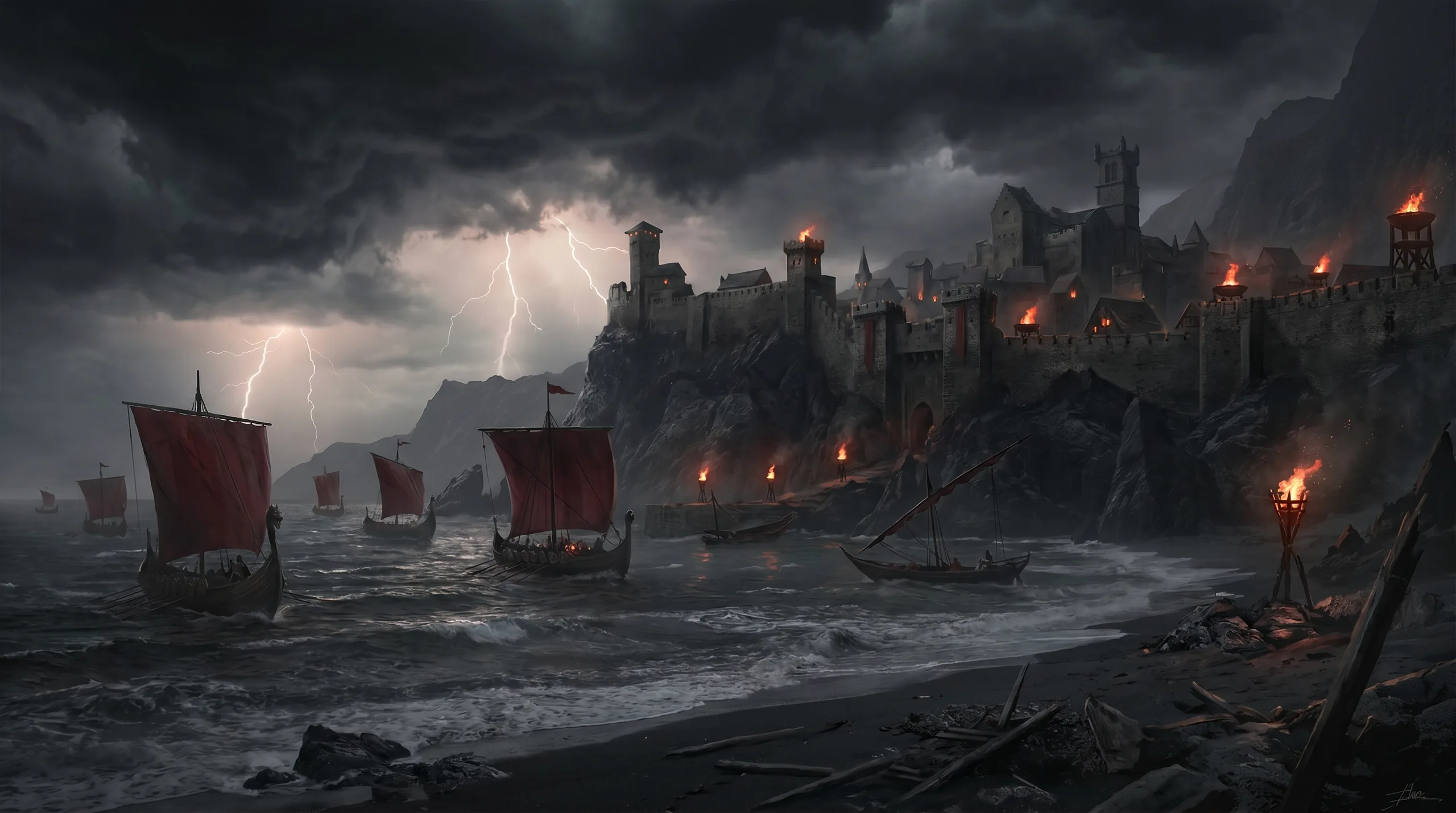
Their homeland is a string of cliff-clinging harbours and far ports along the windward southwest, where black volcanic sand meets cold deep water and the watchfires burn red against the dusk. They build in dark stone, low and stubborn against the gales, their docks crowded with deep-sea craft and the long, crimson-sailed corsair vessels that are their pride. Beyond the last lit harbour lies only the open ocean and the horizon — and the Ashanar look at that emptiness the way other peoples look at a field to be sown.
A calm sea raised no sailor worth the name.
The Covenant and the Hungry Flame
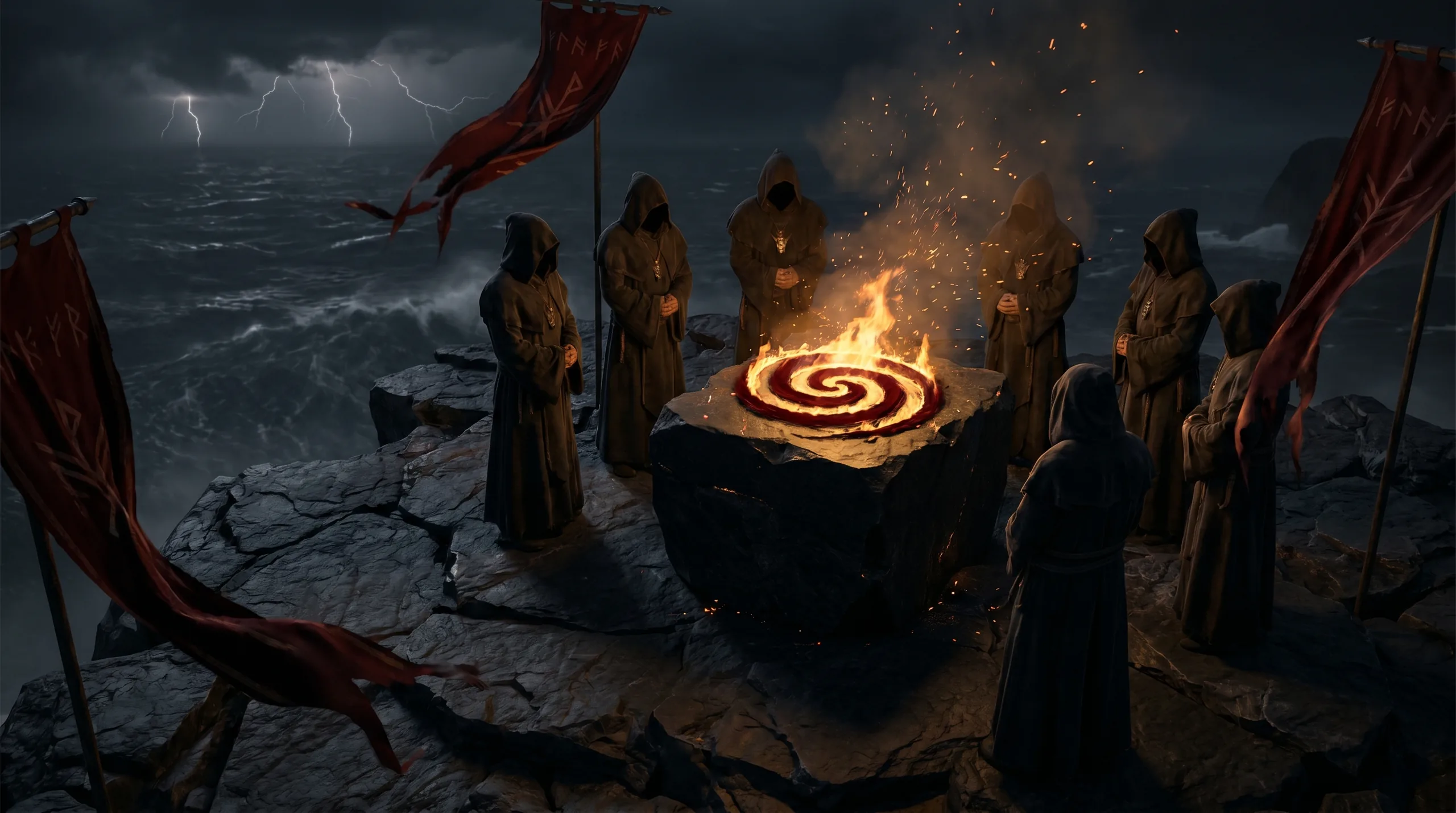
To govern themselves without law, the Ashanar govern themselves by oath. The covenant is everything: a sworn bond between captains, between houses, between a person and a power. A written contract can be burned; a covenant, once given before witnesses and ember, is held to be unbreakable, and the oathbreaker is the lowest creature the Ashanar can name — worse than a thief, worse than a coward, a thing with no place on any deck.
They are a bold and fatalistic people, intense, quick to laughter and quicker to a duel. They venerate strength openly and without apology, and they reckon a life by what it dared rather than what it kept. Their disputes are settled by sworn word, by trusted arbiters, and — as often — by the blade, fairly drawn and fairly answered. This is the cradle of the corsair and the deep-sea explorer, the pact-maker and the freebooter, and of every Elekoi people the Ashanar are the readiest to strike a bargain with darker powers if the bargain will carry them further out.
The Flame They Carry
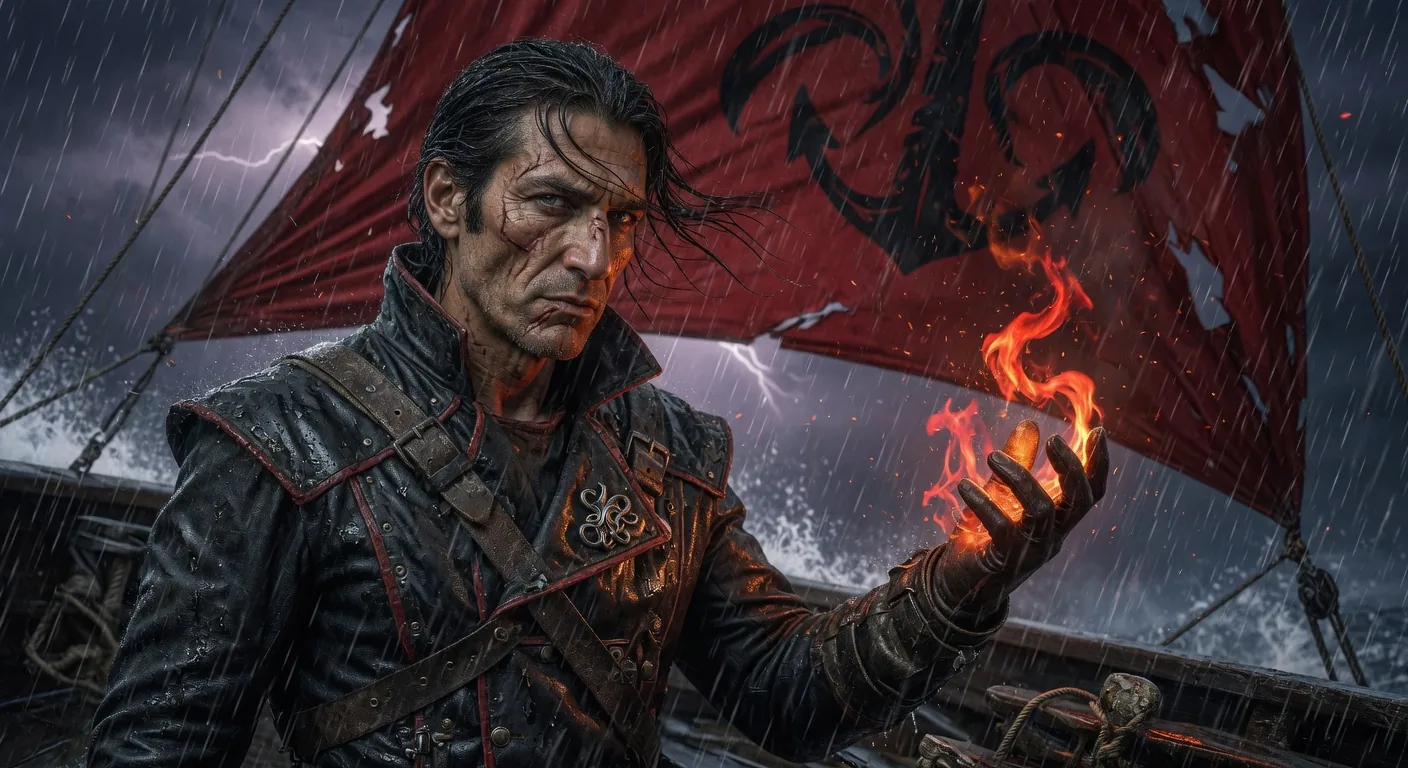
As humans, the Ashanar inherit the Ruby's gift — fire, and the Klerosia bloodline schema by which the strongest of human houses wield it. But the flame burns differently on the ashen shore. Where the eastern Suvanar carry the Ruby's fire as a hearth-warmth, a thing of family and freedom, the Ashanar carry a harder, hungrier ember: storm-fire, the flame that drives a hull through a black squall and lights the covenant-altar at the world's edge. Their fire is crimson shading to black, and they wear it on their banners and their sails as a warning and a boast.
We do not pray for calm. We pray for a strong arm and a stronger oath.
The Creed of the Far Powers
It was on these shores, in this covenant-keeping and bargain-making people, that the Infernal Creed first took root — the faith that would come to revere the Ancient Devil, mistress of strength and of the things called demons, whose colour is black. This is plain public history, neither denied nor dwelt upon. The Ashanar honour strength and the binding of the sworn word, and to many of them the Devil's portfolio — power, endurance, the will to seize a thing and hold it — is simply the truth of the sea made divine.
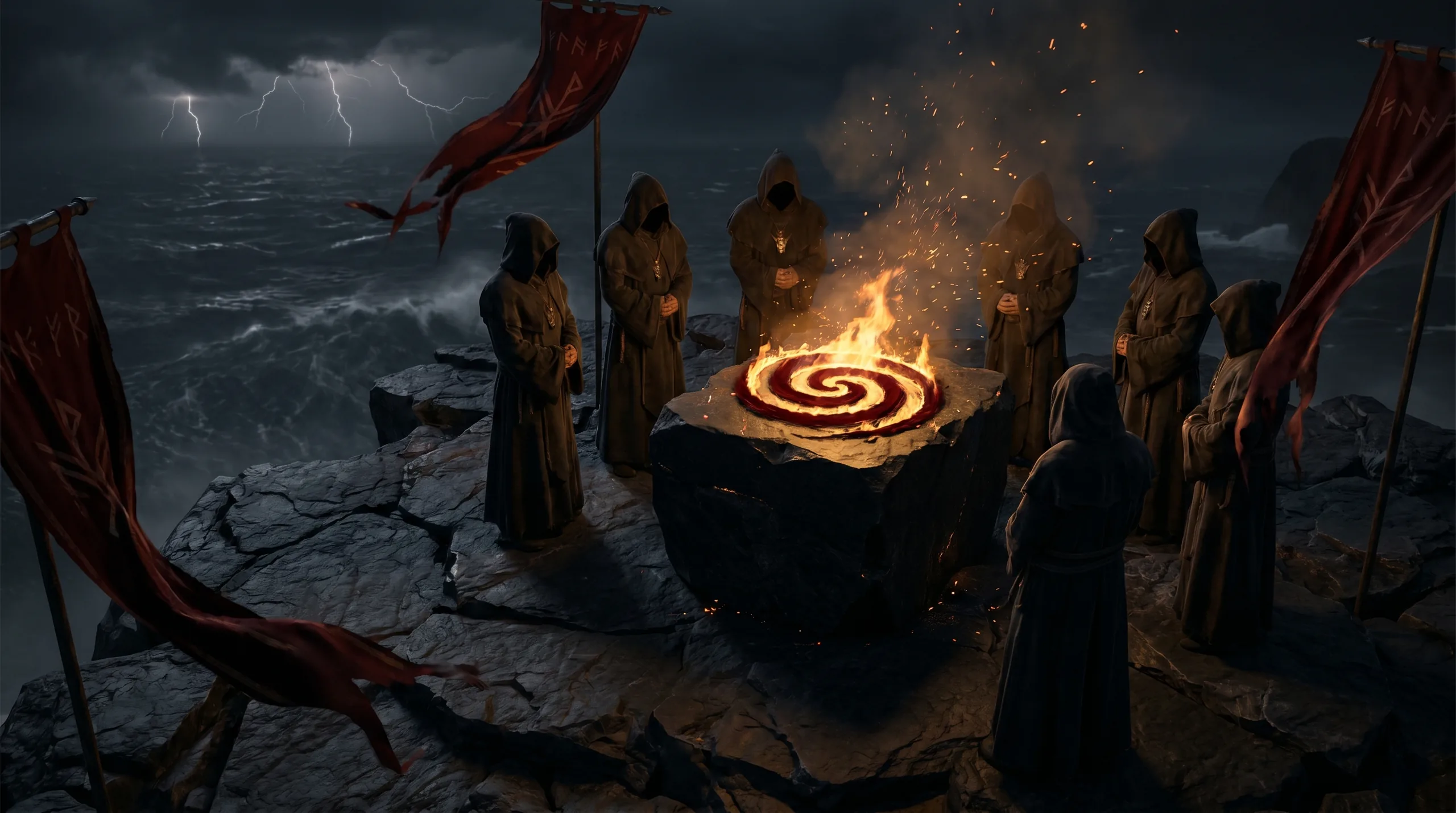
Hers is a covenant-faith of oath-cults and headland shrines, of dread bargains whispered over black stone by ember-light while a storm walks the horizon. Sailors speak, in low voices and never twice, of older pacts and a fire that is not the Ruby's at all — but such talk is left to legend, as is right, for the sea keeps its own counsel and so do the Ashanar.
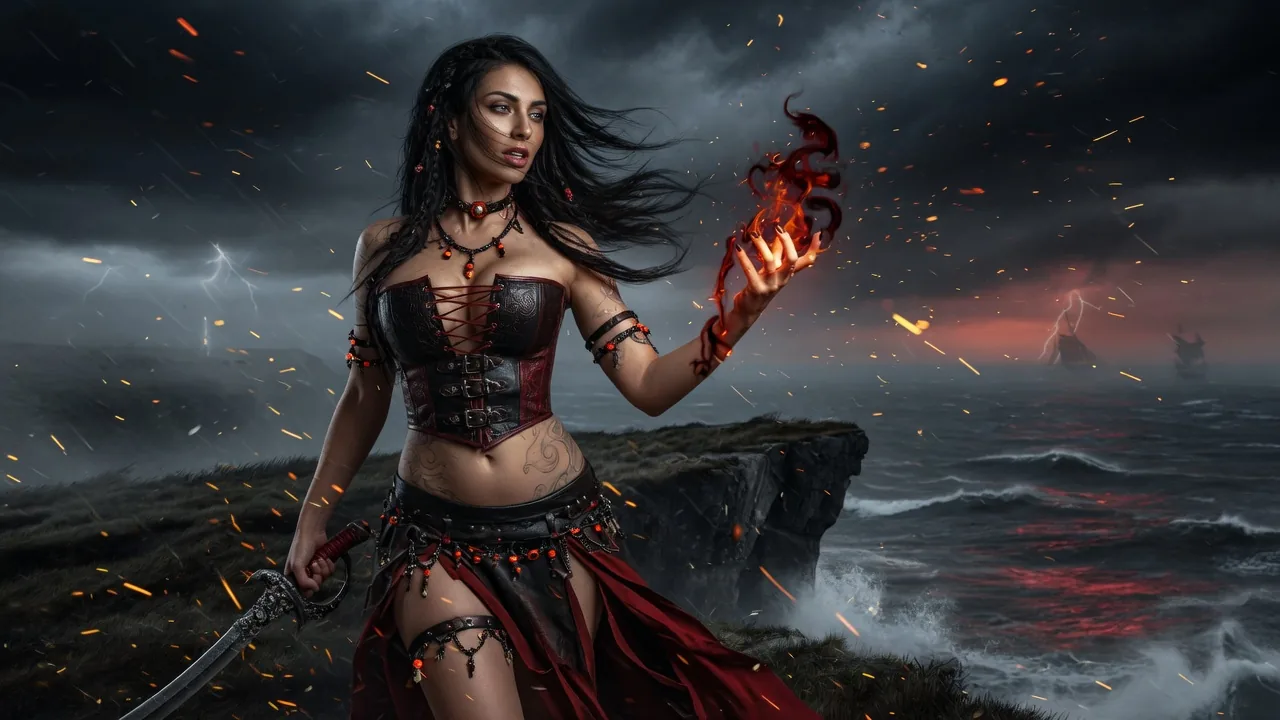
They are not loved by the gentler peoples of the coast, and they do not court that love. They are the far horizon given a face: fierce, free, fatalistic, bound by nothing but the oath they choose to swear — and held by that oath to the death.