
Velastra, First Light of the Ruby
Where the savanna breaks at last against the southern ocean, the land does not slope gently into the water. It shatters — into a wall of fractured black basalt, riven and weeping with hidden springs. Into this broken cliff the oldest human city in all Kworgalya was carved. This is Velastra: temple of memory, seat of the Ruby, the place where the first ships of the Fivefold Fleets ran their keels onto a foreign shore — and where, ever since, the keepers of fire's illumination have refused to let that first flame go out.
They say a daughter sent to Velastra is never truly lost. For she returns as fire.
The City Carved from Shadow and Water
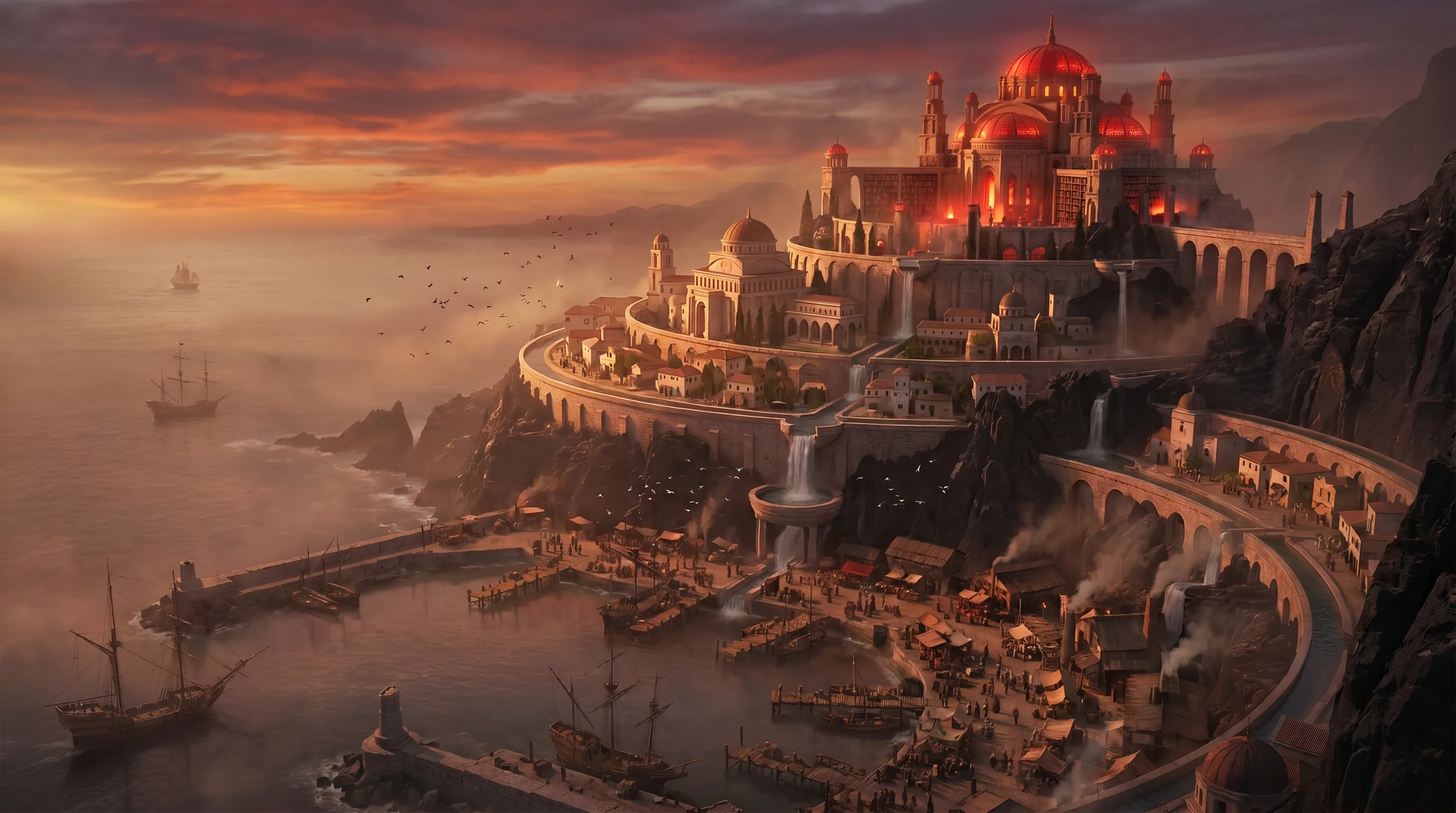
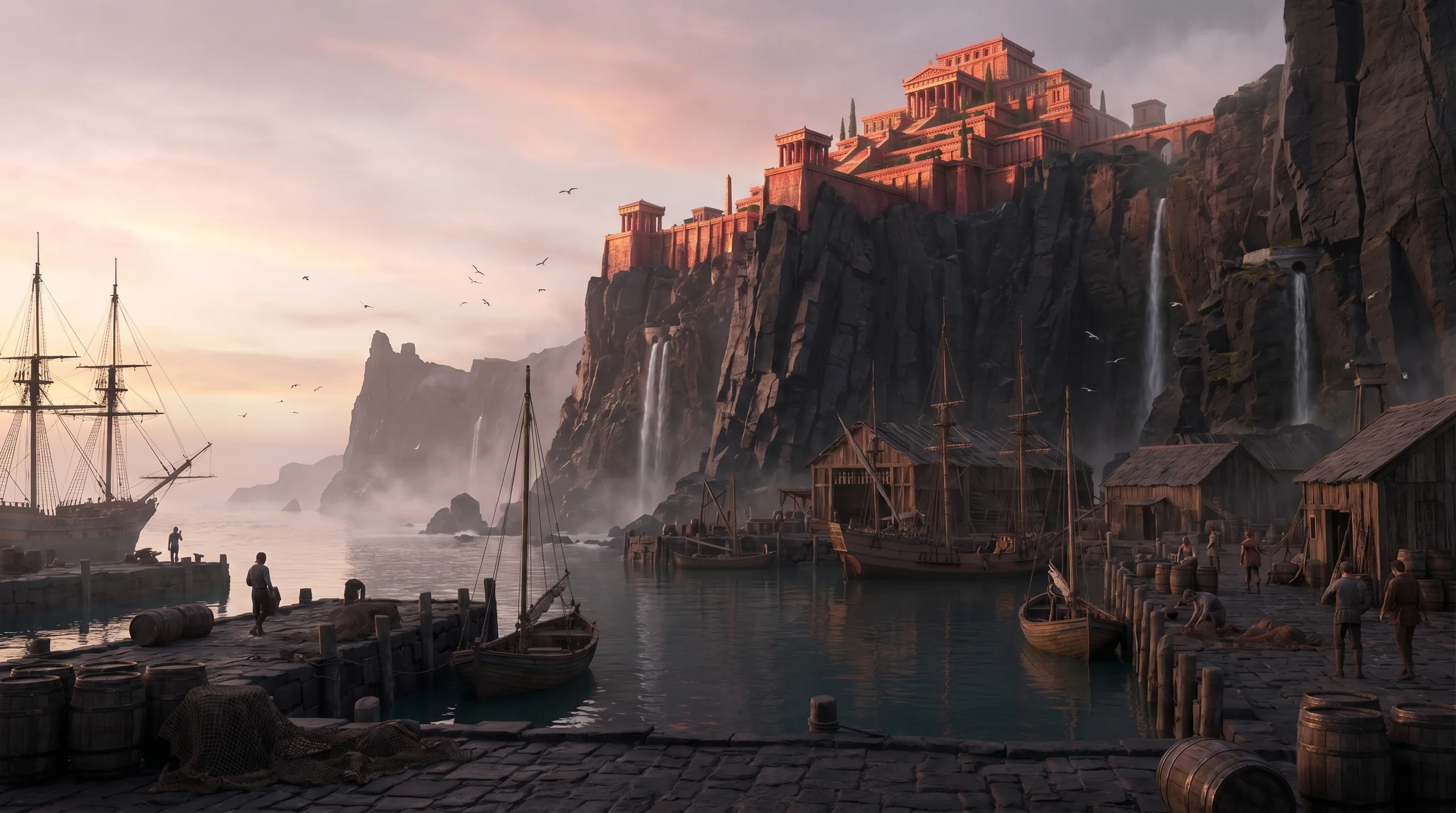
Velastra climbs. From the half-moon harbor at the foot of the cliffs, the city rises in concentric semi-circular terraces, tier upon tier, each ledge wrested from the living basalt. The lowest belong to the sea — quays and breakwaters, shipyards, salting-sheds, the clamor of markets and workshops. Above them spread the residences and the schools, pale houses stacked against black stone. And crowning all, where the cliff meets the sky, stands the great Ruby temple complex: a labyrinth of sanctuaries, cloisters, and libraries that glows from within each night like a coal that will not die.
Water is the city's quiet miracle. The same fractures that broke the cliff also drink the rain of the high savanna, holding it in a perched aquifer deep in the rock. The Velastrans learned to tap it — hanging cisterns and carved channels thread every level, and thin waterfalls spill from terrace to terrace, so that the whole city seems to breathe cool mist even beneath the warm coastal sun.
The Mind and Voice of the Daskilon
Velastra is neither the largest city of the Daskilon faction nor its strongest arm. It is something the others are not: its mind. If Daskilon is the arm, the saying goes, Velastra is the mind that guides the strike. While Daskilon forges truesteel and rides its rhino-cavalry, while Hipalos breeds the herds and Erothys feeds the people, Velastra thinks, remembers, and teaches. It writes the doctrine — religious and magical alike — and it is the faction's gate to the wider oceanic world.
Real authority here rests not with the city's magistrates and guilds but with the all-female priesthood of the Ruby, and above them the High Pyreia, who governs the cult from the great temple of the Thoughtmaiden. By ancient custom the ruling Strategos of Daskilon sends his eldest daughter to be inducted, schooled in thaumaturgy and statecraft, and returned — or kept at a distance — as a living bridge between temple and war-council. So are the sword of Daskilon and the faith of the Ruby bound into a single hand.
The Six Faces of the Ruby
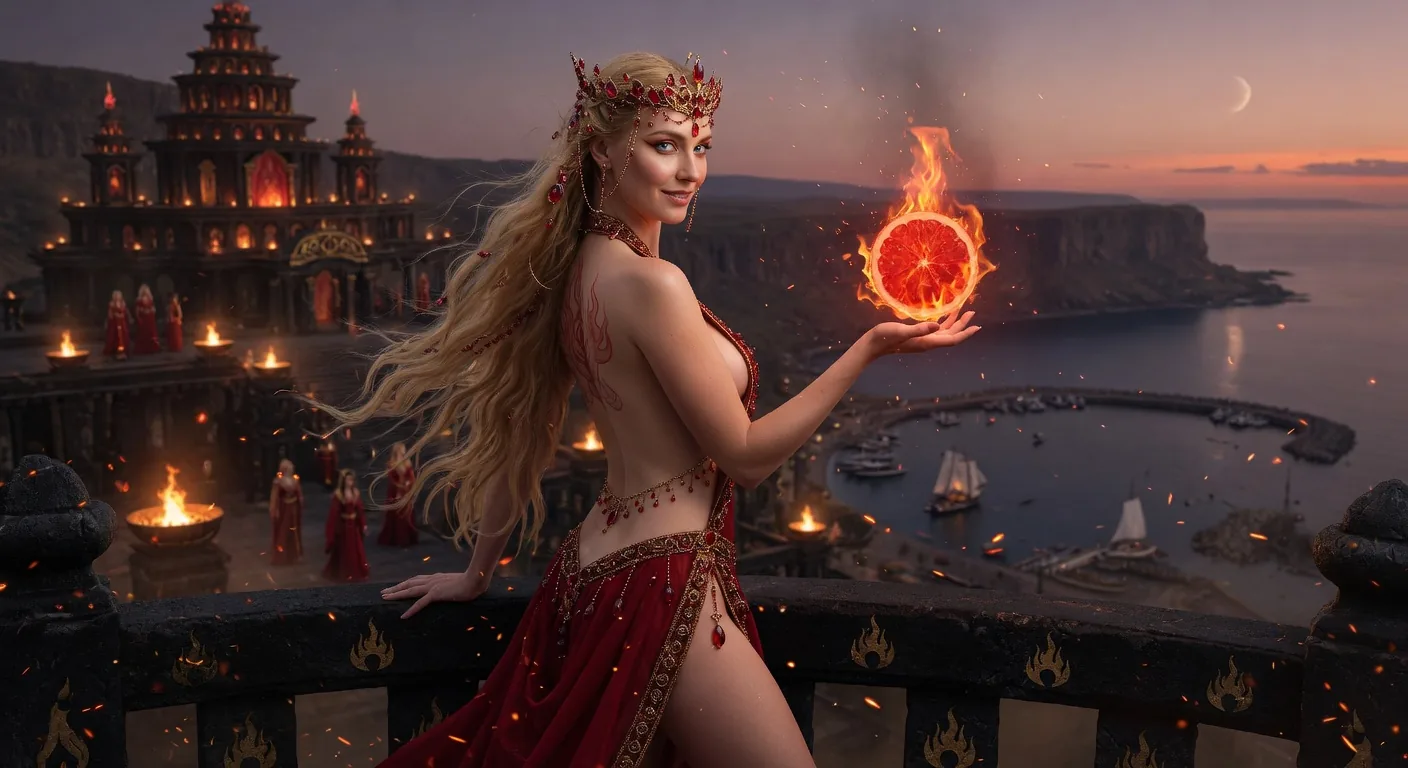
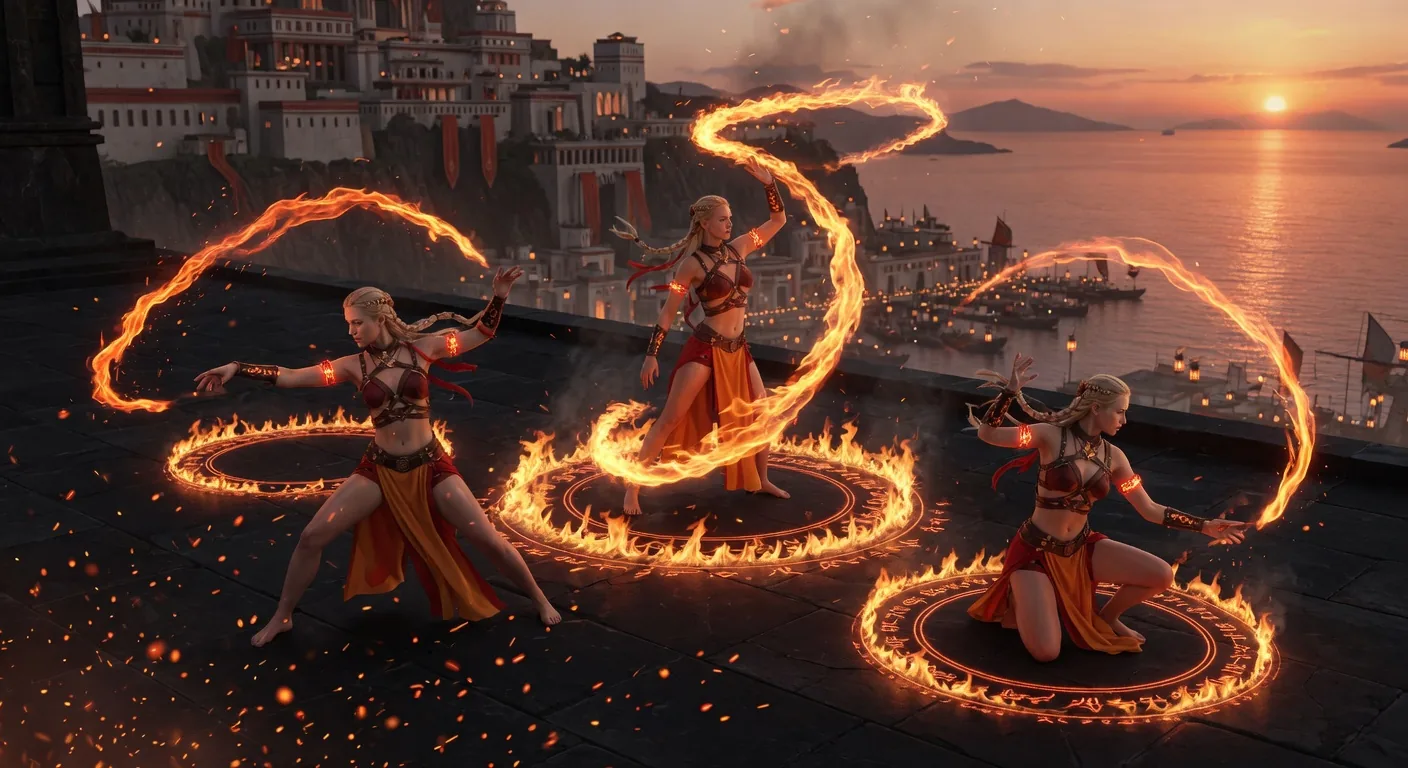
Velastra is the only city in the world where all six aspects of the Ruby keep formal temples — but two burn brightest. The Thoughtmaiden, Theokora, is patroness of knowledge, study, memory, and teaching; hers is the city's true heart. The Firewife, Pyranaika, is keeper of battle, courage, and disciplined flame.
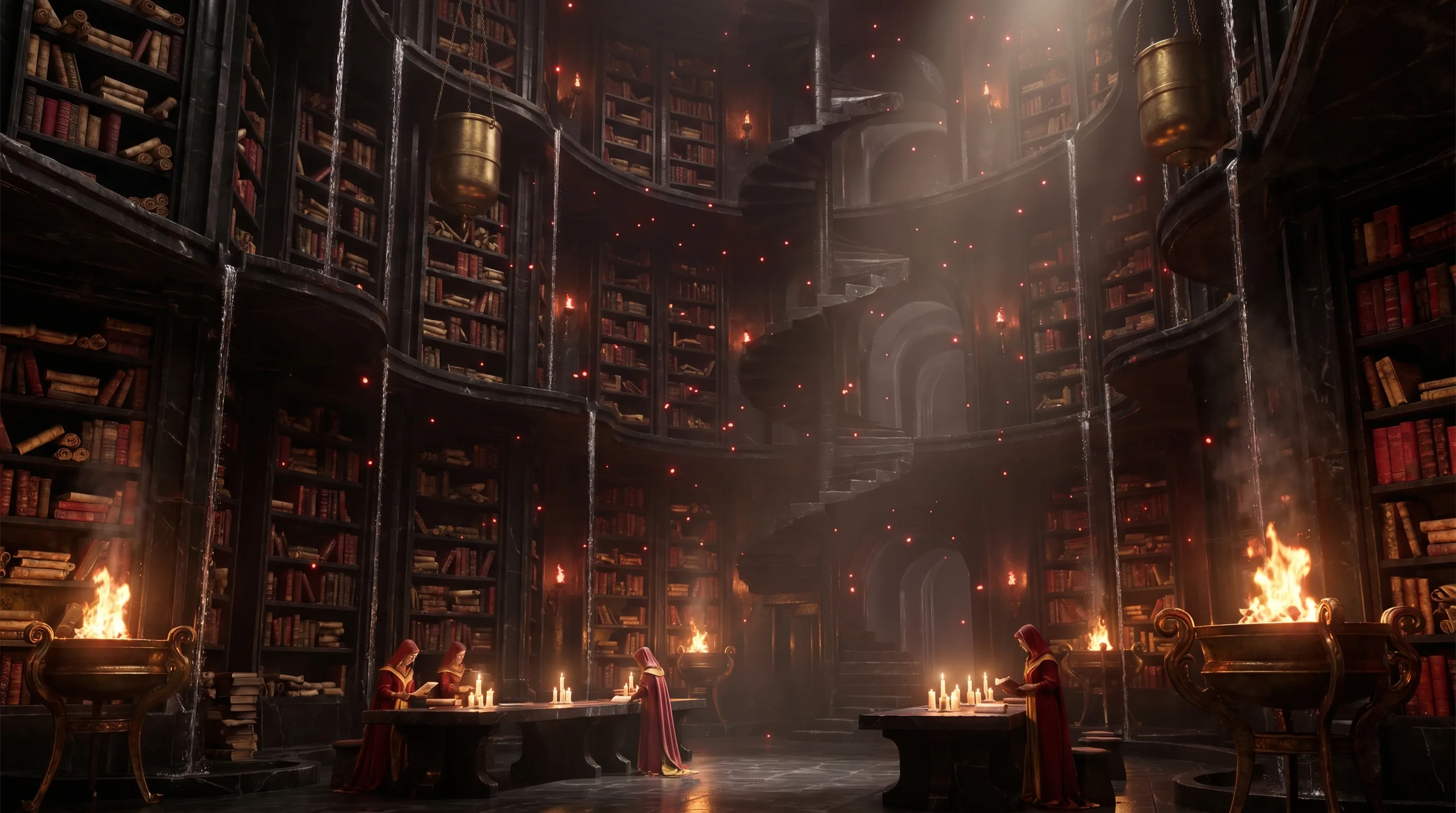
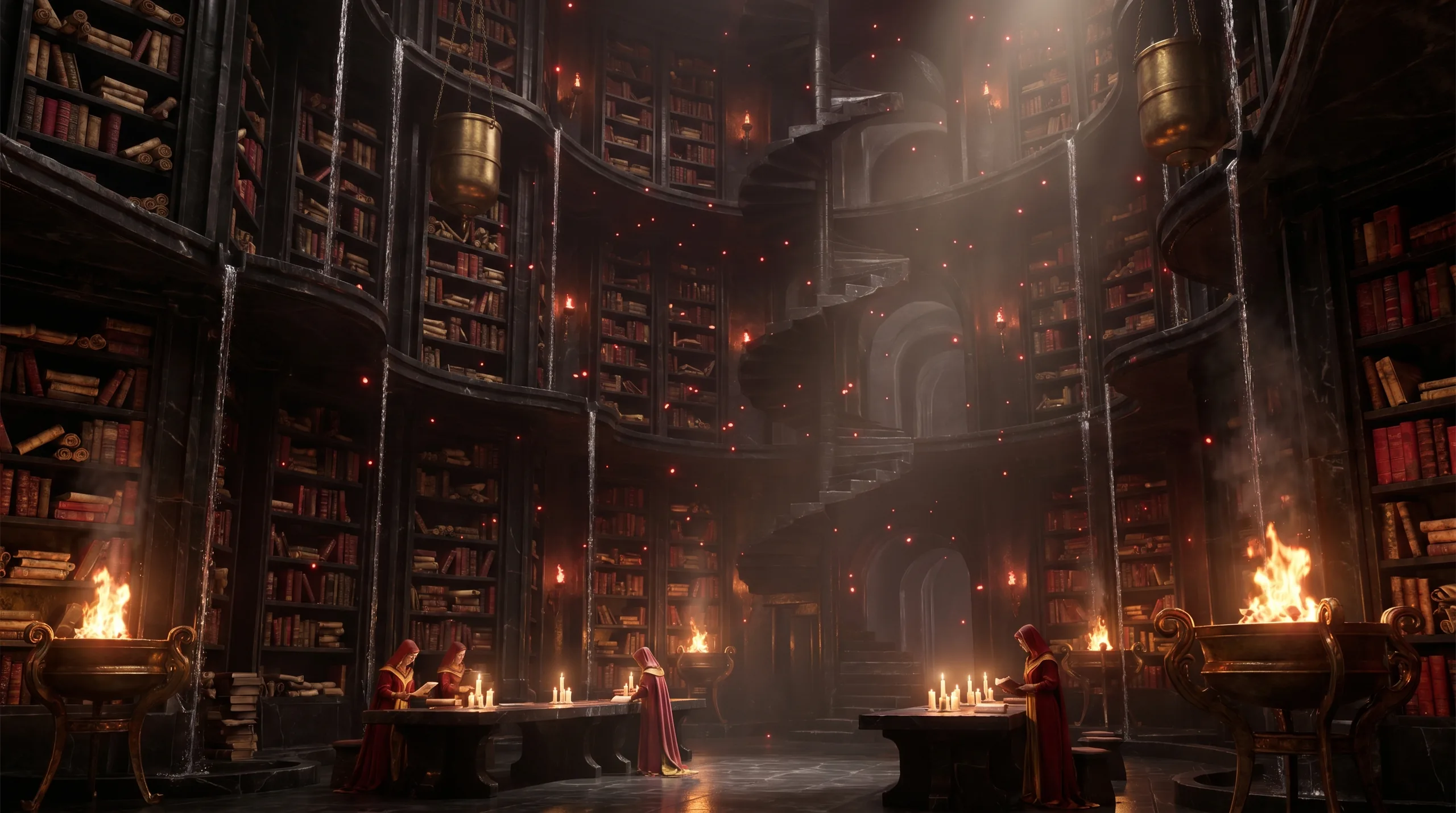
Beneath the Thoughtmaiden's hand, Velastra is a seminary-city in all but name. It holds one of the largest libraries in the world, its black shelves heavy with grimoires and treatises; here new formulae are devised, spells and rituals standardized for the whole faction, and enchanted aids — memory-stones, calculation-rods, ciphered charts — patiently made.
Beneath the Firewife's hand, the temple trains the sorceresses who turn Daskilene steel and Hipaloi rhinos into instruments of terrifying precision: battlefield pyromancers, siege-flame specialists, ritual flamekeepers sent to guard the great cities. Sworn to the Ruby and seconded to the armies, they are the city's most feared export — and its proudest.
The Sea-Gate
For all its theology, Velastra never forgets the water that carried the first humans here. Its half-moon harbor is the primary sea-gate of the Daskilon faction — a working port of saltwater fisheries and curing-houses, of merchant ledgers kept by literate priestesses who settle maritime disputes and watch alike for smuggling and for heresy. Erothyn grain and oil, Daskilene arms, Hipaloi horseflesh, and the temple's own priceless manuscripts all move across these quays, and foreign luxuries flow back inland in return. A modest, well-kept fleet patrols the southern coast and shepherds the convoys home.
To come to Velastra is to find high politics married to theology; libraries carved into black rock; sorceresses arguing formulae beneath hanging cisterns; and the abiding sense that on this cliff both the first human step onto Kworgalya and the future of its magic are being remembered — and remade.