Tirbasos, the Scorchmother's Anvil
Two thousand years ago, Tirbasos was a single spear planted at the edge of the Beast-haunted forests — a frontier fortress raised to hold a line that everyone expected to break. It did not break. It grew. When at last the frontier was subdued and the beasts driven back into legend, the fortress did not fade into a quiet country town. It picked up a hammer. Today Tirbasos is the industrial heart of the southeastern Suvanar, a city of ninety-six thousand souls where every man still drills with spear and shield as though war were coming tomorrow — beneath a skyline crowned with kiln-chimneys, brickworks, and the crane-arms of its shipyards.
A city tempered by war, the Tirbasid say, and hardened by work.
The Fox's Red Crown
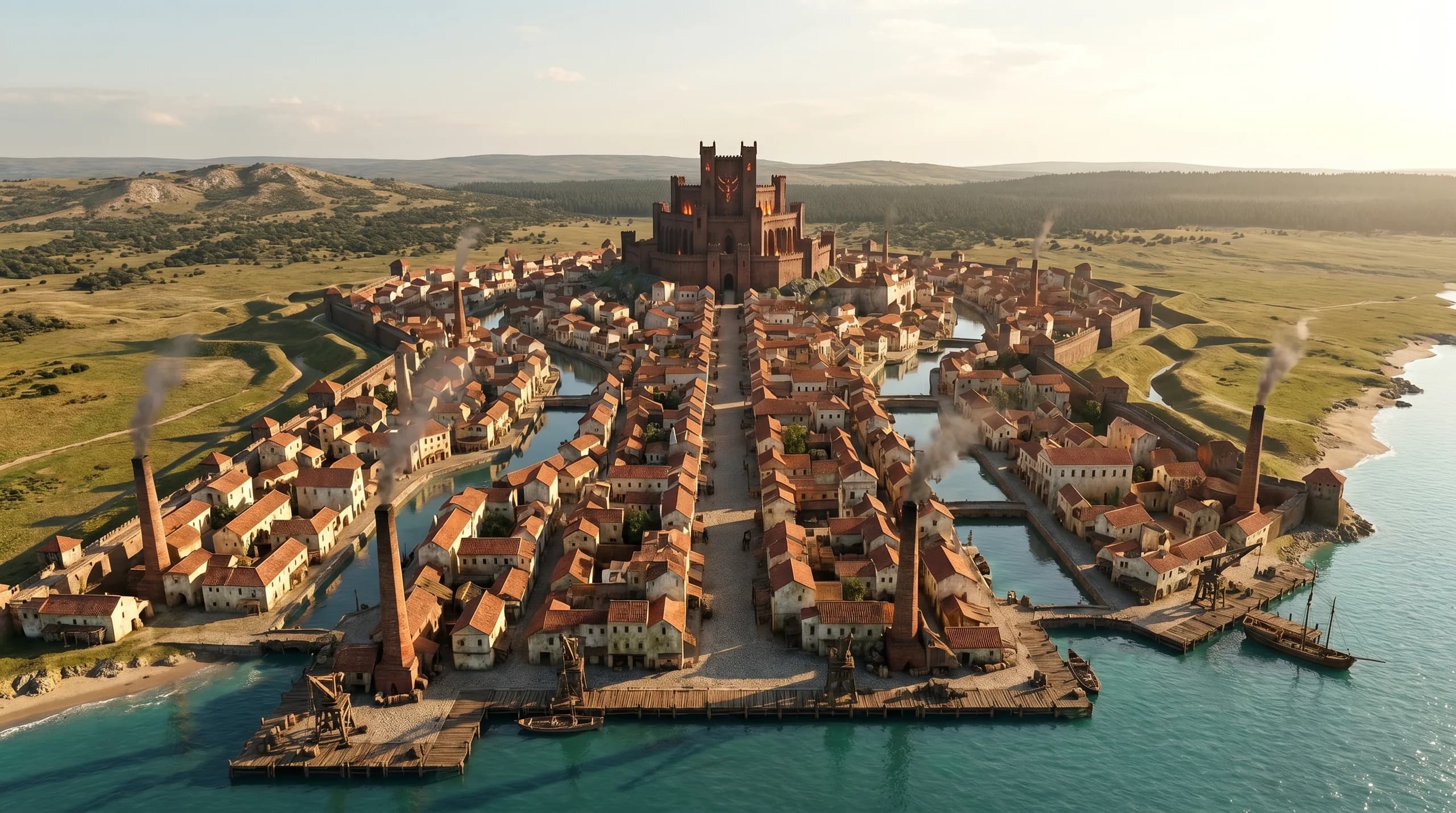
Seen from the coastal grasslands, Tirbasos glows white-gold and red. Its timber-frame buildings are packed thick with pale clay and lime plaster that catch the southern sun; its roofs are capped in red ridge-tile and its gateworks raised in warm brick — the Fox's Red Crown, as the poets have it. The streets keep a martial geometry older than the industry that fills them: broad firebreak avenues run arrow-straight through the dense core, wide enough for a cohort to wheel into formation or for the fire-priests to draw their flames in safety.
Water is the city's oldest teacher. Its founders survived a parched frontier only by hoarding every drop, and that discipline endures in canal-fed gardens, sunken cistern-courts where cool stone steps descend into shadowed chambers, and brick spillways that double as defensive sluices. A city that fails to drink fails to stand.
Tempered by War
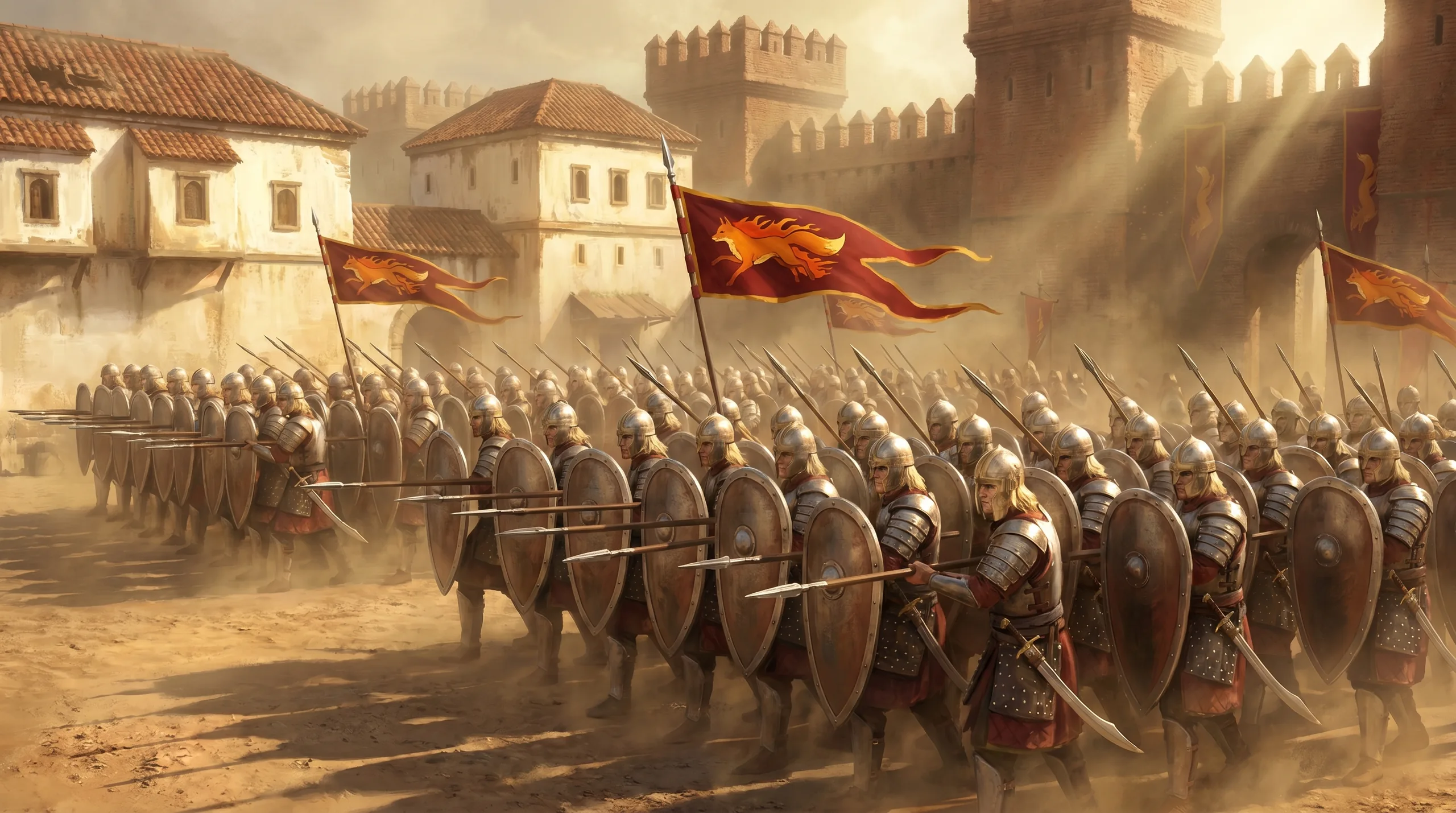
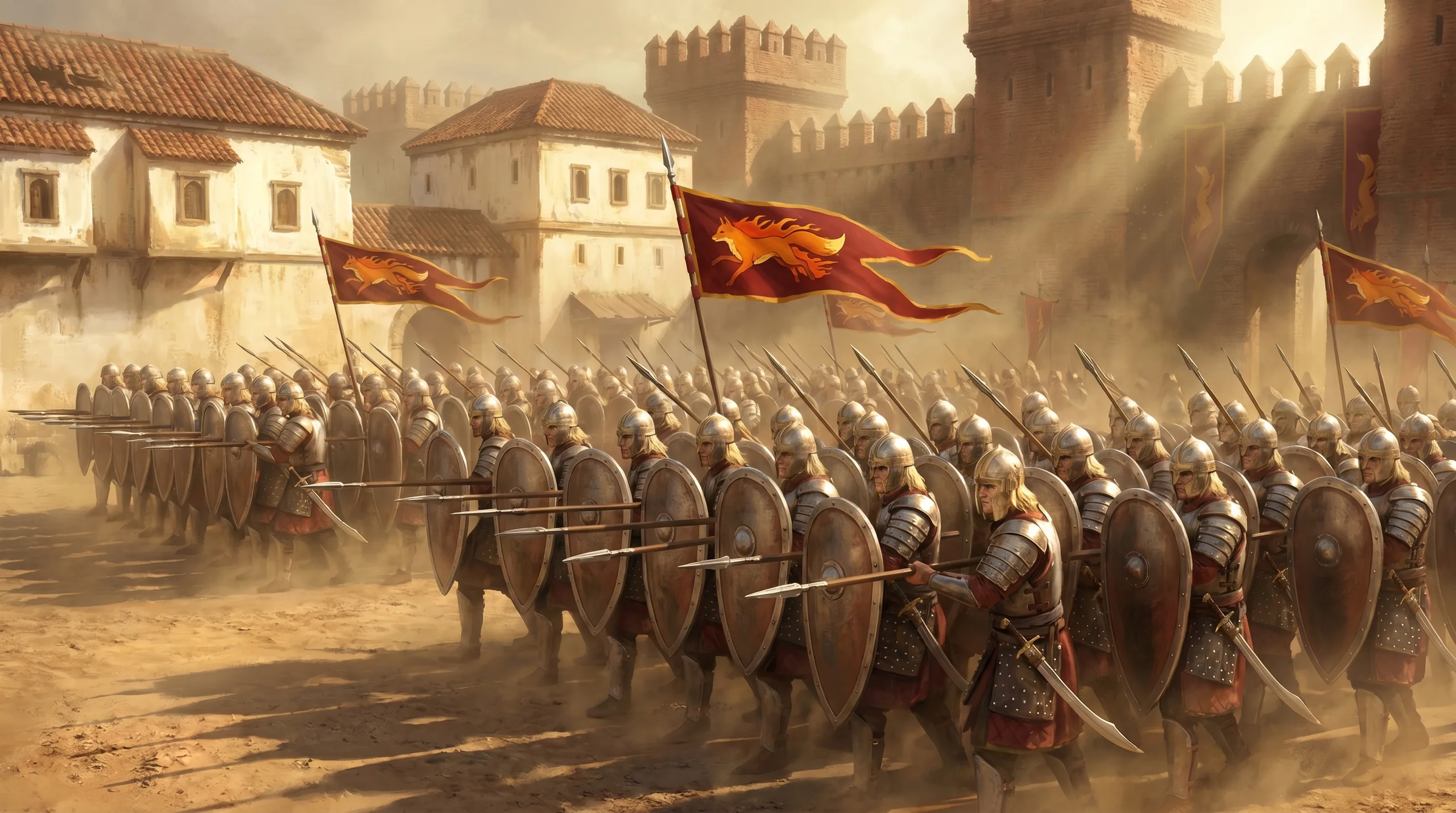
Though no great war has come for generations, Tirbasos remains, in its bones, a city forged for battle. Its legions are the best-drilled heavy infantry on the southern coast: truesteel-armored ranks behind great oval shields, the short thrusting spear their first weapon and the curved makhaira their second — a blade as good for cutting brush as for cutting men, a relic of the forest war that birthed their legend. Every legionnaire still carries a personal engineer's tool, hatchet or saw or hook, in memory of the old creed that every Tirbasid man is a builder of walls and a breaker of beasts.
Hardened by Work
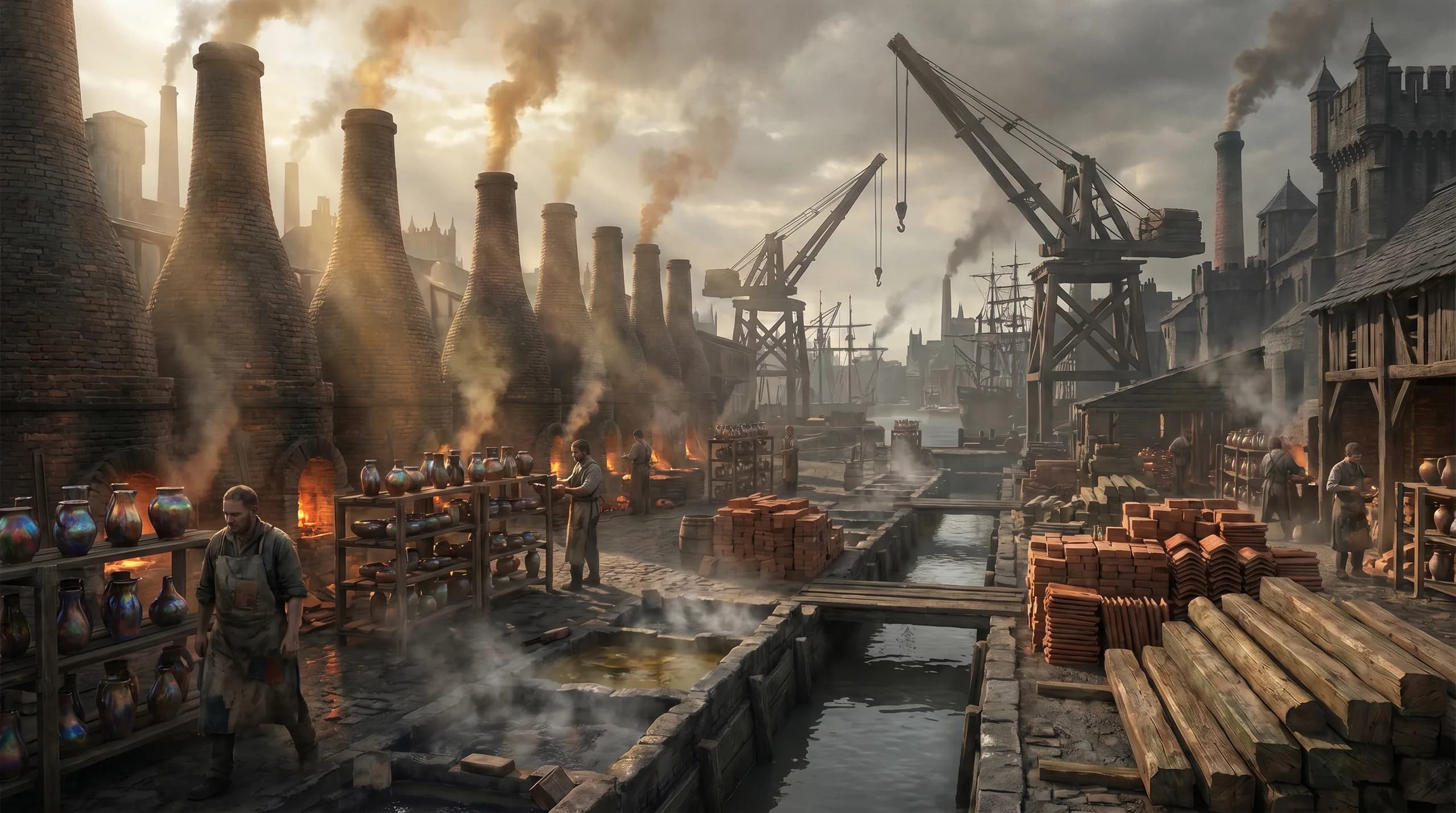
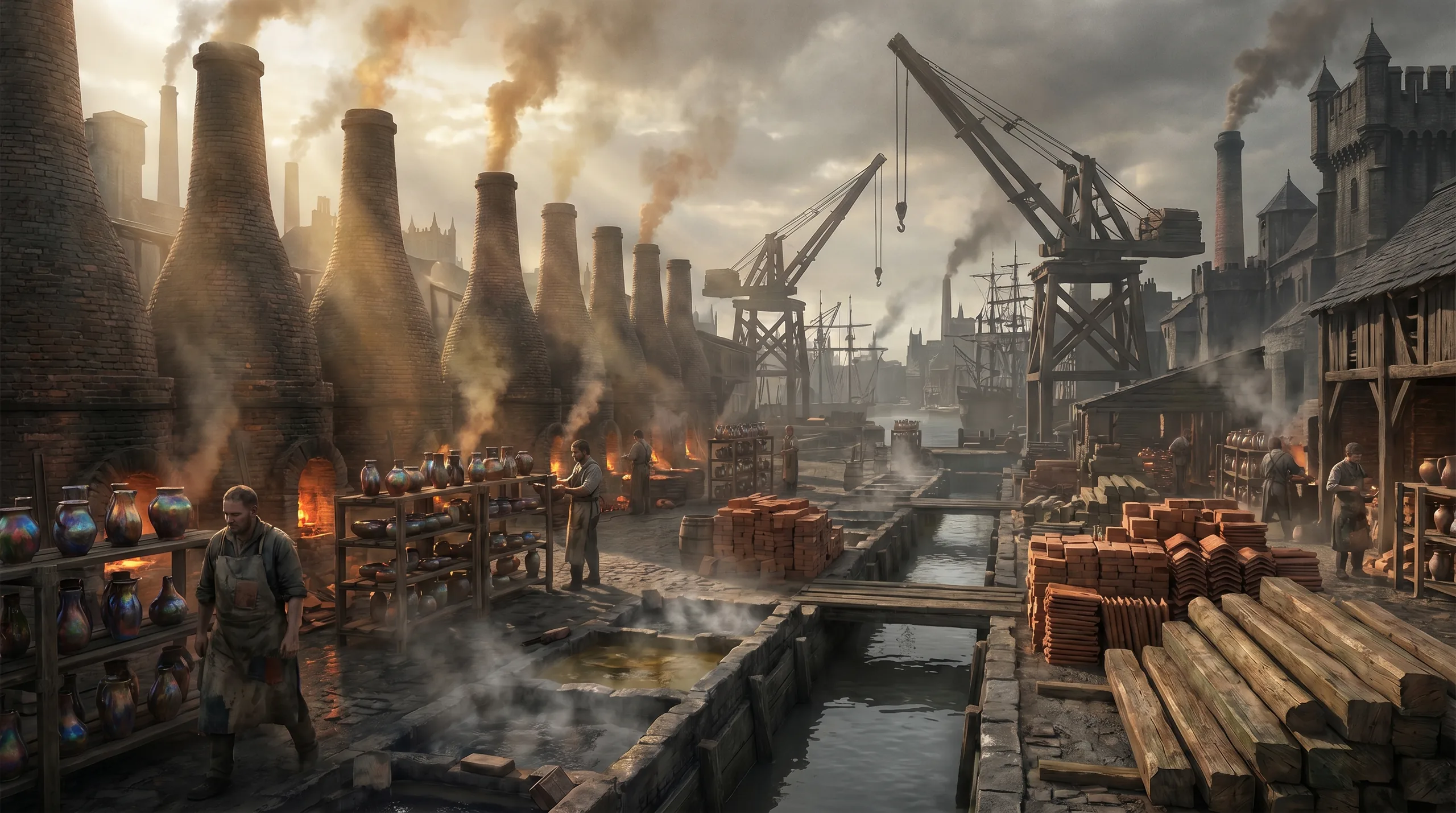
What the legions defend, the workshops make. Tirbasos is the largest industrial center in the region, and proud of it. Its kiln district trails thin banners of smoke over a city that turns out brilliant glazed ceramics, fire-resistant brick and tile, treated lumber, ropeworks, weatherproof legion-grade cloth, and ten thousand small manufactures besides. If you need ten thousand of something, runs the boast, ask Tirbasos — to which the rival city of Daskilon always adds, and if you need one perfect thing, ask Daskilon. The Tirbasid suffer the jibe, for their bricks have built half the cities that repeat it.
The Flame-Scorpions
Above the central districts looms the Arcane Citadel of the Thiaskorpyros — the Flame-Scorpions — a fortress of brick, plaster, and scorched sigils where fire-magic is honed like steel. They are a militant, aristocratic brotherhood of fire battle-mages whose emblem is the skorpyron, the great flame-infused dire scorpion of the Ashen Plains; the ruling Klerokos and his male kin take their place among them, an arcane-martial elite bound to the city's defense. The Scorpions do not burn the city, the Tirbasid say. They burn for it.

The Scorchmother's Smile
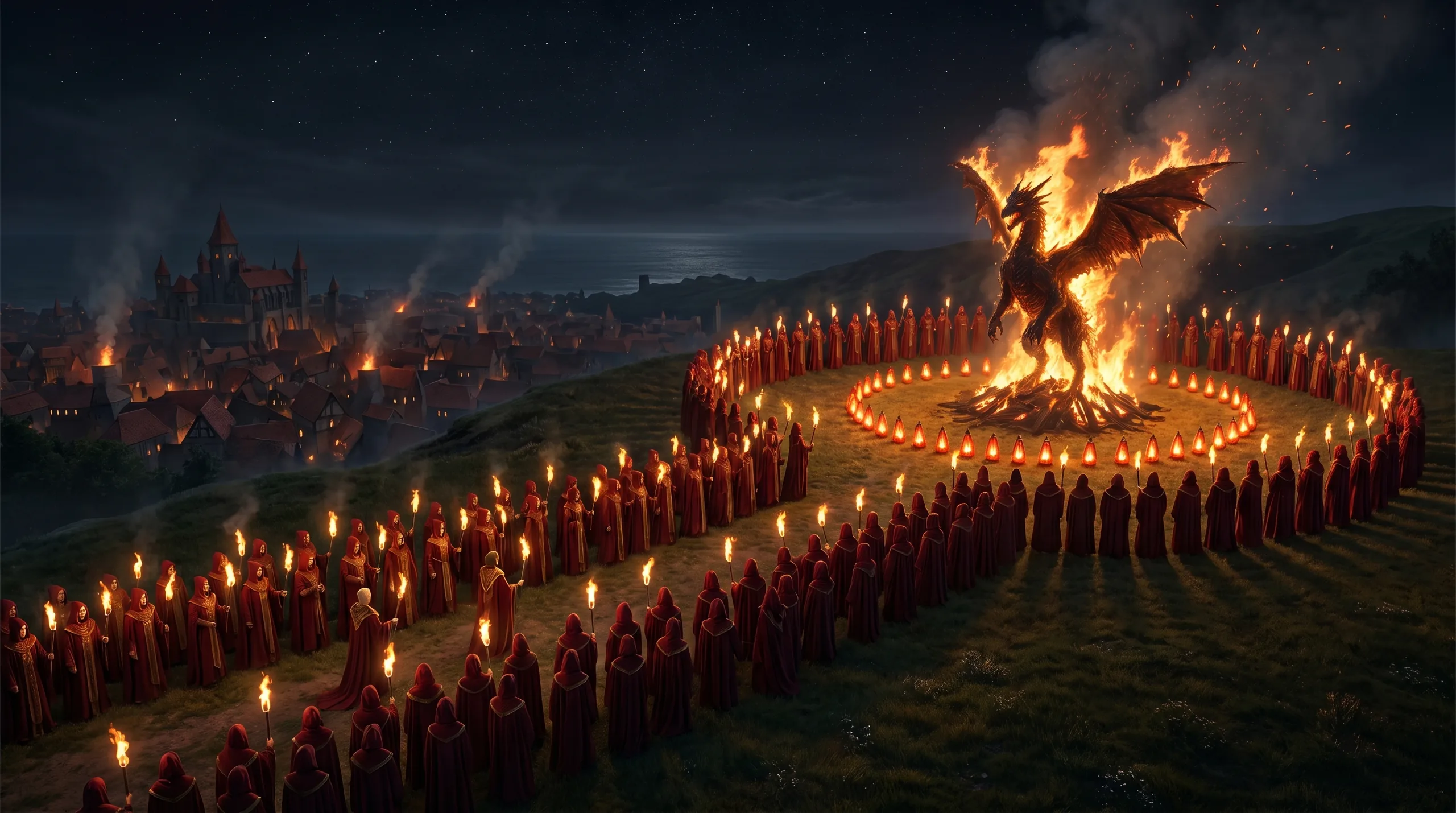
The faith of Tirbasos is the Ruby worn as the Scorchmother — not the gentle patroness of the harvest she is elsewhere, but a vengeful goddess of purifying flame and righteous destruction. She is honored with ceremonial burnings of brush and beast-effigies, with flame-glazed clay votives, and with torchlight processions that crown the hills at night. To the Tirbasid, a fire that spares the innocent and consumes the wicked is the Scorchmother's smile.
The fortress has never forgotten what it was built to stop. The forest remembers, they say. So must we. And so the drills go on, and the kilns burn, and the Fox keeps its watch over the open plains.