
Navalis, the Alpine Flame
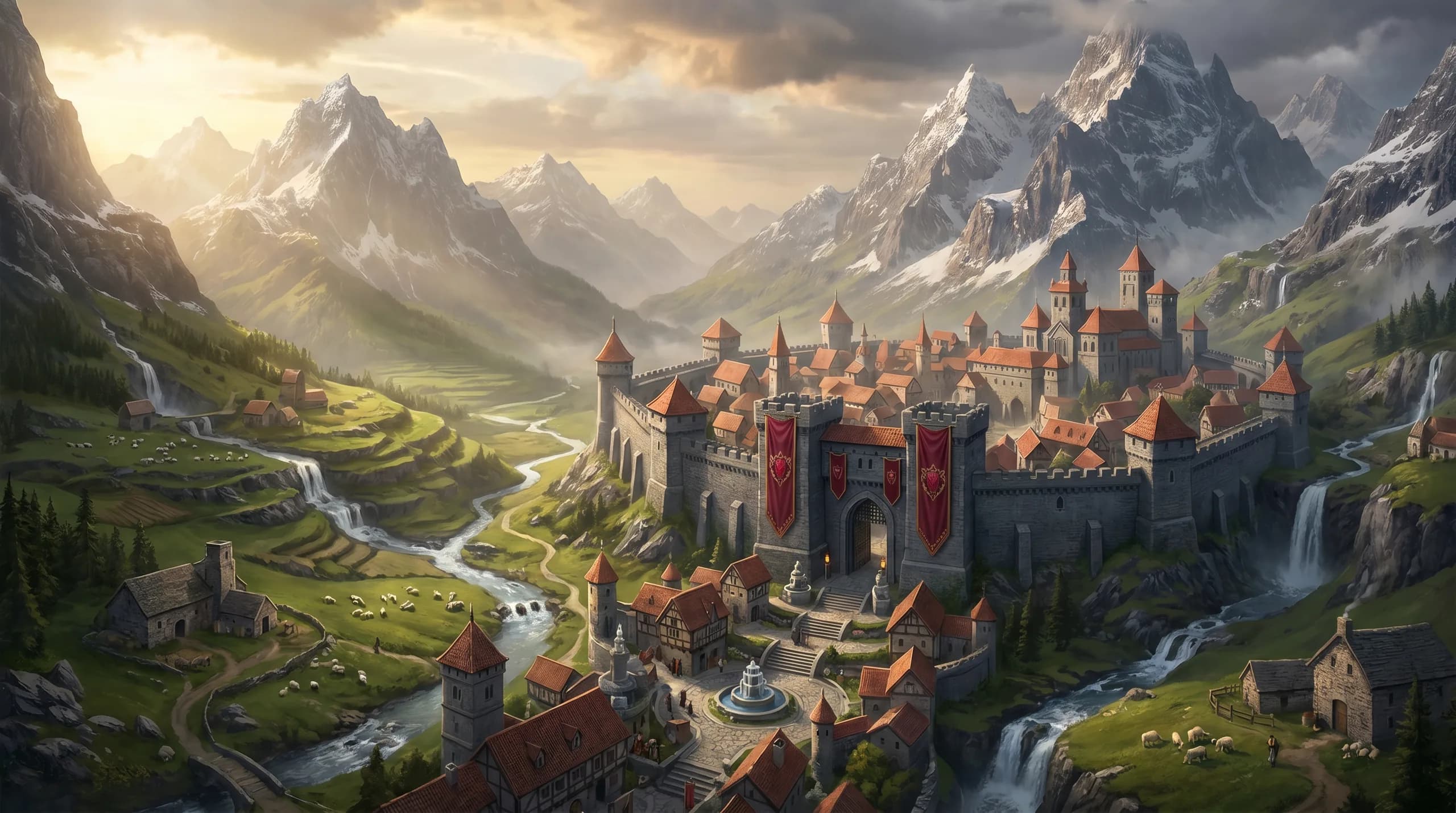
High in the western Greathammers, where the trail ends and home begins, there is a valley greener than the harsh uplands have any right to hold. Mountains cradle it on three sides; cold streams braid down through its pastures; and at its heart stands Navalis — a compact stronghold of grey mountain stone, its red roofs and ember-banners bright against the snow. To the wider world it is a herder's town on a hard frontier. To those who know, it is the beating heart of the Emberguard, the sanctuary where fugitives from the Infernate come to be safe, and the lock upon every western pass into the Daskilon heartlands.
Step by step, reads the carving above its gate, and never lost.
The Hidden Valley
Navalis was not founded so much as found. The dynasty of Loravan the Steady Tracker remembers him as the scout who refused to turn back when others called the mountains hopeless — who followed faint game-trails and half-vanished streams until he came over a high ridge and looked down into the green hollow, then walked the whole cruel path again to lead his people home. The city he founded is built in his image: terraced and walled, its narrow streets made to bottleneck invaders, easy to barricade and hard to burn. Cold mountain streams are braided into covered channels, cisterns, and stepped fountains; rings of pasture and fortified farmsteads climb the lower slopes. It is, against all the odds of its geography, a pocket of paradise.
The Lock on the Passes
Whoever would cross from the hostile lands of Caloryn or the border deserts into the Daskilon core must reckon with Navalis, for it holds the safest road and the highest walls. That makes it a choke-point market, and a famously grey one. Honest pack-caravans of fodder, stone, and Emberguard steel share its roads with quieter traffic — smuggled luxuries, relics, and intelligence bled out of Creed-held lands. The Navaline merchant turns a blind eye to the contraband, provided it hurts the Creed more than it helps it; in this valley, even the smuggling has a side.

Stones Above, Fire Within
The faith of Navalis is the Ruby worn as the Firewife — fire not as a weapon first, but as warmth in the high cold, a guardian presence in a land ringed by enemies. Nearly every home keeps a small hearth-altar, and on festival nights the terraces blaze with communal fires that ring the whole valley like a crown of embers, visible for miles. To stand the watch and shield the glen is held a holy calling: to guard the valley is to serve the Firewife. The people themselves seem made for the symbolism — High Lohanar, pale-skinned and green-eyed, with hair the red of mountain-meadow fire.

The Singing Stones
Navalis fights the way its mountains taught it. Its core is a disciplined infantry of spearmen behind round and kite shields, but its pride and terror are its slingers. Smooth stones lie everywhere here — in the streams, in the quarries — and slinging is all but a universal civic skill: children learn it as play, and the militia hone it into an art. The city's doctrine is to delay and bleed an enemy in the passes, never letting them form ranks on open ground, the walls backed by terrace upon terrace of slingers laying down intersecting arcs of stone and fire. When the slings go quiet, the old warning runs, listen for the pass.

The Water and the Hearth
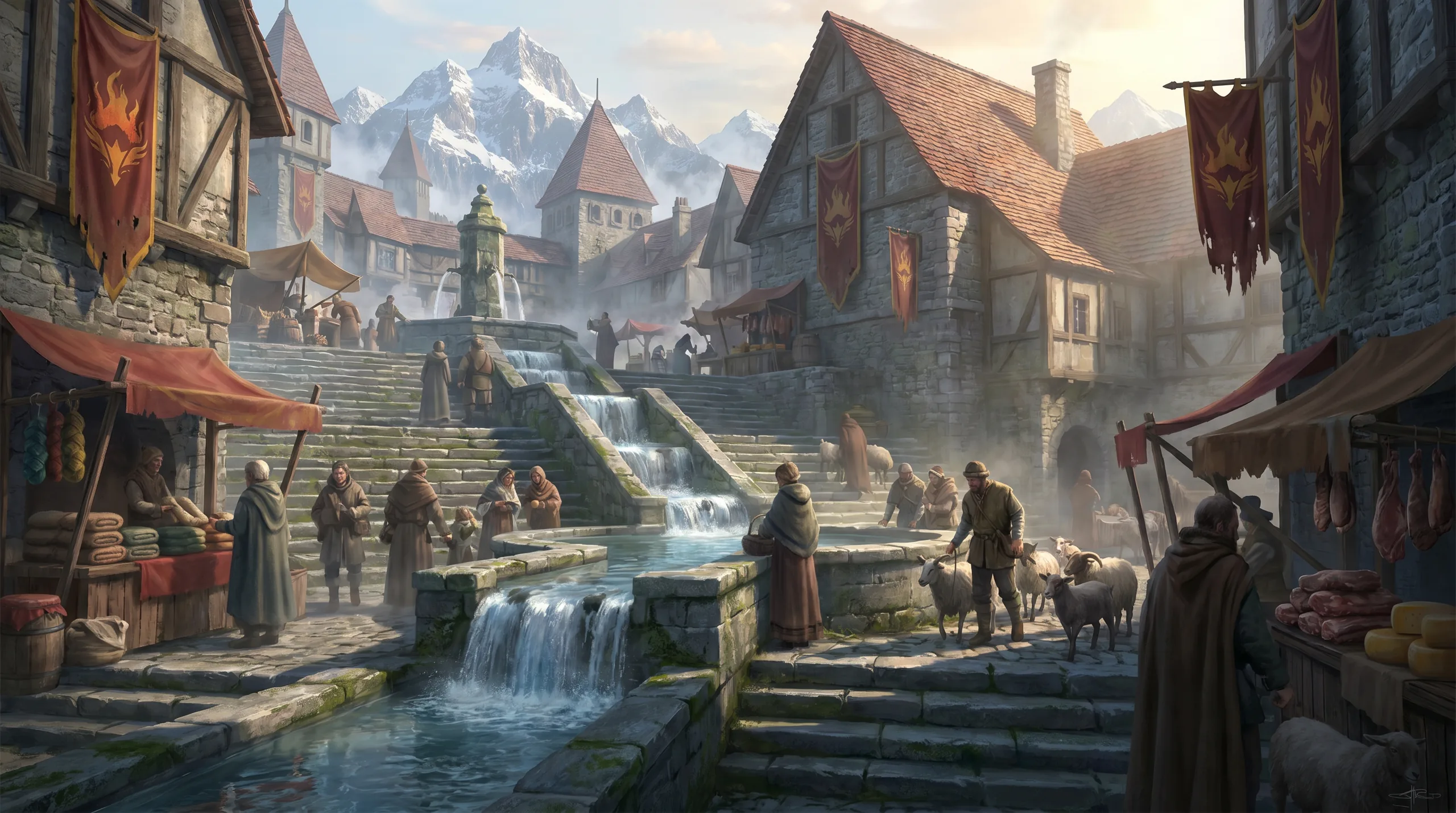
For all its walls, Navalis lives at its fountains. The braided streams surface again and again as stepped basins and cistern-courts, and these double as the city's social hearts — places to draw water, water the herds, trade gossip, and muster at need. Around them turns the steady rhythm of a herding stronghold: fine wool and felt, smoked meats, hard mountain cheeses, the patient craft of the quarries. Outsiders who find the valley are met half with welcome and half with test, for isolation has taught the Navaline to make a stranger explain himself first. If you can find Navalis, they say, you've earned it.