Morbora, Shadowed City of Sunken Roots
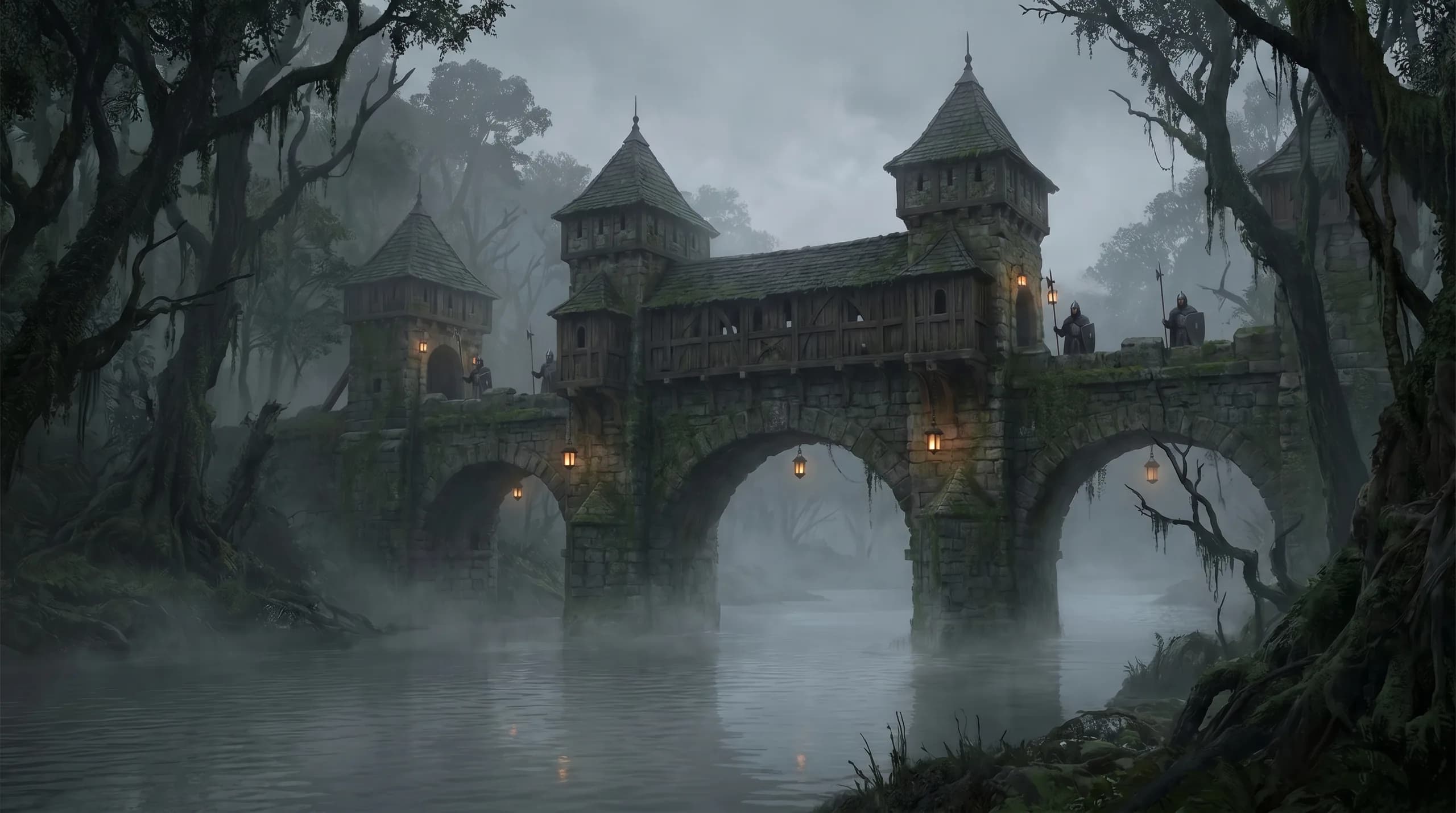
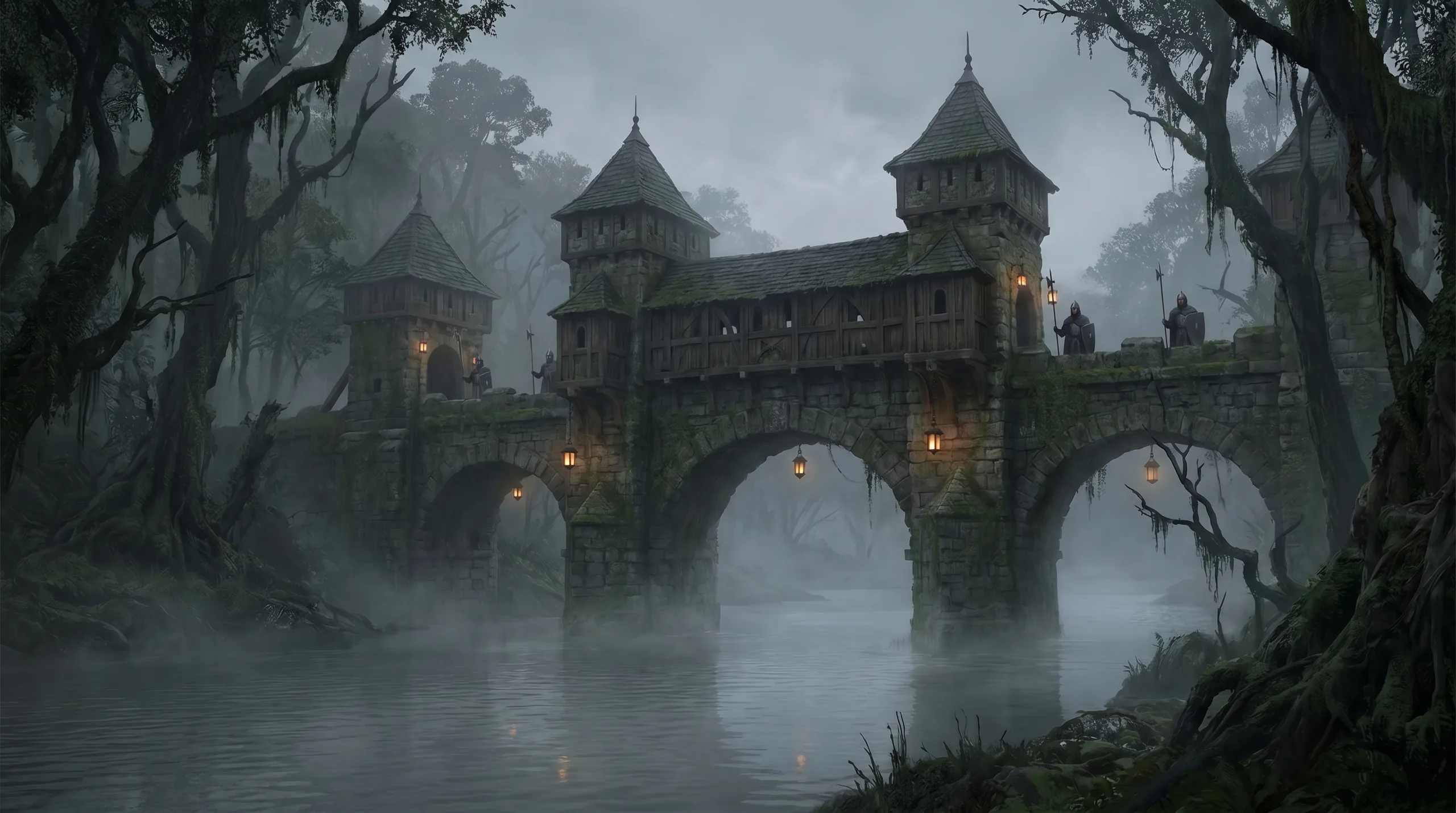
"In Andronis they charge you to cross their bridge. In Morbora, they let you cross for free. One of those should frighten you more." So runs the Daskilene road-proverb, and it is wise to heed it. Morbora is a city of hunters, monster-takers, and dynasty-trained assassins, sunk deep into a dense temperate rainforest on the shore of an enormous inland lake. It began as a hunters' camp where game came to drink and migratory beasts crossed; it grew by quiet control of the wilderness and the one great bridge it holds over the river; and it learned, somewhere along the way, that those who can track and kill a beastman chieftain in a storm-lashed forest can just as easily find a man in a palace.
A City That Hides
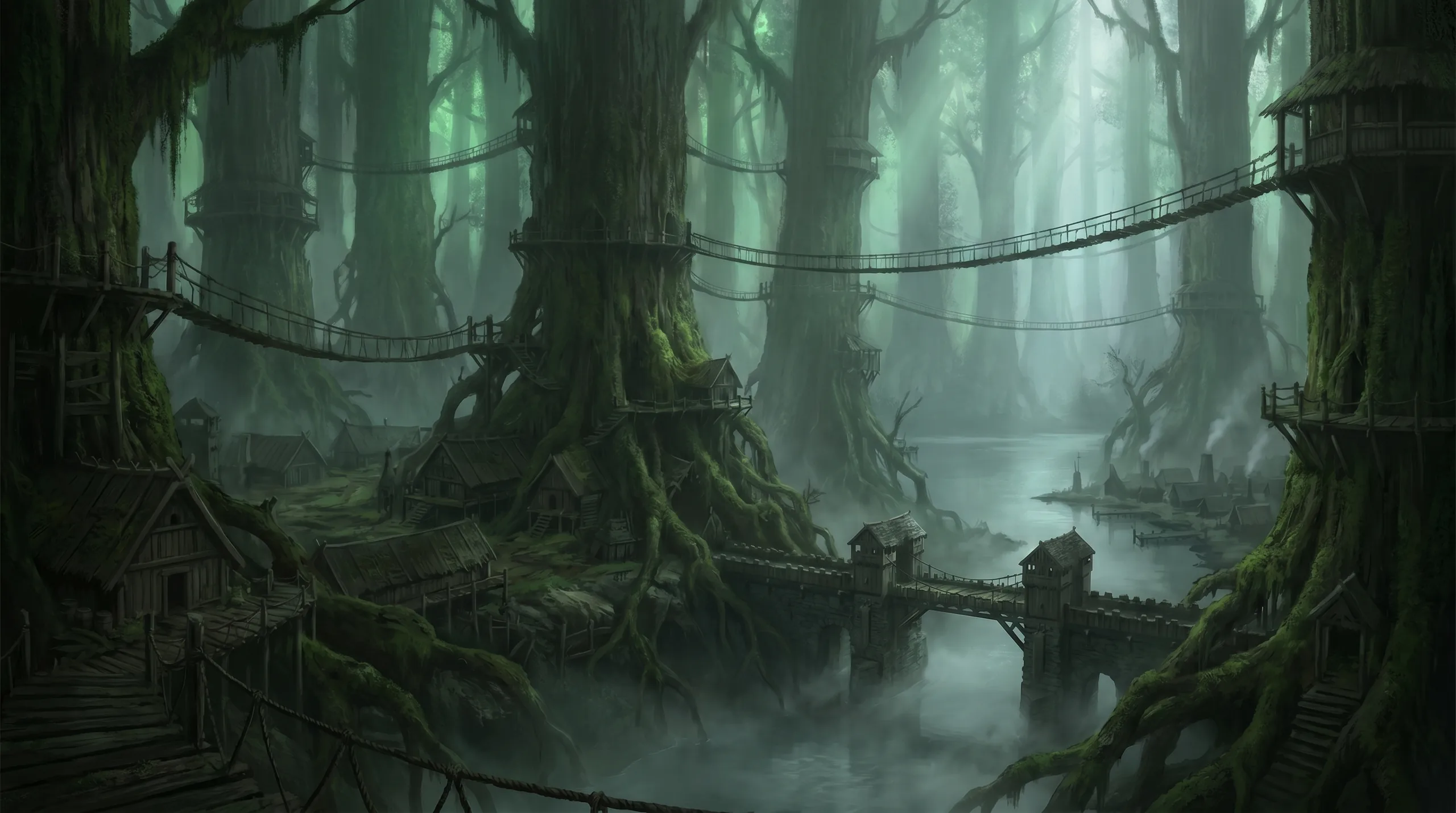
Morbora is one of only two cities that pushes into the forest rather than hugging open water. It is built as a series of interlocking clearings and elevated walkways: a Lakefront Quarter of docks and smokehouses, a Bridge Ward of fortified gate-towers and toll-houses, inner rings of longhouses and guild halls linked by causeways and rope bridges, and an outermost Shadowwood where the city dissolves into traps, blind hunting-posts, and camouflaged watch-platforms. Its defense is not walls but depth and ambiguity — kill-corridors of carefully managed trees, false paths that guide intruders into ambush, and silent alarms of bone-chime and tripline. Leave no noise, runs the civic motto. Leave no trail.
The Borlov Line
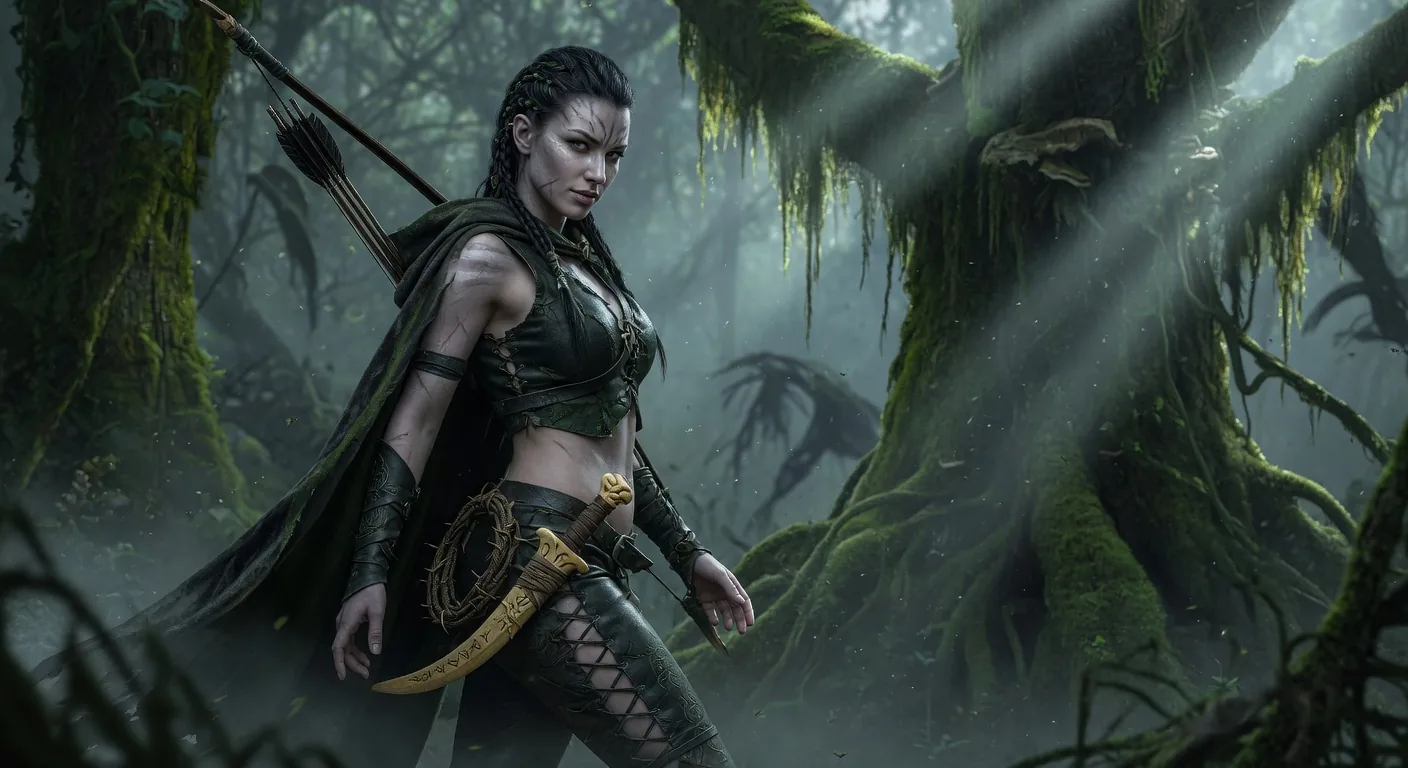
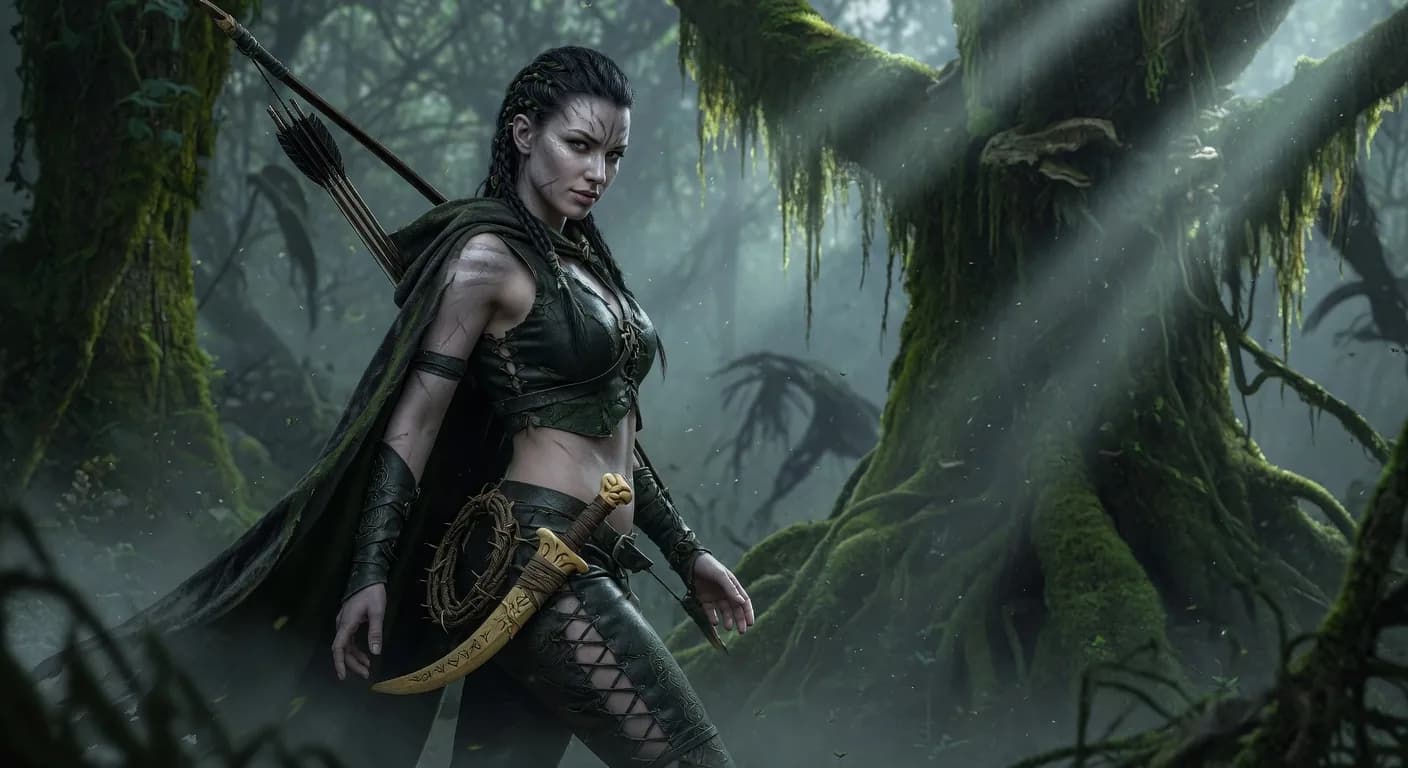
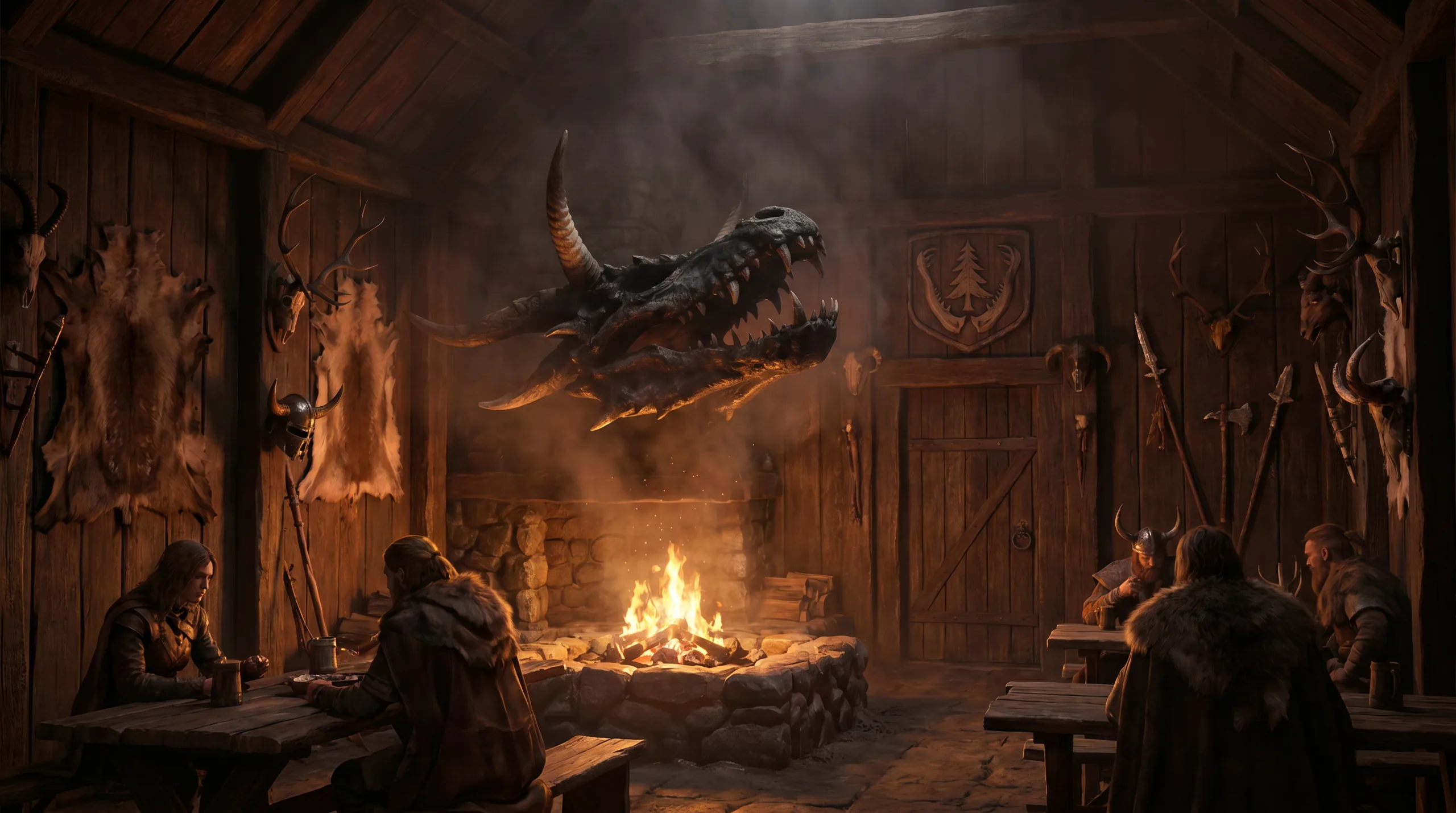
Officially, the ruling Borlov dynasty are the Master Wardens of the Green Road, guardians of bridge and river and forest route. Unofficially, they are brokers of clandestine violence, selling solutions that look like accidents, disappearances, or monster attacks. Many of Morbora's finest assassins are Klerokoi who share a family thymara-pattern that makes them uniquely trackable by their own kin — so that no Borlov killer can ever truly go rogue, and every contract owes its fixed share back to the dynasty's coffers. They take their name and their crest — a dragon's jaw and a rising pine — from the founder who tracked a dragon-like Paragon for seasons through the deep wood, and at last drove a boar-spear through the base of its skull.
The Empty City
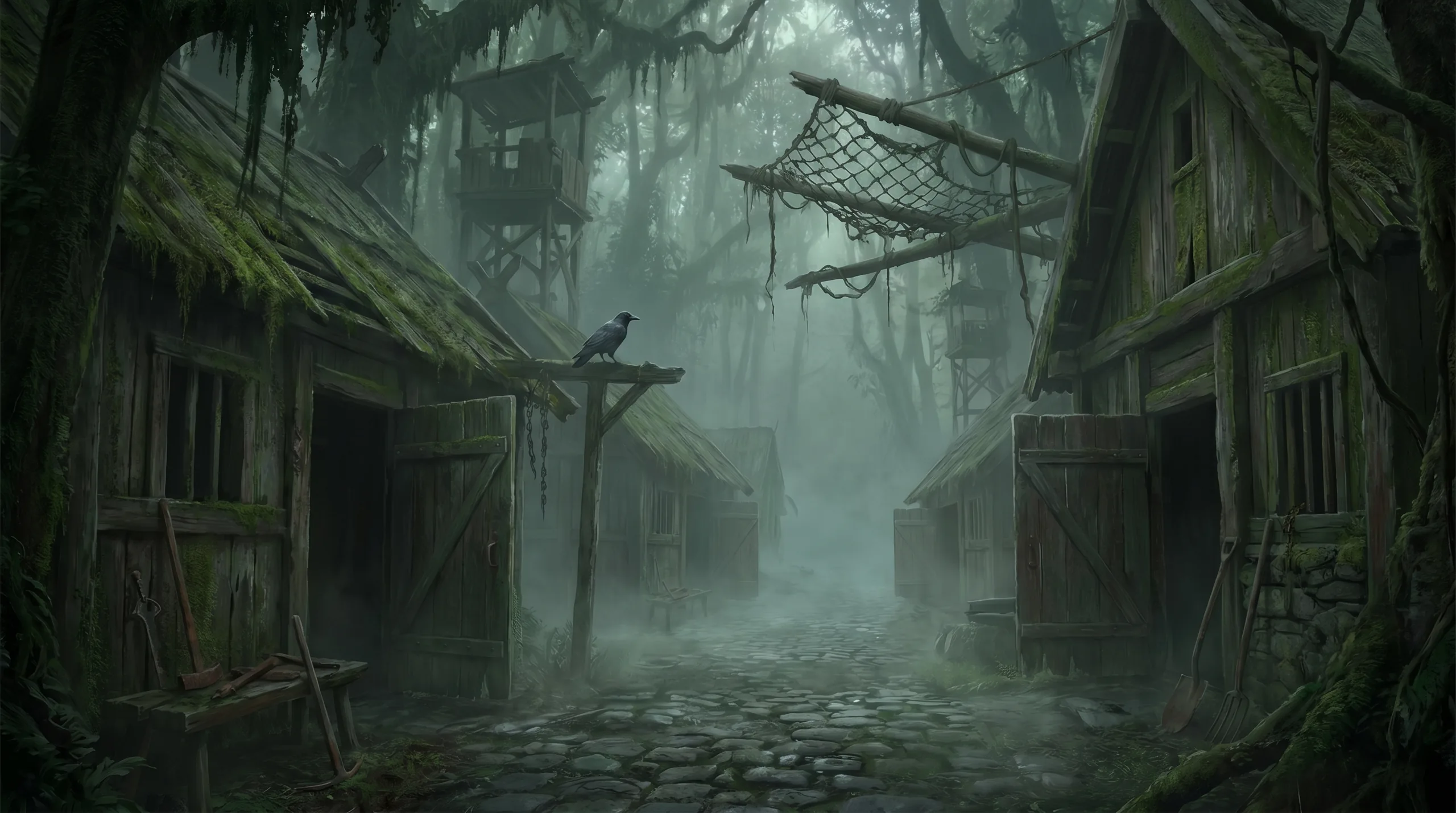
Morbora's most famous defense is to vanish. You cannot burn what does not burn, the doctrine runs, and you cannot conquer what is not there. Its buildings are treated with resin and alchemical washes that refuse to take flame; at the first credible threat, goods and archives and dependents are shed across the lake or into pre-chosen forest glens, leaving a strangely silent, half-intact, seemingly undefended city. An occupier finds doors swinging open, workshops abandoned mid-use, fires that will not catch — and then, as discipline frays into boredom and sleeplessness, the killing rotations begin, from rooftop and treeline and unseen angle. Warlords have "taken Morbora in three days" and bled out over three months without ever fighting a single decisive battle.
The Forest Remembers
Every Morborai is a tracker before they are fully literate, taught to read broken twigs and disturbed moss, to move in silence on wet ground, to navigate fog by night. They prize understatement — your trophies and your reputation are permitted to boast for you — and they hold an old, wary rivalry with Hylessa, who live alongside the very monsters Morbora hunts: where the Hylessans speak with beasts, we cut out their tongues. To hire Morborai is to escalate a war; the mere rumor of their presence can end a negotiation. And over it all hangs the oldest saying of the sunken roots, half warning and half comfort — the forest remembers. Every step leaves a trace, if not in mud and moss, then in the memory of those who watch.