

Karnosta, the Harbor of Freedom
Tucked beneath the cliffs where a great seasonal forest meets the open sea, Karnosta is a pirate's cove that simply never stopped growing. Built atop a honeycombed limestone karst, it has freshwater under its feet, timber at its back, and salt wind in its lungs — and a creed of freedom that it wears like a flag and pays for like a debt. It is a free-haven port of thirty-odd thousand, and it embodies, in equal and unembarrassed measure, the very best and the very worst of what freedom means.
The sea is free, the Karnostans say. Just mind the reefs.
The Cove and the Forest Crown
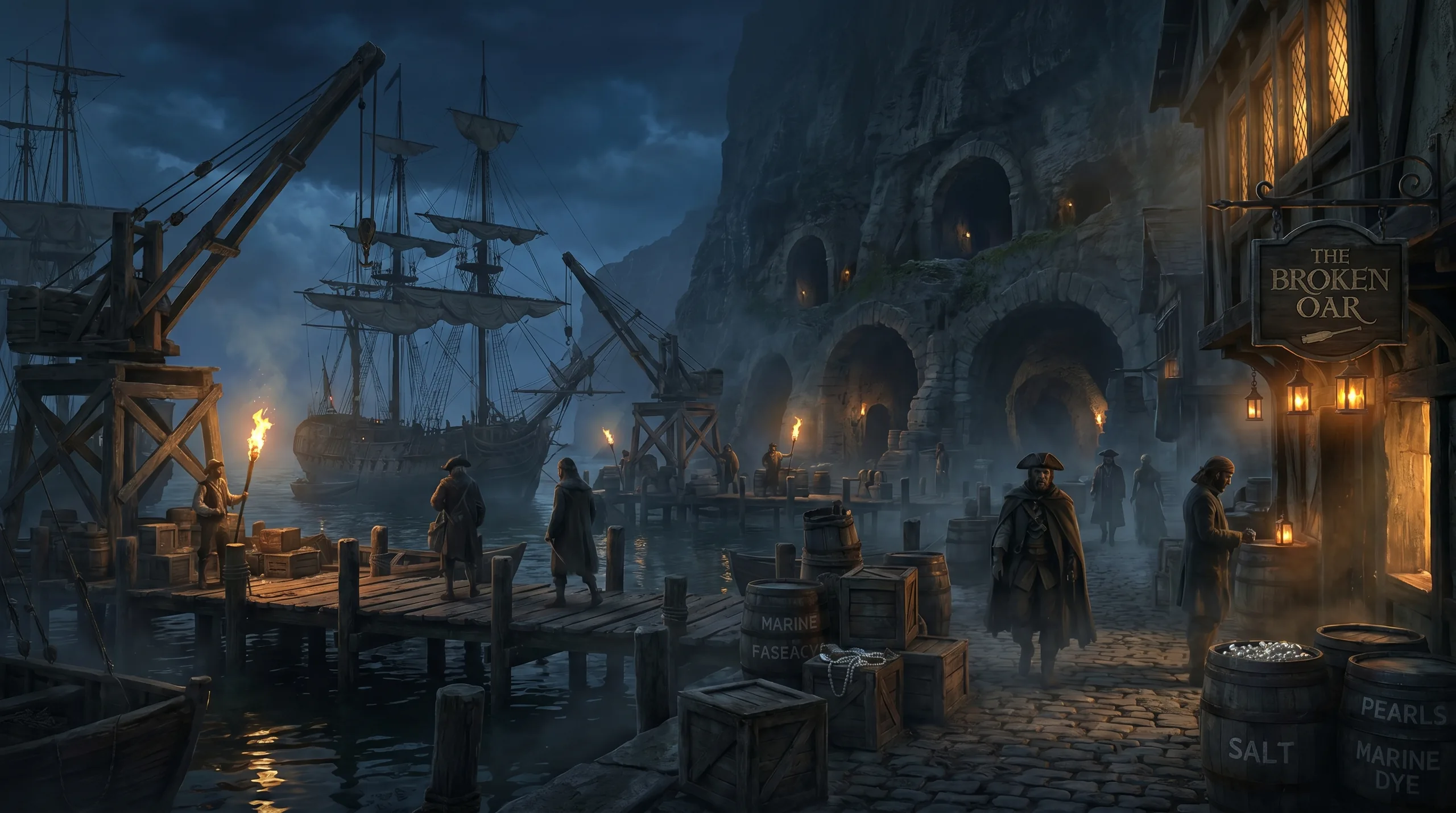
Karnosta is a city in two tiers. Below lies the Cove: a sheltered inner harbor held in the teeth of the coastline like a secret, its waters crowded with docks and creaking cranes, every alley thick with the smell of tar and citrus and brine and trouble. The karst beneath has been carved and tapped into a living infrastructure of cistern-caves, spring-chambers, cool storage vaults, and "forgotten" tunnels that the locals will swear are perfectly safe. They are not.
Above, climbing the cliffs into the forested heights, rises the Forest Crown — the upper city of limestone and treated timber, where Karnosta works the trade that made it: the finest ship-timber and naval stores in the region, masts and planks and barrels and pitch and rope, everything a fleet dreams of far from home. The Karnostans claim their wood sings in salt air.
The Promenade
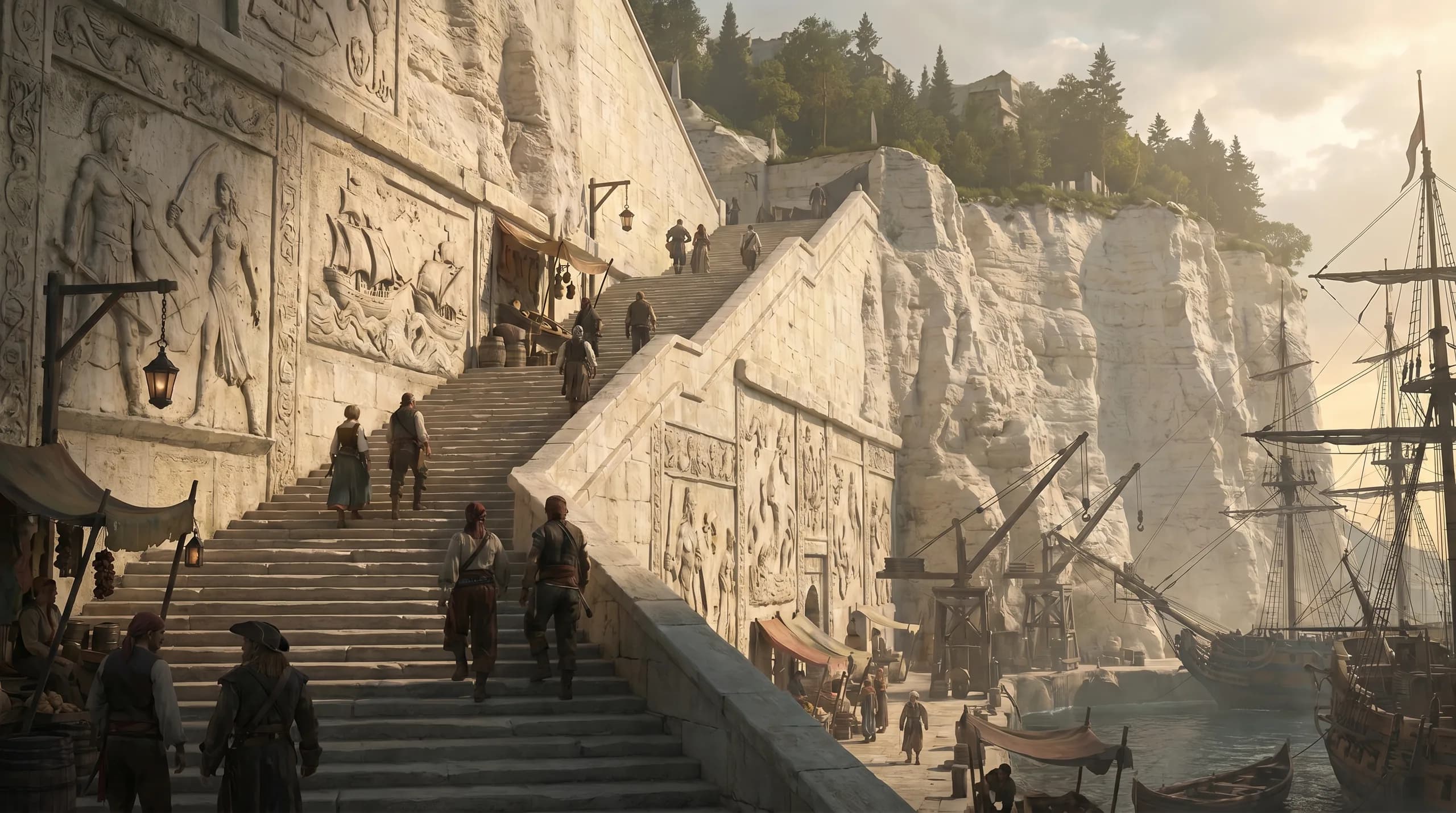
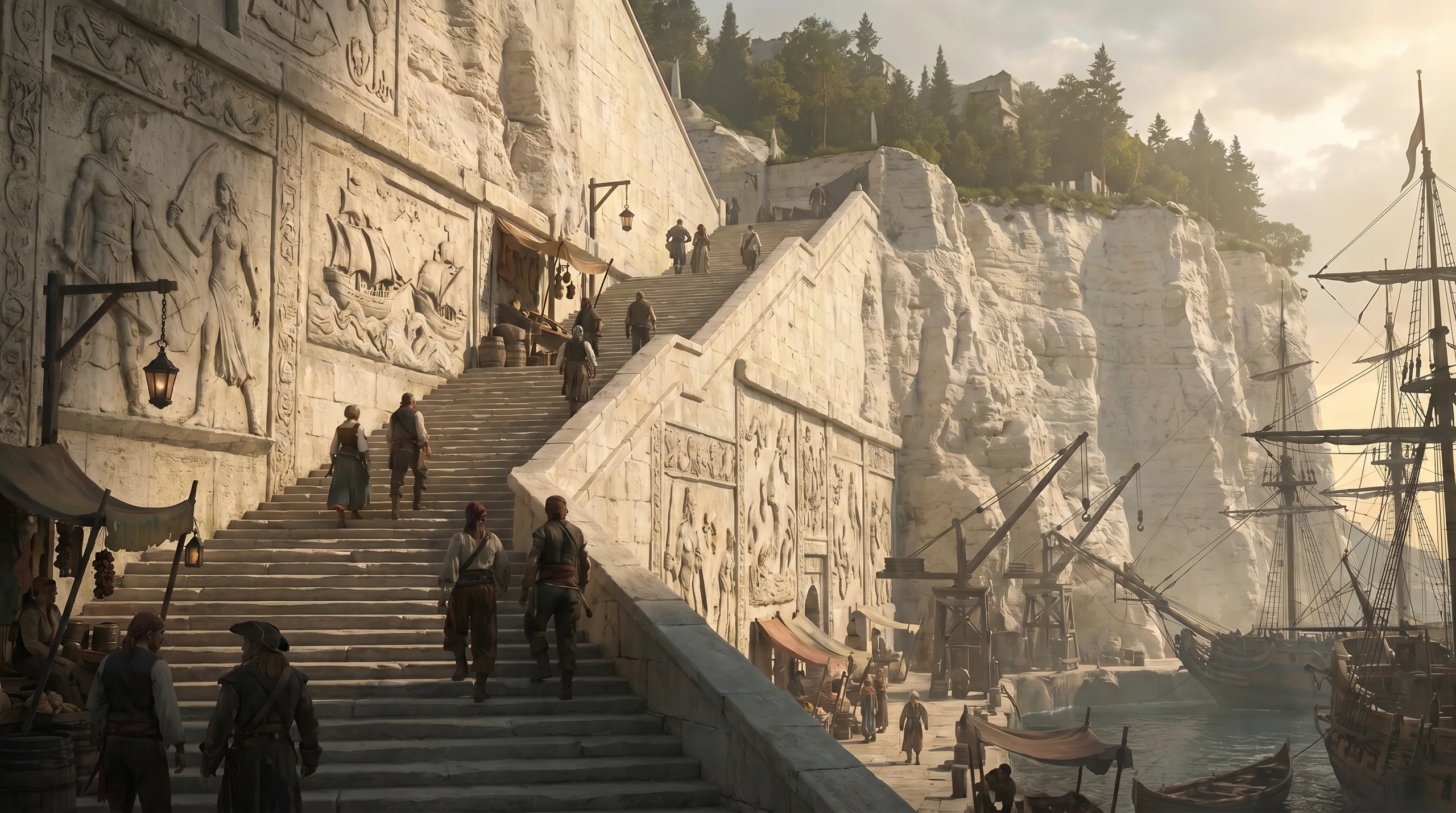
Between the tiers runs the Promenade — an enormous carved cliffside staircase, named as a joke and kept as something close to sacred. Its walls are a gallery of relief carvings recording the whole brawling history of the city: heroes and scandals, ship-duels and sea-monsters, and the occasional carved insult that no one will admit commissioning. The official path it may be, but a true Karnostan prefers the countless unofficial ones — the tunnels, ladders, and hidden stairwells, the routes you only learn, as they say, after your second arrest.
The Freebride
Karnosta venerates the Ruby through Lysanyma, the Freebride — a fitting patron for a city that worships freedom and settles the consequences later. Her temple life is famously warm: her priestesses are notoriously friendly, and though it is nothing so crude as temple-trade, it is well understood that a generous donation invites unusual blessings. Yet the same priestesses are the city's mediators and its informal courts, resolving feuds with brokered compromise and holy theater both. In Karnosta a case may be won by evidence, by reputation — or by a reconciliation public enough, and sacred enough, to end the matter.

First Scar Wins
Defense in Karnosta is less an institution than a habit. Every sailor is expected to be fit for a boarding action, and unrestricted legal dueling sits at the very center of the city's identity, complete with arena-docks, duel-sponsors, and celebrity feuds. The grand aristocratic quarrels now mostly fight to first scar — dramatic enough for the crowds, survivable enough for repeat business. First scar wins, the saying goes; last scar teaches. When truly threatened, the city can field a startling number of ferocious fighters by sea and land, because half of Karnosta treats violence as a trade skill.

Ply the Sea, Hire the Free
The ocean is Karnosta's lifeblood — fishing and salting, pearls and marine dyes and curious oils, and above all the naval stores it sells across the coast. Its freebooting legacy never died; it merely got paperwork. For a price, almost anyone may fly Karnostan colors, and "piracy" today mostly looks like a mandatory voyage-escort politely asserting its right to payment in kind. The one loud exception is the semi-ceremonial non-peace with rival Kolmos: waylay, "fight," bribe, and both sides sail home reporting a famous victory. Ruled by a Captains' Council where, plainly, whoever can move ships can move votes, Karnosta runs on a single unwritten First Code — freedom includes responsibility toward oneself. Locals live by it. Outsiders learn it. One warning is kindness, they say. There is no second.