
Darolas, the Steadfast Grey City
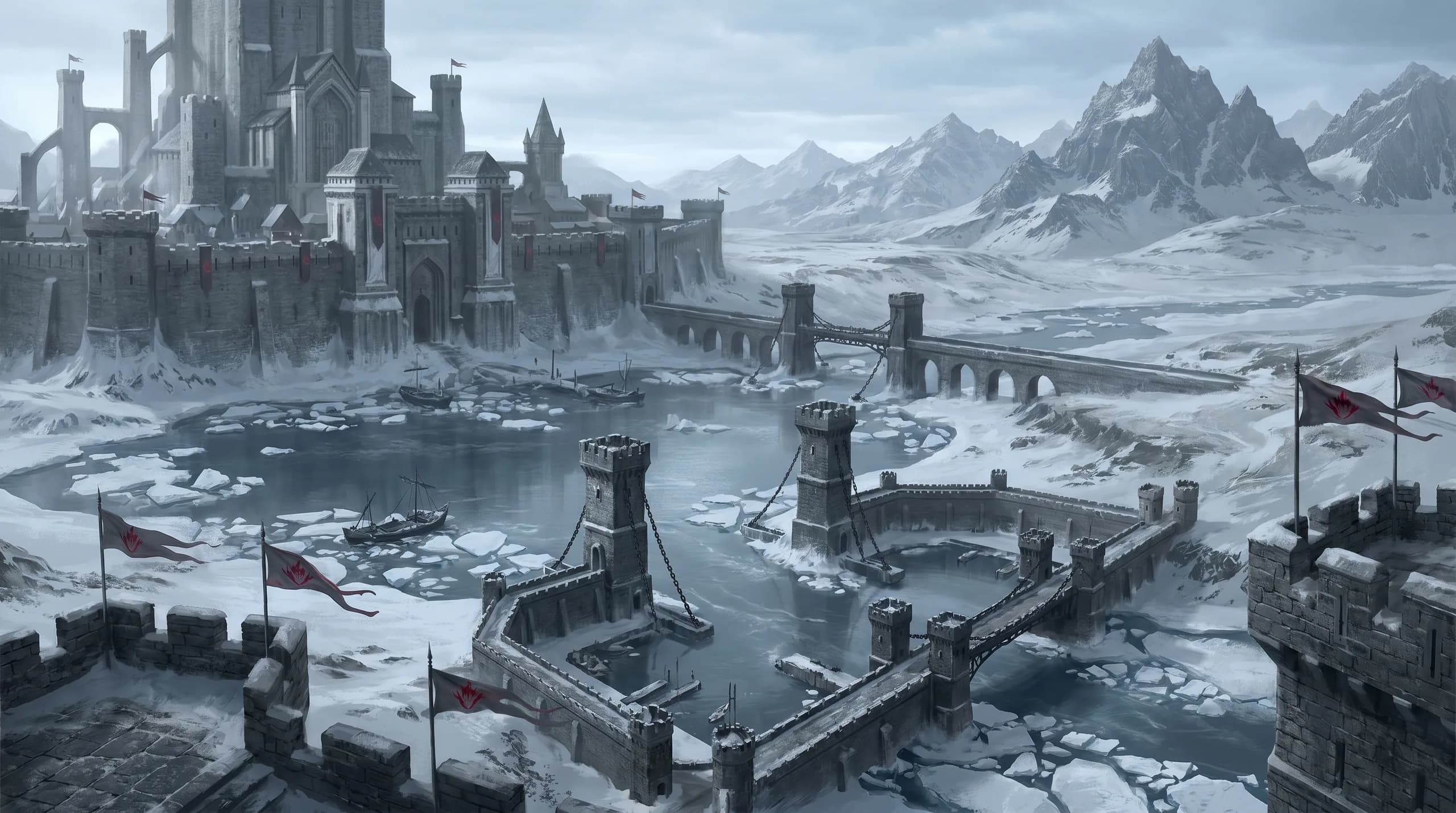
On the eastern shore of a vast inland lake, wedged between two ice-fed rivers that pour down from the Frostpeaks, stands a city that exists for one reason: to hold the line. Darolas is grey to its bones — rough-cut gneiss walls with marble trim, quarried upriver and floated down to the water's edge — and it was raised not beside a forest or a mineral seam but on raw strategic position alone. It controls the only bridges over the twin rivers, the main crossing of the lake, and the landward roads between the mountains and the western basin. Where others would have surrendered the ground, the Caidar dynasty — the Steadfast Keepers — built a fortress one floated block at a time, and never since have they voluntarily shrunk the frontier by a single step.
A Hard Land
Darolas is a city of the tundra, and the tundra spares nothing. Its winters are long and brutal, its summers thin; permafrost and poor soil allow little beyond hardy crops and kitchen gardens. The walls run right along the shoreline, enclosing fortified docks that can be sealed behind chains and towers to turn the harbor into a walled basin at need. To the north and east the windswept tundra climbs toward the Frostpeaks; to the west spreads the great grey lake. It is home to a hardy, mingled people — High Lohanar with red hair and green eyes, raven-haired High Ashanar, auburn High Duskers — whom the Caidar wed across freely, binding a diverse frontier into one polity by blood as much as by law.

Never Within a Stone's Throw
Deprived of metal and timber from the start, the early Darics hunted with the one weapon the land gave freely: smooth river-stones and a simple hide sling. In a country where a clean shot on a hare meant the difference between eating and starving, accuracy became survival, and survival hardened into doctrine. Today massed slinger companies form the backbone of the Daric army — drilling with river-stones, going to war with imported lead, and signalling with golden howling bullets from Tenedos. Never stand within a stone's throw of a Daric, the saying warns, and it is no jest.

Stone and Tusk
Behind and above the slingers loom the mammoths. Slow, precious, and few, the armored war-mammoths of Darolas serve as cold-weather shock troops and mobile ramparts both; a handful of them can decide a campaign by their presence alone. Around this core turns a city of soldiers, wardens, and workers — armorers and fletchers, sling- and harness-makers, dockhands and ice-cutters — and a constant stream of pilgrims, merchants, and recruits passing through to the deeper north. Darolas does not sell glory. It sells stability: if Darolas fails, trade and travel through the whole north disintegrate.

To the Last Spark
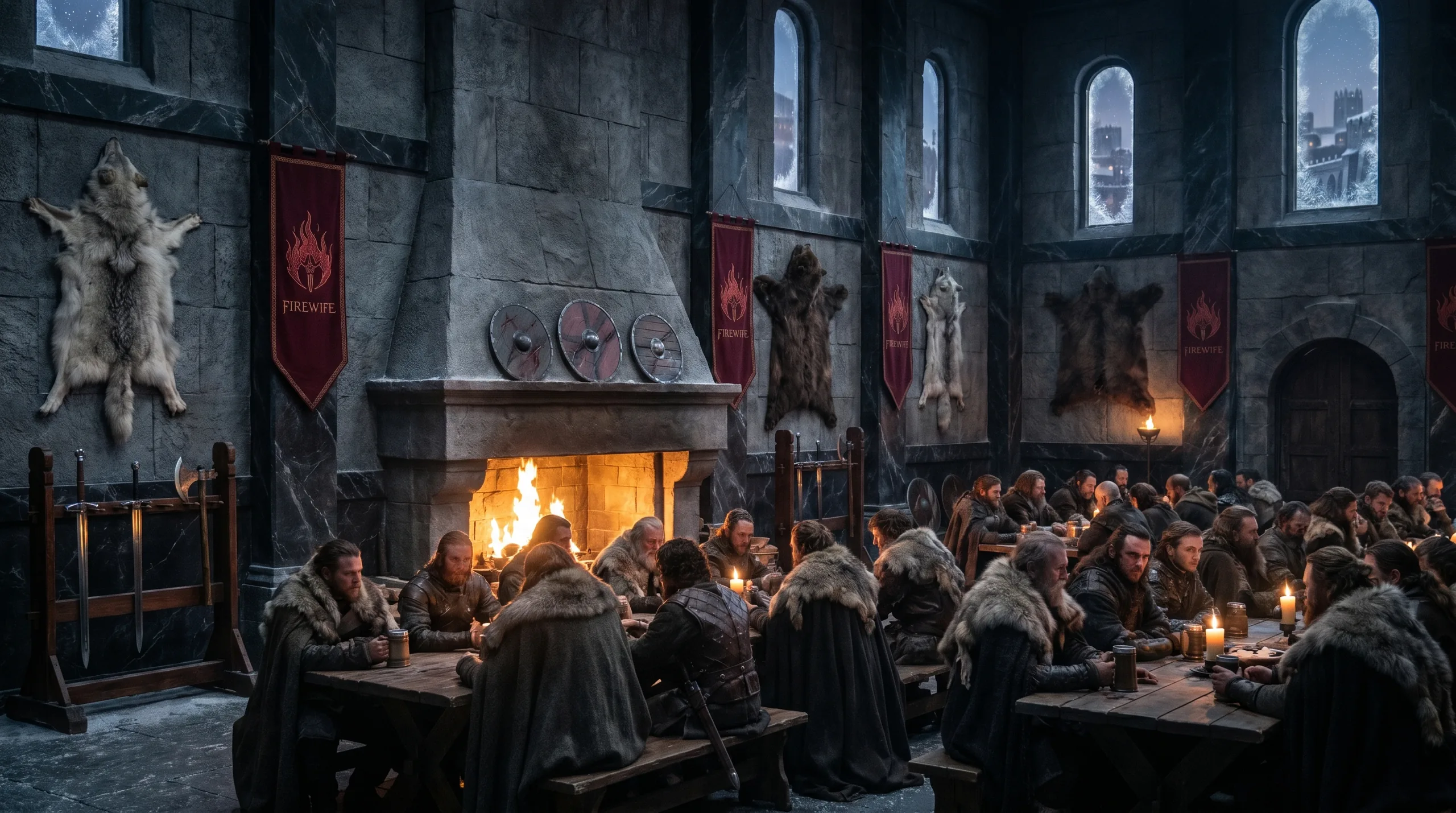
For a city of snow and stone, Darolas keeps a faith of fire. It is bound to the Ruby's war-aspect, the Firewife Pyranaika, whose blessing comes down from the mountain temple of nearby Liarath: regiments march under fire-marked banners, officers set ruby chips into their moonsteel and sunsteel armor, and oaths to hold a bridge or a fort "to the last spark" are sworn in her name. The Daric virtue is endurance — the long watch on an icy wall, the frozen patrol that does not break — and the city's stories are not of conquering, but of holding. We celebrate survival, a Daric will tell you, and steadfastness above all.